
Introduction
At some point, many hikers start asking the same quiet questions: Do I really need a tent for every trip? When is a Tarp Enough?
That question usually does not come from trying to be extreme. It comes from experience. After enough nights outside, you begin to notice that a full tent is not always doing as much as you thought. Maybe the weather is calm. Maybe the bugs are light. Maybe the site itself already offers some shelter. In those moments, a tent can start to feel less like a need and more like a habit.
That is where tarps start to make sense.
A tarp is not the right shelter because it is lighter, tougher, or more “minimalist.” It is the right shelter when the conditions support it. That is the real skill behind tarp camping. It is not about proving you can handle less. It is about learning how much shelter the night actually requires.
For hikers interested in cowboy camping, stealth camping, long-distance trekking, or lighter shelter systems in general, this is an important judgment to build. A tarp can be a great tool. But it works best when the choice is based on weather, terrain, temperature, and site selection—not on fear, and not on overconfidence.
This article contains affiliate links. If you purchase through these links, MoreHiking may earn a commission at no additional cost to you. We only recommend gear we trust and have carefully researched.
What a Tarp Actually Does
To decide when a tarp is enough, it helps to understand what it really does.
A tent tries to create a small enclosed space. It gives you walls, a floor, and bug protection all in one package. A tarp works differently. A tarp does not try to block everything. It tries to block the most important exposure while letting the landscape do part of the work.
That is why tarp camping can feel simple and demanding at the same time. The shelter itself is simple. The judgment behind it is not.
A tarp mainly helps with rain from above, some wind depending on the pitch, and a bit of exposed heat loss. But it does not seal you off from the environment. It does not solve ground moisture by itself. It does not stop bugs unless you pair it with something else. It does not create the same feeling of separation that a tent does.
That is not a weakness. It is just a different way of thinking.
With a tarp, the site matters more. The wind direction matters more. The shape of the pitch matters more. A good tarp night is often the result of a good decision made before the shelter ever goes up.
On a calm, dry night in sheltered forest, a tarp can feel perfect. On an exposed ridge with shifting weather, the same tarp can feel very small. The difference is not toughness. The difference is conditions.
If you want to support this section with an internal link, this is a strong place to link to How Experienced Backpackers Read Weather Forecasts for Shelter Decisions.
The Main Things That Decide Whether a Tarp Is Enough
Weather Stability
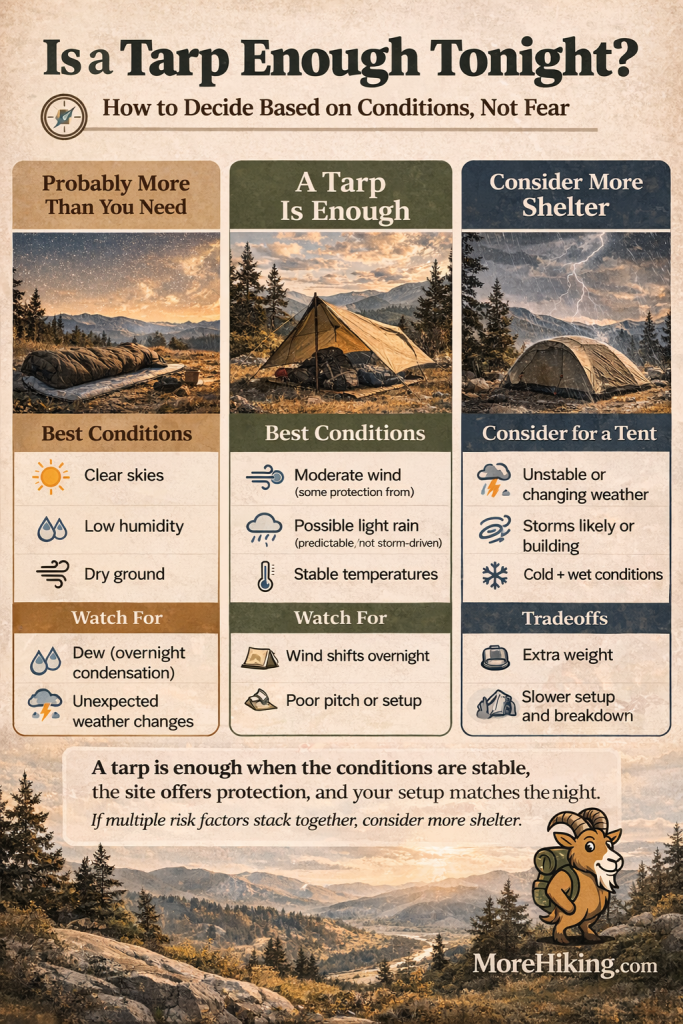
The first question is not just, “Will it rain?” The better question is, “How stable is the weather pattern?”
A tarp handles settled conditions much better than unstable ones. Light rain in a steady forecast is one thing. Building thunderstorms, shifting wind, and fast temperature drops are something else. Tarps do well when the weather behaves in a predictable way. They become less forgiving when the weather becomes messy.
This matters because rain is not usually the whole problem. Wind-driven rain is harder to manage. Sudden weather changes are harder to manage. A tarp may be enough for a simple wet night, but not for a night that keeps changing shape.
That is why experienced hikers look beyond the basic forecast icon. They want to know whether the atmosphere feels calm and organized or unstable and active.
Wind Exposure
Wind is often more important than people expect.
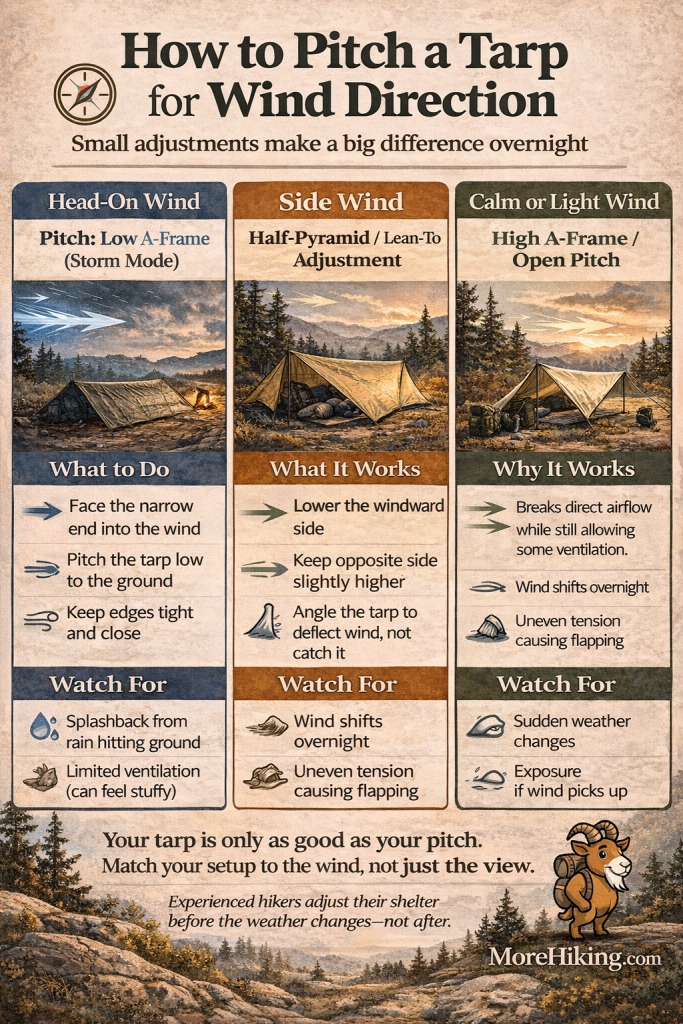
A little rain straight down is usually manageable under a tarp. Wind changes everything. It pushes cold air into your sleep space. It can carry mist and spray under the edges. It can make a calm site feel exposed and noisy all night.
This is one reason a tarp often feels better in the woods than in open terrain. Forests break up airflow. Tree cover, uneven ground, and nearby vegetation all help reduce exposure. On a ridge, a shoreline, or open alpine ground, the same tarp has much harder work to do.
Good tarp users are usually good at avoiding wind problems before they begin. They do not just ask whether the tarp can handle the site. They ask whether the site gives the tarp a fair chance.
Bug Pressure
A tarp may be enough for the weather and still be the wrong shelter for the night.
Bugs are often the reason.
Mosquitoes, black flies, and no-see-ums can make an otherwise easy night feel long and miserable. That does not mean tarps stop being useful. It just means the shelter system may need to change. In some seasons, a tarp alone is fine. In others, a tarp works much better with a bug bivy or inner net.
This is where local knowledge matters. A dry fall night is not the same as a warm summer campsite near still water. The weather may look easy, but the bugs may tell a different story.
Terrain and Natural Shelter
A tarp becomes more useful when the landscape is helping you.
That could mean tree cover overhead. It could mean a stand of brush that blocks some wind. It could mean a low rise, a cluster of boulders, or a tucked-away site that stays calmer than the open ground around it.
This is one of the real strengths of tarp camping. It teaches you to stop looking only for flat ground and start looking for protected ground. A site does not have to be perfect to work well. But it should be doing something to reduce exposure.
That change in mindset matters. Instead of asking, “Where can I fit my shelter?” you begin asking, “What part of this place is already offering shelter?”
What every hiker/backpacker should carry, but 90% forget.
Temperature and Sleep System
A tarp can keep you dry without keeping you warm.
That catches some hikers off guard. A tent does not create a huge amount of warmth, but it does reduce airflow. A tarp stays more open. That is great on warm nights. It is less helpful when temperatures drop and the wind begins pulling heat out of your system.
That does not mean tarps are poor cold-weather shelters. It means your sleeping pad, quilt or bag, clothing, and site choice matter more. If the rest of the system is solid, a tarp can still work well. If the rest of the system is marginal, the tarp may feel like the weak link even when the real problem is bigger than the shelter.
Ground Conditions and Drainage
One of the easiest tarp mistakes is paying attention to the sky and not enough attention to the ground.
A site can look great in the evening and turn annoying or uncomfortable after dark. Water may begin moving through the area. Bare soil may throw up splashback during rain. Ground that felt dry at sunset may become cold and damp overnight.
This matters more under a tarp because the shelter is more open at the edges. You do not just want a place that is flat enough to sleep on. You want a place that will still make sense if the weather gets worse.
Slightly raised ground is often better than a low pocket. Natural ground cover is often better than exposed hard-packed dirt. Small differences in drainage can make a big difference by morning.
This is the right place to link to Stop Ground Seepage: The Ultimate Minimalist Guide if that article is live.
Pitch Shape
A tarp does not perform the same way every night. Its performance changes with the pitch.
A high pitch can feel open, airy, and comfortable in calm conditions. A lower pitch gives more protection when the weather looks less certain. The same tarp can feel spacious one night and storm-ready the next depending on how it is set up.
That is part of what makes tarps useful. But it is also part of what makes them less beginner-friendly than they first appear. The shelter is not just the fabric. The shelter is the shape you give it.
When a Tarp Is Usually Enough
A tarp is usually enough when several things are working in your favor at the same time.
The weather is fairly stable. The wind is limited or manageable. The site offers some natural shelter. Bugs are light, or you have a plan for them. Your sleep system matches the temperature. The ground is not likely to become a problem overnight.
Those are the nights when a tarp often feels not just acceptable, but ideal.
A sheltered woodland campsite on a calm summer or fall night is a good example. So is a stable shoulder-season trip where insects are mostly gone and the forecast looks steady. In those conditions, a tarp can feel lighter, simpler, and more connected to the landscape without feeling underbuilt.
The important point is that tarp decisions are rarely based on one factor alone. It is usually the overall pattern that tells you whether a tarp is a smart choice.
When a Tarp Probably Is Not the Best Choice
A tarp may not be the best choice when the weather looks unstable, the site is exposed, the wind is likely to shift, or your sleep system is already close to its limit.
The same is true when bug pressure is high and you do not have a workable bug solution, or when the terrain offers very little natural shelter. These are the nights when a tarp can still be possible in skilled hands, but it stops being the comfortable or sensible answer for many hikers.
That is especially true for beginners.
The best way to learn tarp camping is not to test it on your hardest night. It is to start when the conditions are forgiving. That gives you room to learn how the tarp behaves, how site choice changes comfort, and how much protection you really need.
That is not backing down. That is building skill the smart way.
If you want to reinforce that confidence-building idea, a good internal link can go here to Hiking Light Without Feeling Reckless: Building Confidence in Minimalist Shelter.
Comparing Shelter Styles
It helps to think of shelter as a spectrum.
A tent carries more of the protection for you. A tarp asks more from your site choice and setup. Cowboy camping asks even more because it removes overhead protection almost entirely.
| Factor | Tent | Tarp + Bug Net | Tarp Only | Cowboy Camping |
|---|---|---|---|---|
| Weight | Moderate to heavy | Light | Ultralight | Minimal |
| Weather Protection | Excellent | Good | Moderate | Very limited |
| Ventilation | Moderate | Excellent | Excellent | Excellent |
| Bug Protection | Excellent | Good | None | None |
| Skill Required | Low | Moderate | High | High |
The point of the table is not to prove that one system is better. It is to show that lighter systems shift more of the responsibility onto judgment.
That is why many hikers move toward tarps gradually. They do not need to stop using tents completely. They just begin to notice that some nights ask for less shelter than others.
Don’t just hike—be prepared. Shop Camping Survival.
Practical Use on Trail
Experienced tarp campers often make their best shelter decision before they ever pull the tarp out of their pack.
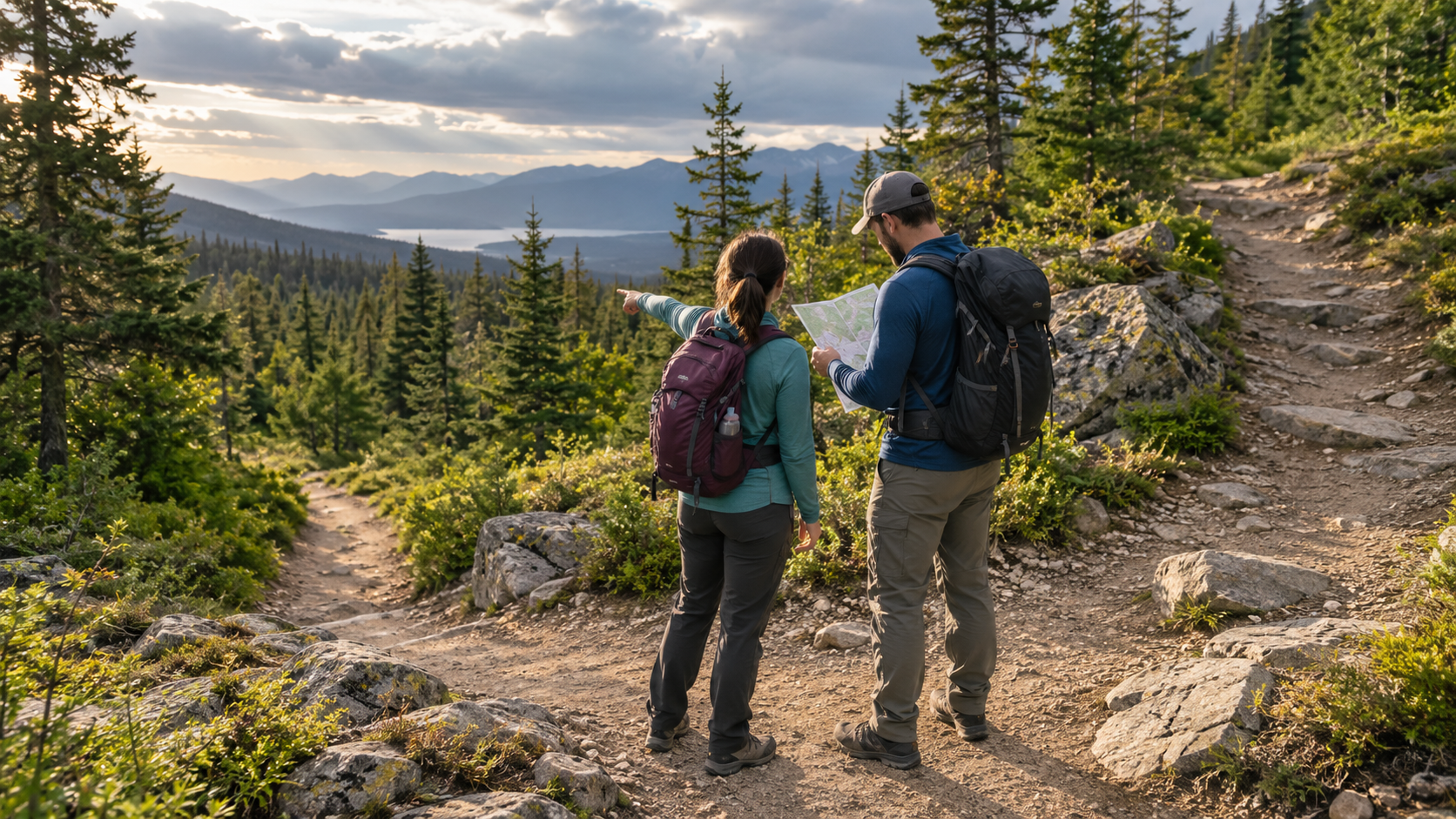
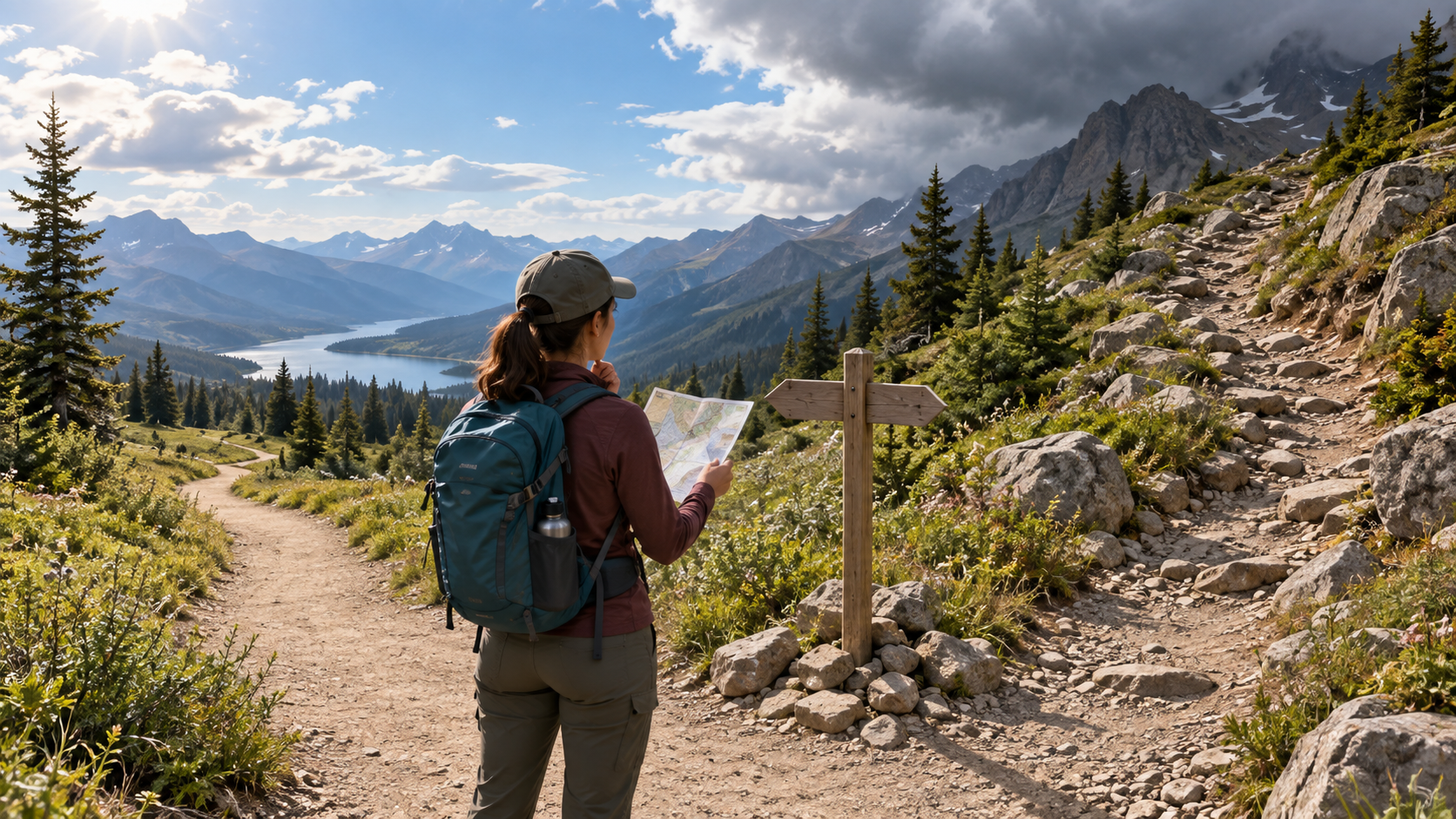
They pause and look around. They notice where the wind is coming from. They study the canopy. They think about where water would go if rain arrived overnight. They ask whether the site will still feel smart at midnight, not just whether it looks convenient right now.
That pause matters.
A common beginner mistake is choosing camp based only on flat ground. Flat ground matters, but it is not enough. A good tarp site should also be protected, well-drained, and oriented in a way that makes the pitch easier.
Once the site is chosen, the tarp should match the conditions. Calm weather allows a more open pitch. Uncertain weather should usually push the setup toward something lower and more protective. Many bad tarp nights happen because the shelter was pitched for the evening view, not for the weather that arrived later.
It also helps to pay attention to small signs that something is wrong. Maybe cold wind is moving straight through your sleep space. Maybe the edges of your gear are starting to feel damp. Maybe the ground is beginning to collect water. Those are not signs to “tough it out.” They are signs that the site, the pitch, or the overall system needs work.
That is how hikers get better at tarp camping. Not by forcing themselves through miserable nights, but by noticing what went wrong and making better decisions the next time.
Frequently Asked Questions: Tarp Camping
Is tarp camping safe in the rain?
Yes, tarp camping can be very safe in the rain when the tarp is pitched well and the site is chosen carefully. The real challenge is usually not simple rain from above; it is wind, runoff, and poor orientation. In steady conditions, a tarp can handle rain very well. In unstable weather with shifting wind, the margin for error gets smaller, requiring more advanced pitching skills.
Can you stay warm under a tarp?
Yes, but most of that warmth comes from the rest of your sleep system. A tarp does not trap heat the way a more enclosed shelter does. Your sleeping pad, insulation, clothing, and campsite choice all matter more. If those pieces are solid and you’ve blocked the wind, a tarp can be a very warm and comfortable environment.
Do you need trees to pitch a tarp?
No. Trees certainly make setup easier, but they are not required. Tarps are incredibly versatile and can be pitched with trekking poles, sticks, rocks, or various ground anchors depending on the terrain. The key is practicing multiple configurations so you can adapt to different environments like alpine ridges or deserts.
Why do long-distance hikers like tarps?
Long-distance hikers favor tarps because they are lightweight, simple, and adaptable. When you’re covering thousands of miles, saving a few pounds makes a massive difference in fatigue levels. Additionally, seasoned hikers develop the “trail sense” needed to read weather and choose protected sites, making the openness of a tarp feel like a benefit rather than a risk.
Is tarp camping only for experienced hikers?
No. Beginners can absolutely master tarp camping. The secret is to start in mild, forgiving conditions near home or in familiar terrain. This allows you to build confidence in your knots and pitches before you have to rely on the shelter during more demanding weather events.
Conclusion
A tarp is enough when the night does not demand more shelter than the tarp, the site, and your system can reasonably provide.
That answer is less dramatic than some people want, but it is the honest one. There is no single rule that works for every trip. What matters is the combination of weather, wind, terrain, temperature, bugs, and your own experience.
That is also why tarp camping is worth learning.
It teaches you that shelter is not just something you carry. It is something you build through judgment. The more nights you spend outside, the better you get at seeing what the landscape is offering—and what it is not.
And once that judgment improves, the question becomes easier to answer.
Not because you are tougher.
Because you are paying closer attention.
If you have enjoyed this article, please also read our other post.
Leave a Reply