
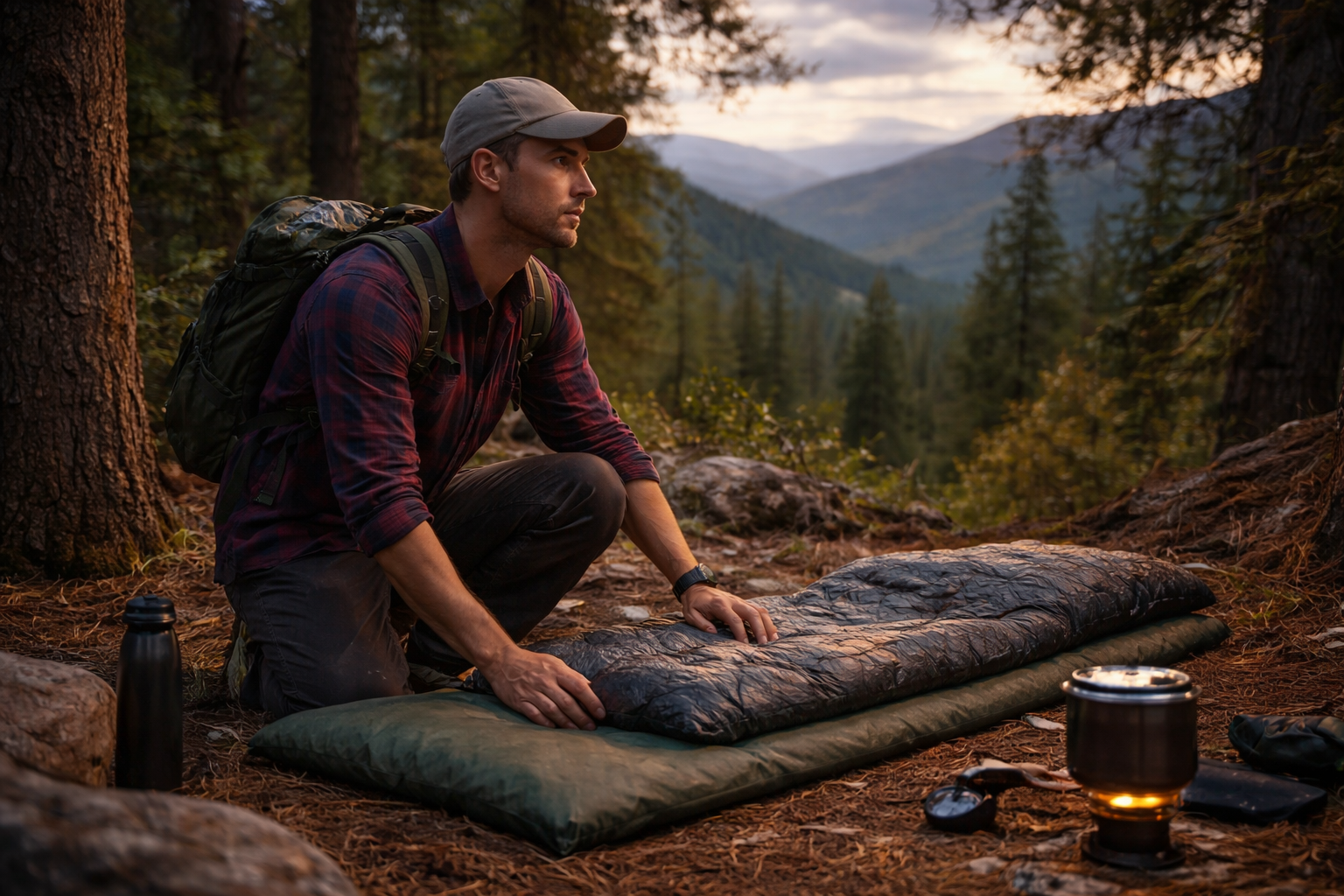
When people first get interested in minimalist hiking, they usually focus on gear. They think about lighter shelters, smaller packs, and simpler sleep systems. But one of the biggest lessons in minimalist hiking is that choosing a campsite selection matters just as much as what you carry.
A smart campsite can block wind, reduce cold, limit ground moisture, and help a lighter shelter system work better overnight. A poor site can do the opposite. It can make a good tarp feel exposed, make a warm quilt feel weak, and turn a simple overnight into a restless one.
That is especially true for hikers drawn to cowboy camping, tarp camping, stealth camping, survival-minded travel, or long-distance trekking. In these styles of hiking, you usually have less margin for sloppy decisions. You are relying more on judgment and less on extra gear to protect you from discomfort.
This article is for hikers who want to understand how to choose a campsite that works with them instead of against them, especially when using a minimalist camping setup. The goal is not to find a perfect patch of ground every time. It is to learn how to notice the small things that make a night calmer, drier, warmer, and easier.
This article contains affiliate links. If you purchase through these links, MoreHiking may earn a commission at no additional cost to you. We only recommend gear we trust and have carefully researched.
Why Campsite Selection Matters in Minimalist Hiking
A lot of newer hikers think of shelter as the thing they pitch. It is the tent, tarp, bivy, or quilt. But in real trail conditions, your shelter is only part of the system. The land around you matters too. The shape of the ground, the direction of the wind, the trees nearby, and the way cold air settles after dark all affect how the night goes.
This matters even more when you are carrying a simpler setup. A full tent can hide some mistakes. A more exposed setup usually cannot. If you sleep in a windy, damp, low-lying spot, your shelter has to work harder all night. If you choose a better site, the land itself helps protect you.
That is why experienced hikers often study an area before they ever think about pitching camp. They are not just looking for somewhere flat. They are asking a better question: how will this place behave once the temperature drops, the wind shifts, and the dark settles in?
That change in mindset matters. Instead of asking, “Can I sleep here?” you start asking, “Will this place help me sleep well?” Those are not the same question.
A good campsite does not need to be impressive. It does not need a great view or a postcard look. It needs to give your setup the best chance to work with the fewest problems.
What a Good Campsite Actually Does for You
A good campsite solves problems before they start.
It can reduce your wind exposure. It can keep you out of wet ground. It can help you avoid the coldest air. It can also give you a little privacy and make a stealth camp feel less obvious. In minimalist hiking, those small advantages matter because they stack together.
Think about two simple examples. One hiker chooses a wide open flat area because it looks easy and scenic. Another chooses a slightly less perfect patch just below the ridge, where some trees break the wind and the ground stays drier. The second site may not look as attractive at sunset, but it will often produce the better night.
That is the main idea behind this whole article. A campsite is not just where you stop. It is part of how you manage the night.
What every hiker/backpacker should carry, but 90% forget.
What to Look for When Choosing a Campsite
Wind Protection
Wind can ruin a simple camp faster than many hikers expect. It strips warmth, makes sleep harder, and turns a quiet shelter into a noisy one. It can also make a tarp or exposed sleep setup feel much less secure.
A common mistake is choosing a site because it looks open and beautiful, especially near ridgelines, clearings, or viewpoints. These places may feel pleasant while you are walking around in the evening, but they can become uncomfortable once the temperature drops and the wind builds.
That does not mean you need to bury yourself in the thickest cover you can find. Too much enclosure can lead to moisture and condensation problems. Usually, what you want is moderate protection. A stand of trees, a low fold in the land, or a site slightly below the most exposed ground can make a huge difference without trapping damp air.
A simple rule helps here: if a site feels exposed before bed, it will probably feel more exposed at midnight.
Drainage and Ground Shape
Flat ground is helpful, but it is not the only thing that matters. A site can look level and still be a poor choice if it collects water or sits in the path of runoff.
This is one way hikers get fooled by appearances. A shallow low spot may look smooth and comfortable in dry weather. But if rain starts overnight, that same spot may become muddy, damp, or even collect standing water. With minimalist gear, you usually have less tolerance for wet ground, so drainage matters more than people think.
Before you commit to a site, stop and look at the shape of the land. Ask yourself where water would go if steady rain started in the next hour. If the answer is “probably through here,” keep moving.
Even in fair weather, drainage still matters. Damp ground can mean more condensation, more chill, and a less restful night. A slightly less flat site with better drainage is often the smarter choice.
Cold Air and Low Spots
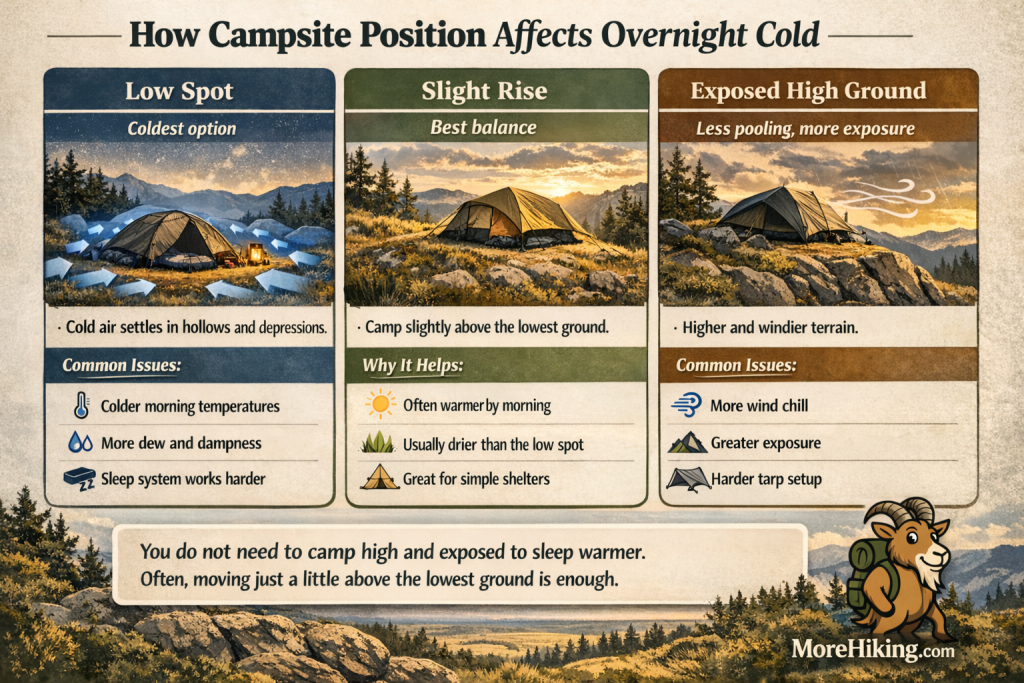
Cold air settles into the lowest ground on calm nights. That is why hollows, meadow bottoms, and shallow depressions often feel colder and damper by morning than they did at sunset.
For hikers using a tarp, bivy, or cowboy camping setup, that matters more than many beginners realize. A cold low spot can make an otherwise reasonable sleep system feel underpowered.
The good news is that you usually do not need to climb to a high, exposed position to fix the problem. As the infographic shows, moving just a little above the lowest ground is often enough to avoid pooled cold air without putting yourself in a windier, more exposed campsite.
Sometimes that better spot is only a few steps away. But that small decision can make the night feel noticeably warmer, drier, and easier to manage.
This is where terrain starts to matter: even moving a little above the lowest ground can help you sleep warmer and drier.
Overhead Hazards
When hikers are tired, they often focus on the ground first. They look for flatness, softness, and shelter from the wind. But you also need to look up.
Dead branches, damaged trees, leaning snags, and loose rock are all reasons to move on. A hidden site under a dangerous tree is not a good site. A soft patch beneath broken branches is not worth the risk.
This matters even more in forested stealth camps, where privacy can make a site feel appealing right away. But concealment is never more important than safety. Minimalist camping asks you to be more aware, not less.
A quick overhead scan should be part of your routine every time you choose camp.
Surface Comfort
A campsite can be safe and reasonably protected, and still give you a poor night if the surface is wrong. Roots, rocks, uneven pressure points, and hard-packed slopes can wear you down faster than you expect, especially if you are using a thinner pad or a stripped-down setup.
This is where honesty matters. Some hikers can sleep well almost anywhere. Others need a more forgiving surface to recover properly. Neither one is wrong. What matters is knowing your own limits and planning around them.
Minimalist hiking is not about pretending discomfort does not matter. Sleep affects mood, judgment, and energy the next day. A slightly firmer site with good protection may still be the best choice, but it helps to understand what kind of ground you can realistically handle.
Privacy and Stealth
For stealth campers, campsite choice has a social side as well as an environmental one. You are not only thinking about weather and comfort. You are also thinking about visibility, noise, and whether the site will stay unnoticed.
A common mistake is camping just barely off a trail or road because the first screen of trees feels hidden enough. In practice, these sites are often easy to spot. They also tend to feel more stressful through the night because you remain close to obvious human movement.
Better stealth sites usually break line of sight more naturally. They feel tucked away without forcing you into dangerous ground or fragile terrain. A good stealth site should help you stay unnoticed, but it should also let you camp responsibly and leave quietly.
That last point matters. Minimalism should never become an excuse for careless impact.
How Different Campsites Affect Wind, Cold, and Moisture
Not all campsites fail in the same way. That is worth understanding because it helps you think more clearly when choosing between a few decent options.
An exposed ridgeline might be dry and scenic, but also colder and windier. A sheltered forest bench may feel calmer and more protected, but if the air is too still and the ground is damp, you may wake up with condensation and a chill in your gear. A low meadow can look soft and inviting, but it often becomes one of the coldest and wettest places by morning.
This is why campsite selection is less about finding one perfect type of site and more about matching the site to the conditions. On a dry, calm summer night, an open cowboy camp may work beautifully. In uncertain weather, the better choice might be a more protected location with enough airflow to avoid trapped moisture.
The point is not to memorize one “best” campsite. The point is to learn what each kind of site is likely to do once the night takes over.
Choosing a Campsite on the Trail
Most campsite decisions do not happen when you are fresh and patient. They happen at the end of the day, when your feet hurt, the light is fading, and you want to be done. That is exactly why a simple thought process helps.
Start by reading the area, not just the patch of ground right in front of you. Notice the wind. Notice whether the terrain drops into a hollow. Notice whether the place feels damp or dry. Notice where water might travel if weather changes. This wider view helps you avoid obvious mistakes before you get attached to one spot.
Then move in closer. Check overhead hazards. Look at the surface. Think about how you will actually sleep there, not just how it looks while standing up. Ask whether the site will still seem like a good idea at two in the morning.
That question is useful because many campsite mistakes only become clear later. A site that looks fine at sunset may become cold, windy, damp, or awkward once darkness settles in. Good campsite judgment often means trying to predict the night, not just react to the evening.
It also helps to choose camp a little earlier when conditions are uncertain. If weather is moving in or terrain is limited, daylight gives you options. When you wait too long, convenience starts to win over good decision-making.
Another useful lesson is knowing when not to push a minimalist idea too far. If you are exhausted, cold, or dealing with unstable weather, that may not be the night to force a very exposed cowboy camp just because it sounds simple on paper. Minimalism works best when it is thoughtful. It should feel deliberate, not stubborn.
Don’t just hike—be prepared. Shop Camping Survival.
Common Mistakes Hikers Make
One common mistake is choosing for the view instead of the conditions. Scenic sites are tempting, especially after a long day, but they are not always the best places to sleep. A great view does not block wind, improve drainage, or keep you warmer.
Another mistake is focusing too much on flatness. Flat ground matters, but many hikers stop their search as soon as they find it. Later, they discover the site is damp, exposed, or poorly drained. A slightly imperfect site with better protection is often the better choice.
A third mistake is arriving mentally tired and treating “good enough” as good. That happens to every hiker sometimes, but it helps to be aware of it. When you are tired, you are more likely to ignore warning signs because you want the search to end. That is often when poor campsite decisions slip through.
Finally, many newer minimalist hikers trust their gear too much and their site judgment too little. Good gear matters, but it cannot erase a bad location. A better campsite often improves your night more than one more expensive piece of equipment.
Campsite Advice for Cowboy Camping, Tarps, and Stealth Camping
If you are cowboy camping, your site needs to do more of the work. Wind, dew, and cold air matter more because you are more exposed. That usually means paying extra attention to airflow, ground moisture, and low spots.
If you are using a tarp, site choice still matters, but in a slightly different way. You may be able to manage some weather with a smart pitch, but the site still affects how much stress the tarp takes through the night. A more protected spot often gives you better pitching options and a calmer sleep.
If you are stealth camping, privacy joins the list. You still need decent drainage, safety, and comfort, but you also need to think about visibility and movement. It helps to choose a site that feels naturally hidden rather than one you are trying to force into secrecy.
If you are on a long-distance trek, small campsite mistakes become more expensive because they repeat. One poor night may be manageable. Several poor nights in a row can affect energy, recovery, and judgment. For long-distance hikers, campsite skill is not just about comfort. It is part of staying functional day after day.
Quick Campsite Selection Guide
When you are tired and want a simple reminder, the easiest approach is to think in layers. First, avoid obvious problems. Then look for small advantages.
Before you set up, make sure the site is not sitting in a drainage path, a cold low pocket, or a dangerous area with overhead hazards. After that, look for the things that help a minimalist setup work better, such as moderate wind protection, drier ground, better privacy, and a surface you can actually sleep on.
A quick mental check can help:
- avoid exposed wind funnels
- stay out of low, damp ground
- check overhead hazards
- think about how the site will feel at 2 a.m.
- choose protection over scenery when conditions are uncertain
That short list will not replace judgment, but it gives you a useful trail filter when your energy is low.
Frequently Asked Questions: Campsite Selection
How do I know if a campsite is too exposed?
If you can feel wind moving freely through the area before you even set up, that is a warning sign. Open ridges, clearings, and bare benches often become more uncomfortable after dark. In minimalist camping, a site does not need to be fully enclosed, but it should not leave you completely exposed without any natural protection like trees, large rocks, or brush.
Is flat ground the most important part of campsite selection?
No. Flat ground helps, but it is only one part of the decision. A flat site that is damp, exposed, or in a drainage path can still make for a poor night. In many cases, hikers are better off with a slightly less perfect surface if the site offers better protection and drier conditions. Elevation and drainage usually trump a perfectly level pitch.
Why do low spots feel colder at night?
Cold air is denser than warm air and tends to settle into lower ground, especially on calm nights. This phenomenon, known as “cold air pooling,” can make hollows, depressions, and meadow bottoms feel significantly colder than slightly higher terrain nearby. Experienced hikers often camp on “benches” or slightly up-slope to stay in a warmer air layer.
Does campsite selection really matter if I already have good gear?
Yes. High-quality gear gives you a wider margin of safety, but it does not make site choice unimportant. A poor site can still create problems with wind-driven rain, heavy condensation, and poor sleep quality. Better judgment often improves your comfort just as much as an expensive upgrade to your equipment.
Is cowboy camping only for warm and easy nights?
No, but success depends heavily on conditions and judgment. Cowboy camping works best when the site supports it—meaning you’ve accounted for wind, dew point, and ground moisture. It is not a matter of “toughing it out”; it is about recognizing when the atmospheric conditions are stable enough to forego a physical overhead barrier.
What is the biggest beginner mistake in campsite selection?
Many beginners choose a site based on aesthetic appeal—like a flat spot with a great sunset view—rather than how it will behave at 3:00 AM. They prioritize soft ground but ignore wind direction or potential water runoff. Experienced hikers look for “micro-protections” and think ahead to how the temperature and moisture will shift after dark.
Final Thoughts
Minimalist hiking is often described as a gear choice, but it is really a judgment skill. Carrying less works best when you get better at reading the land. That is why campsite selection matters so much. It helps your shelter work better, your sleep system work better, and your whole night feel more manageable.
The good news is that this skill grows quickly once you start paying attention. You begin to notice where wind moves, where cold settles, where water would travel, and which sites only look good at first glance. Over time, you stop chasing the most obvious spot and start choosing the one that will actually treat you better through the night.
That is what it means to choose a campsite that does the work for you. It is not about finding luxury in the backcountry. It is about making smart, quiet decisions that let a simple setup work the way it should.
If you have enjoyed this article, please also read our other post.
When is a Tarp Enough? How to Decide Based on Conditions, Not Fear
Leave a Reply