
Because this article supports our broader guide to the 3-layer hiking system, I am not going to repeat the whole layering system here. This piece stays focused on one question: which affordable shell jackets makes the most sense for your hiking kit?
A lot of beginners head out in a casual raincoat, a heavy slicker, or an insulated jacket they already own. That may be fine for a short walk. On a real hike, though, those layers often feel hot, damp, and uncomfortable once the trail starts climbing.
That is where a proper shell helps. A good one blocks rain and wind without feeling too bulky, and it gives you a layer you can pull on quickly when the weather changes.
Many new hikers assume the most expensive jacket must be the best one. That is not always true. In this price range, some shells are lighter and easier to pack, while others feel sturdier but trap more heat. The goal is not to buy the fanciest jacket. It is to buy the one that fits the way you hike.
Because this article supports our broader 3-layer hiking system guide, I am not going to repeat the whole layering system here. This piece stays focused on one question: which affordable shell makes the most sense for your hiking kit?
Before we get into the jackets, one point matters more than most beginners expect. In an affordable rain shell, the details often matter more than the marketing. Look for sealed seams, a hood that adjusts well, and some way to release heat. That last point is important. A shell can keep rain out and still feel miserable if it traps too much warmth and sweat inside.
This article contains affiliate links. If you purchase through these links, MoreHiking may earn a commission at no additional cost to you. We only recommend gear we trust and have carefully researched.
Marmot PreCip Eco — Best for a Light, Packable Trail Shell
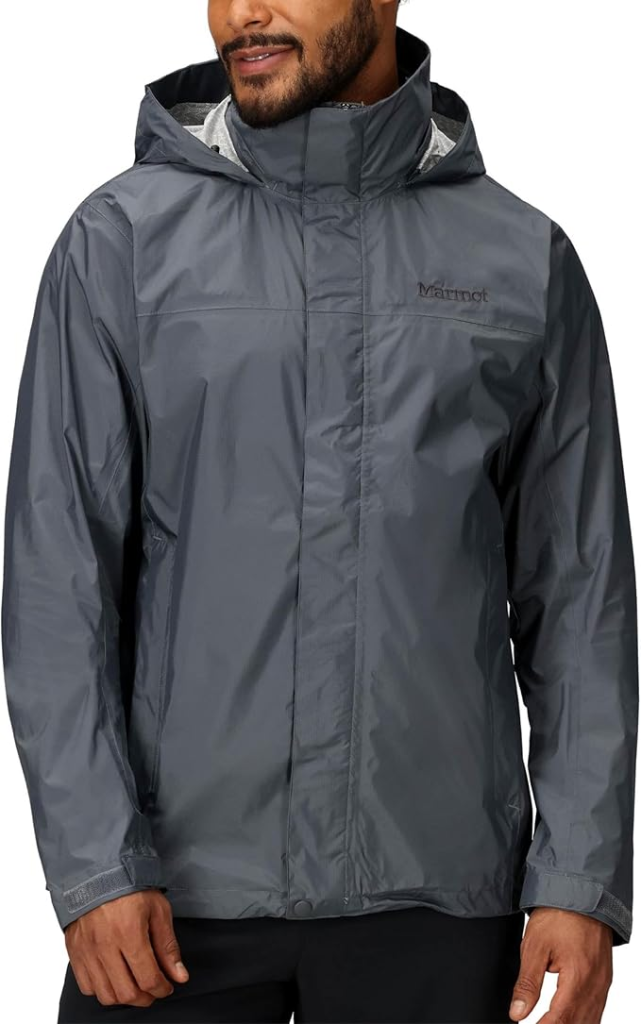
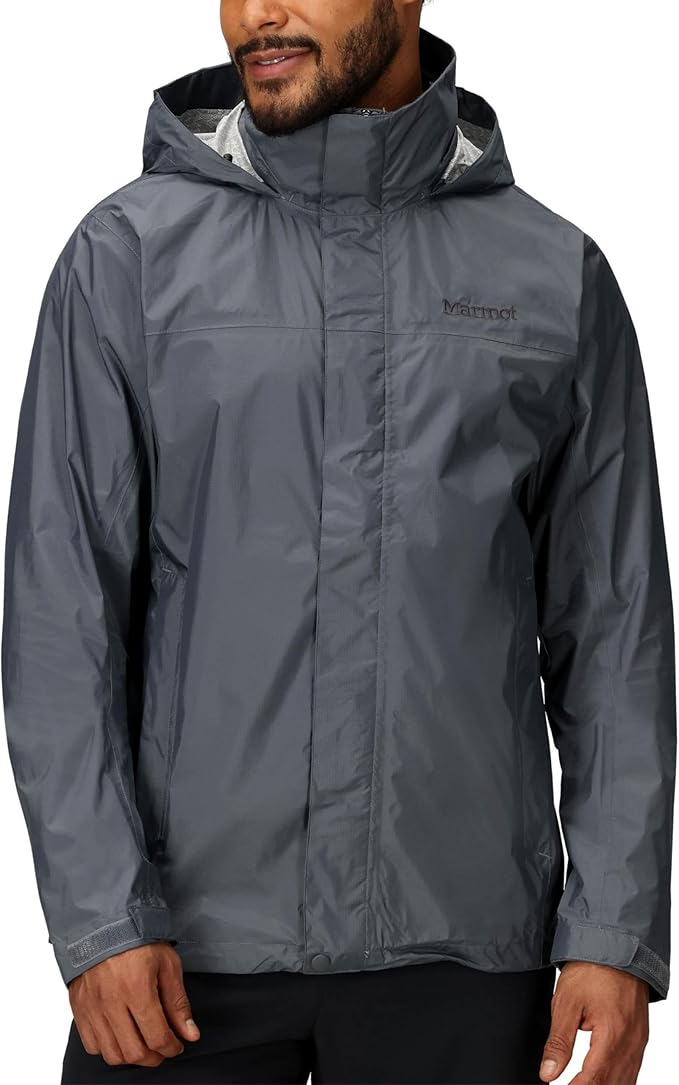
The Marmot PreCip Eco is a strong choice for hikers who want a real rain shell without adding much weight or bulk to the pack. This is the kind of jacket that makes sense for day hikes, weekend outings, and trips where rain is possible but not certain.
Its biggest strength is how easy it is to carry. It packs down small, so it is easy to bring along even when the forecast looks decent. It also has pit zips, which help release heat when the trail gets steep. That matters more than many beginners realize. Staying dry is not only about blocking rain. It is also about avoiding that hot, sweaty feeling inside the jacket.
The tradeoff is that this is still a lighter shell. It makes the most sense for regular trail use rather than repeated long days of hard wear in rough weather. That does not make it fragile. It just means it is better as a versatile hiking shell than as a jacket built for years of heavy abuse.
This is the right choice for the hiker who wants one affordable shell that is easy to carry, easy to use, and clearly built for the trail.
Pros
- Light and easy to pack
- Pit zips help release heat
- Great value for a true hiking shell
Cons
- Better for regular trail use than repeated rough abuse
- Not the most substantial-feeling option in prolonged bad weather
Check Current Price and Availability at Amazon.
Helly Hansen Seven J Jacket — Best for Simple Comfort and Everyday Use
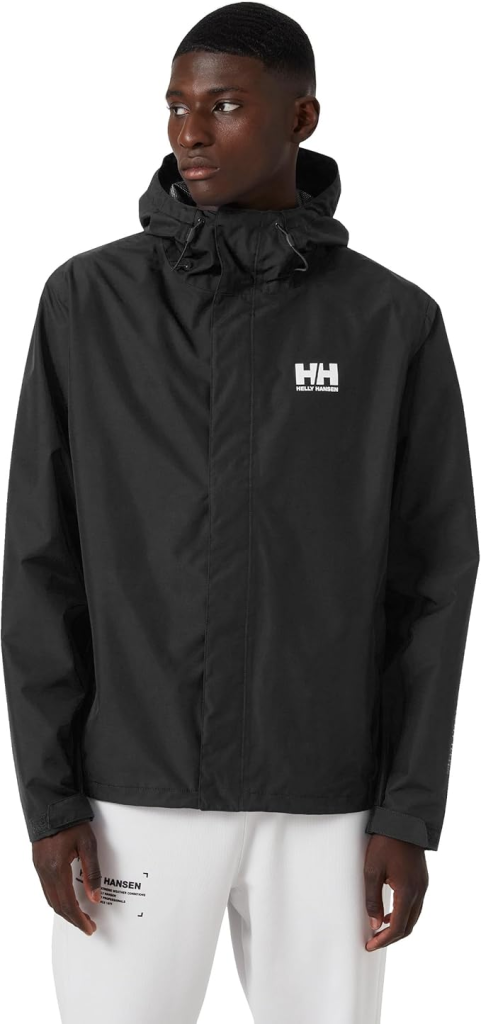
The Helly Hansen Seven J works well for hikers who want straightforward rain protection and a jacket that can move easily between daily life and the trail. It feels more like an all-around rain jacket than a shell built only for hiking.
That is part of its appeal. It is simple, comfortable, and easy to wear. For a beginner who wants one jacket for wet walks, easy trails, and general outdoor use, that can be a very practical choice. It does not feel overly technical or fussy.
The limitation is heat control. Unlike some more trail-focused jackets, the Seven J does not give you pit zips. That means once you start working harder uphill, it can be tougher to stay comfortable. For casual hikes or cooler conditions, that may not matter much. In warm or humid weather, it matters a lot more.
This jacket makes the most sense for the hiker who wants dependable rain coverage and everyday versatility. It makes less sense for someone who hikes hard, climbs often, or tends to run hot.
Pros
- Comfortable and easy to wear
- Good for town and trail use
- Dependable rain protection for the price
Cons
- No pit zips
- Less ideal for steep or sweaty hikes
Check Current Price and Availability at Amazon.
Columbia Watertight II Jacket — Best for Budget-Conscious Beginners
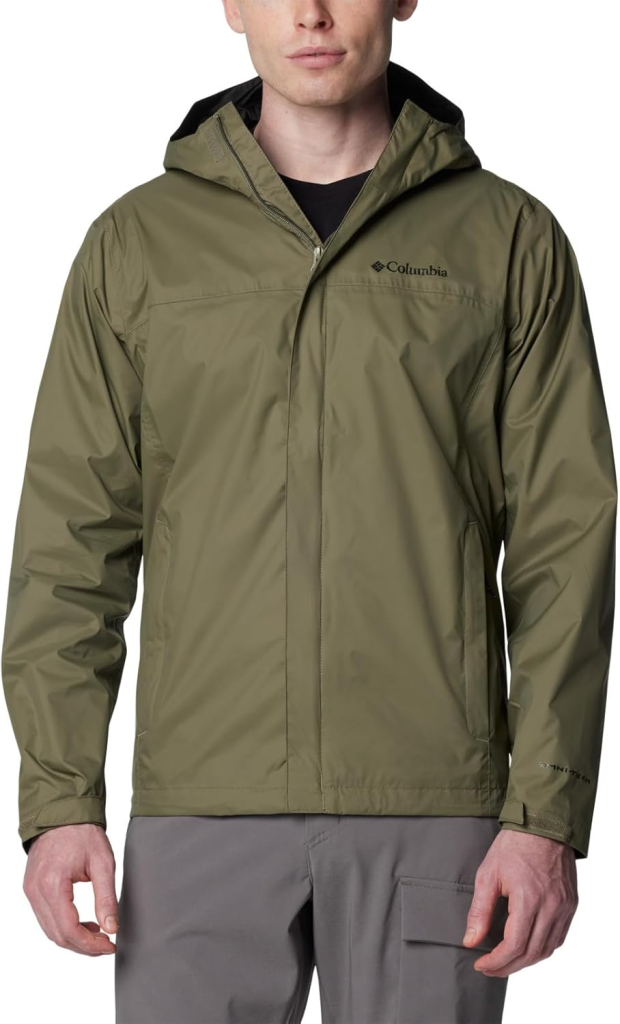
The Columbia Watertight II is one of the easiest rain jackets to recommend to a beginner. It is affordable, simple, and widely available. For many hikers, it is the first real shell they buy after learning that a casual rain jacket is not enough.
What makes it appealing is that it covers the basics well. It gives you waterproof protection, sealed seams, and packable convenience without pushing the price too high. If your goal is to stop getting soaked on short to moderate hikes, this jacket can do that job well.
The compromise is breathability. Like many lower-cost shells, it focuses more on keeping weather out than on keeping you cool during harder effort. If you hike in warm, humid conditions or sweat heavily on climbs, you may notice that sooner with this jacket than with a better-vented option.
Still, that does not take away from its value. For newer hikers building a kit on a budget, this is one of the clearest and safest starting points in the category.
Pros
- Strong value for the price
- Fully seam-sealed and packable
- Easy pick for newer hikers
Cons
- Can feel warm on harder climbs
- Better for simple trail use than all-day high effort
Check Current Price and Availability at Amazon.
The North Face Antora Jacket — Best for Fit and Everyday Trail Coverage
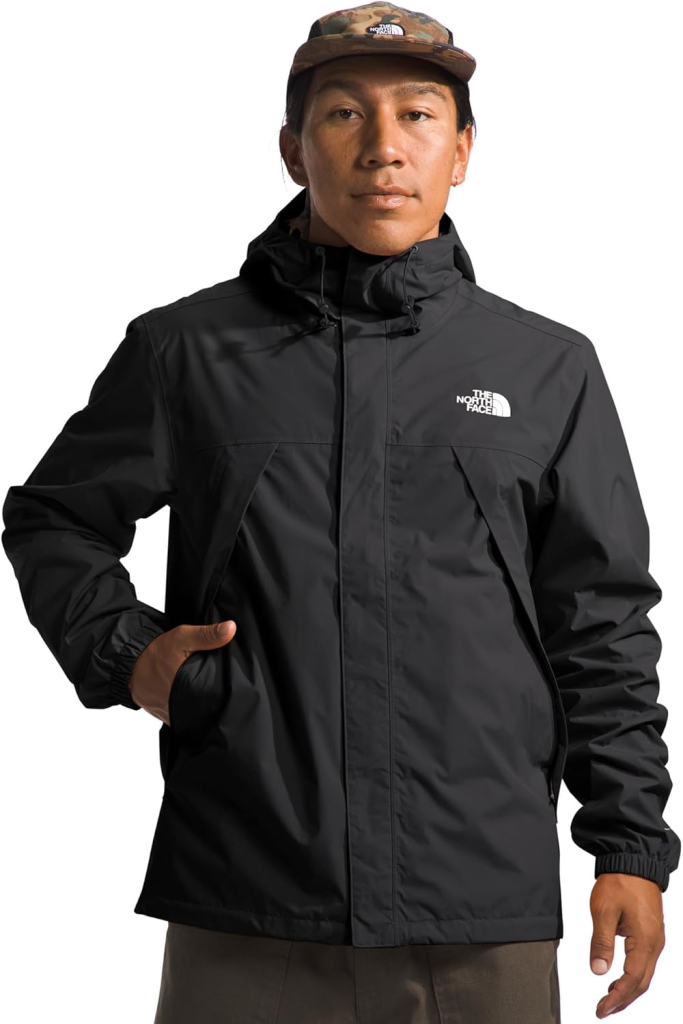
The North Face Antora is a good choice for hikers who want a shell that feels polished, practical, and easy to wear both on and off the trail. It stands out less because of one big feature and more because it feels balanced overall.
The fit range is one reason it deserves attention. It is available in a wider range of sizes than many jackets, which makes it easier for more hikers to find a shell that layers comfortably and does not feel awkward in motion. It also gives a bit more coverage than some shorter-cut jackets, which many hikers will appreciate in wet weather.
Like the Helly Hansen, though, it does not have pit zips. So while it works well for regular trail use, travel, and mixed daily wear, it is not the strongest option here for hot hikers who want the easiest heat release on climbs.
This is the jacket for someone who wants a dependable shell with a clean fit, solid weather protection, and an easy town-to-trail feel.
Pros
- Good fit range, including extended sizing
- Reliable rain and wind protection
- Easy to wear on the trail or around town
Cons
- No pit zips
- Less appealing for hikers who overheat easily
Check Current Price and Availability at Amazon.
Carhartt Monterey Jacket — Best for Practical Crossover Use
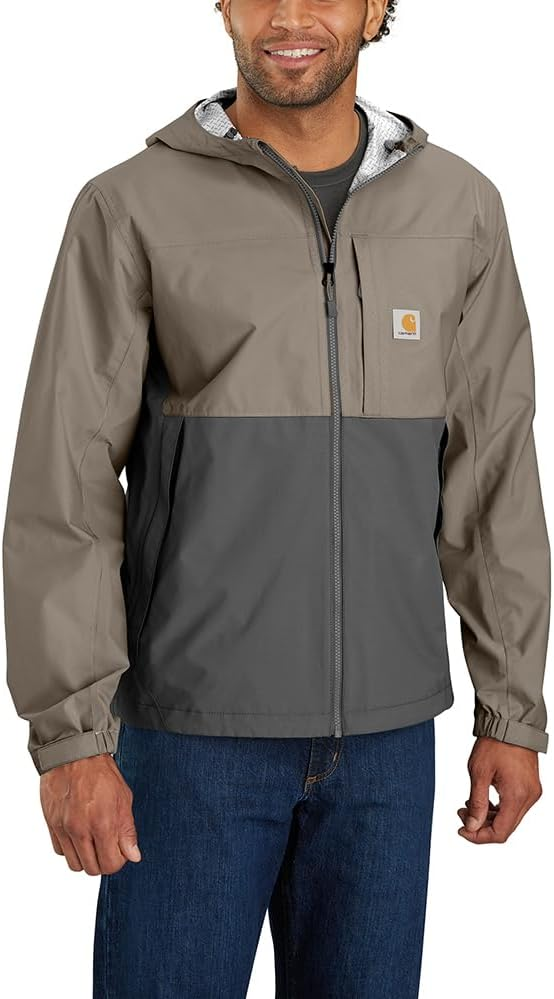
The Carhartt Monterey needed a clearer role than it had in the earlier draft. It is not a heavy, bulky work coat. It is better understood as a lightweight waterproof jacket with a practical, everyday feel.
That matters because it changes who this jacket is really for. The Monterey makes more sense for someone who wants a simple shell that can handle rain on local walks, errands, travel, and easier hikes. It has a more crossover identity than some of the trail-first options on this list.
That does not mean it cannot work for hiking. It can. But it feels less trail-specific than the Marmot, and it is not the first pick here for someone who expects long climbs, high effort, or frequent wet-weather hiking. It fits better as a practical rain shell that can come along on the trail rather than a jacket built mainly around hiking performance.
For the right person, that is perfectly fine. Not every reader needs the most trail-focused option. Some just need a dependable shell that works in a lot of everyday situations.
Pros
- Lightweight and packable
- Practical design for daily use
- Good crossover option for light hiking and general rain protection
Cons
- Less trail-focused than other jackets here
- Not the best choice for hotter, harder hiking
Check Current Price and Availability at Amazon.
Understanding the Tradeoffs
The easiest mistake in this category is to think only about rain. Rain matters, of course, but comfort on the trail is usually a balance between keeping water out and keeping heat from building up inside the jacket.
That is why two jackets can both be called waterproof but still feel very different on a hike. A shell with better venting may be much easier to wear uphill, even if both jackets look similar on paper.
Your hiking style matters too. If your shell mostly stays in the pack until a shower moves in, a light jacket like the Marmot PreCip Eco makes a lot of sense. If cost matters most, the Columbia Watertight II is a strong starting point. If you want one jacket that works for local trails and everyday life, the Antora, Seven J, and Monterey all have something to offer.
Weather matters as well. In cool conditions, a simpler shell may feel perfectly fine. In warm and humid weather, poor ventilation becomes much harder to ignore. That is often when hikers realize that not all rain jackets feel the same once they start moving.
The best affordable hiking rain shell is not always the one with the biggest name or the longest feature list. It is the one that fits the way you actually hike.
Choosing the Right Shell for Your Hiking Kit
You do not need a perfect shell. You need one that matches the way you hike.
If you want something light and trail-focused, the Marmot PreCip Eco is the strongest fit here. If budget matters most, the Columbia Watertight II is an easy place to start. If everyday fit and general use matter more, the Antora, Seven J, and Monterey each have their place.
The important thing is to stop treating rain protection as an afterthought. A good shell is one of the simplest ways to make your hiking kit more reliable when the weather turns.
You do not need a perfect shell. You need one that matches the way you hike.
Frequently Asked Questions: Hiking Shell Jackets
Should I size up a hiking shell jacket to fit over layers?
A little extra room usually helps, but too much can make the jacket feel loose and awkward in wind and rain. A shell should fit comfortably over your usual hiking layers without pulling across the shoulders or limiting movement. If it only fits well over a T-shirt, it may be too trim for regular trail use. If it feels overly baggy with your normal setup, it may be harder to manage once the weather turns.
Is a packable rain shell durable enough for regular hiking?
For many hikers, yes. A packable shell is often a very good fit for day hikes, local trails, and general three-season use. The main thing to understand is that lighter jackets are built for easier carry, not for years of rough abuse. If most of your hiking is moderate and you want something you will actually bring along, a packable shell can be a smart and practical choice.
What matters more in a budget shell: better venting or thicker fabric?
For many hikers, better venting matters more. A shell can keep rain out and still feel miserable if it traps too much heat and sweat inside. That is why pit zips or a cut that releases heat well can make a bigger real-world difference than a jacket simply feeling thicker or tougher. This becomes even more important in warm, humid weather or on steep climbs. Outdoor review sources frequently call out pit zips and ventilation as key comfort features on lightweight hiking shells.
Can one shell jacket work for both hiking and everyday use?
Yes, but there is usually a tradeoff. Some jackets feel more trail-focused, while others work better as crossover pieces for errands, travel, local walks, and easier hikes. If you want one shell to do both, look for dependable weather protection, a hood that adjusts well, and a fit that feels comfortable on the trail without seeming too technical for everyday wear.
When does an affordable shell stop being good enough for hiking?
Usually when your conditions or expectations change. If you start hiking longer in steady rain, carrying a pack more often, or spending more time in rough weather, you may begin to notice the limits of an entry-level shell. That does not mean affordable shells are a poor choice. It just means that “good enough” depends on where you hike, how often you go out, and how hard you push your gear.
If you have enjoyed this post, perhaps you would like one of our other Posts.
How to Choose the Best Mid-Layer for Hiking: 6 Beginner-Friendly Picks

Leave a Reply