
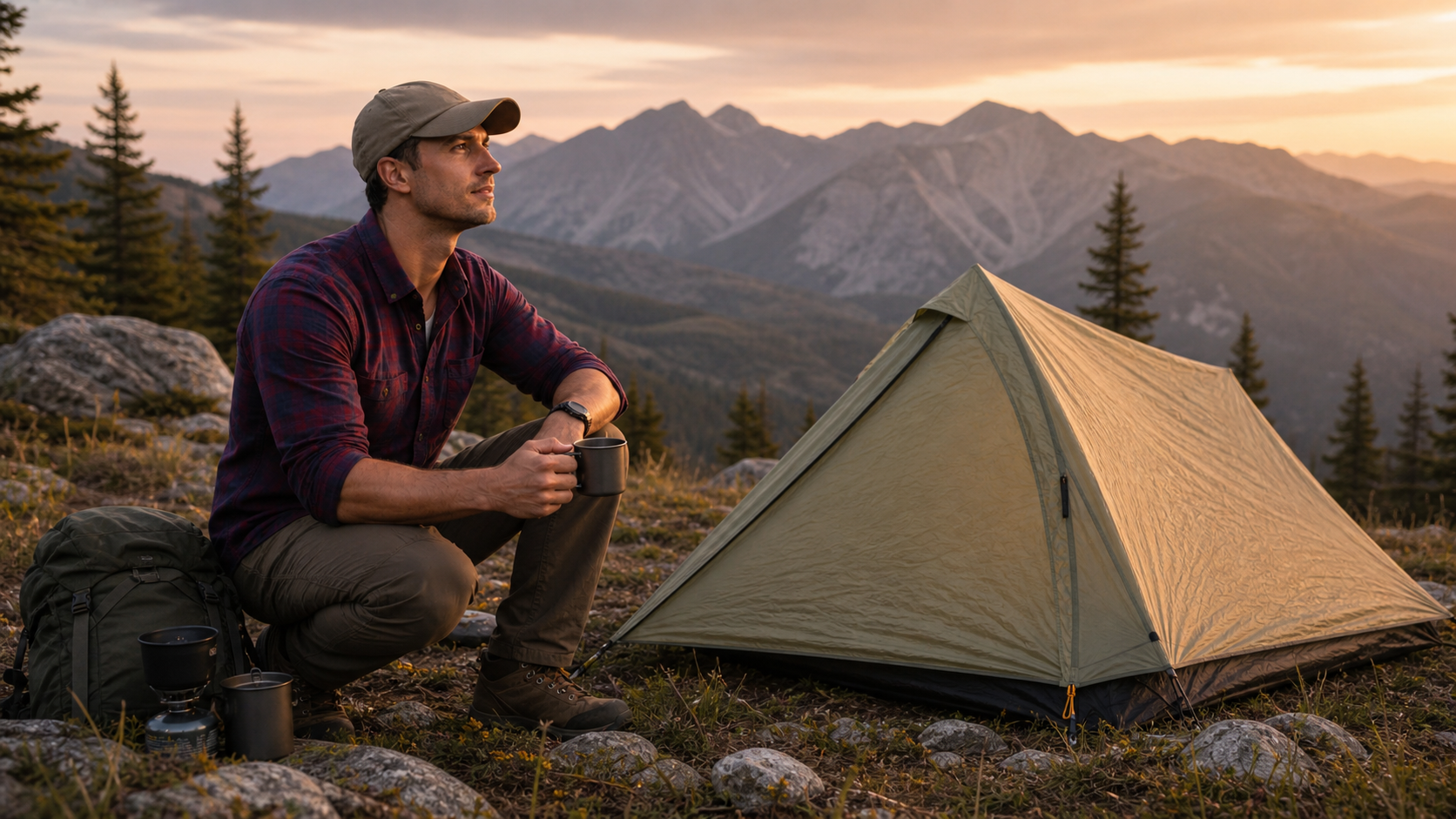
Minimalist backpacking is not about refusing to carry a tent. It is about knowing when a tent is worth carrying.
That distinction matters. Many hikers start looking at tarps, bivies, ponchos, and other lighter shelter systems because they want to reduce pack weight and move more comfortably. That is a good instinct. A lighter pack can make hiking easier, especially over long days, steep climbs, or rough terrain.
But lighter is not always better by itself.
A shelter has to do more than look good on a gear list. It has to help you stay dry, manage wind, avoid bugs, sleep well, and wake up ready to hike again. On some trips, a tarp is enough. On others, a tent is the smarter minimalist choice.
If you are trying to decide when you can safely leave the tent at home, start with our guide on when a tarp is enough. This article looks at the other side of that decision: when a tent still earns its place in a minimalist backpack.
This article contains affiliate links. If you purchase through these links, MoreHiking may earn a commission at no additional cost to you. We only recommend gear we trust and have carefully researched.
Minimalist Backpacking Is About Judgment, Not Just Weight
It is easy to think minimalist backpacking means carrying the lightest shelter possible. That can lead some hikers to see a tent as something they should “graduate” away from.
That is not the best way to think about it.
A minimalist backpacker is not trying to win a contest. A minimalist backpacker is trying to carry the simplest gear that still fits the trip. Sometimes that means a flat tarp. Sometimes it means a bivy. Sometimes it means a hammock. And sometimes it means a tent.
The question is not, “What is the lightest shelter I can carry?”
The better question is, “What shelter gives me enough protection for the conditions I am likely to face?”
That small shift changes everything. A tent is not a failure of minimalist thinking. It is a tool. When it solves the right problems, it belongs in the pack.
This is also why minimalist backpacking should be built around skill, not pressure. The goal is not to carry less just to prove a point. The goal is to carry with purpose. If a tent gives you better protection, better sleep, and better confidence for the trip ahead, then it may be the right minimalist shelter.
A Tent Earns Its Weight When It Solves Several Problems at Once
A tent often makes the most sense when your shelter has to handle more than one challenge at the same time.
If you only need overhead rain protection, a tarp may work well. If you only need bug protection, a bug bivy or inner net may be enough. If you only need ground protection, a good campsite and groundsheet may solve the problem.
But trips are rarely that simple.
You may be dealing with rain, wind, damp ground, mosquitoes, crowded campsites, privacy, and poor sleep all at once. That is where a tent starts to earn its weight.
A tent combines several forms of protection in one system. The floor helps separate you from wet ground. The mesh keeps insects off you. The fly gives rain coverage. The structure creates a more predictable sleeping space. The vestibule may give you somewhere to store wet shoes, a pack, or damp gear.
A tarp can still be excellent in the right conditions. But once you start adding a bug net, groundsheet, extra guylines, more stakes, and a more protected pitch, the weight and complexity may not be as far from a lightweight tent as you first thought.
Minimalism is not only about removing gear. It is also about choosing gear that does several jobs well.
| Trip Challenge | Lighter Shelter May Work If… | A Tent Makes More Sense If… |
|---|---|---|
| Rain | The forecast is light and steady | Rain may be heavy, wind-driven, or long-lasting |
| Bugs | Insects are mild or seasonal pressure is low | Mosquitoes, blackflies, ticks, or midges are active |
| Wind | You have a protected site and strong pitch skills | Wind may shift or campsites are exposed |
| Ground moisture | You can choose a well-drained site | Sites are damp, compacted, or limited |
| Sleep quality | You rest well in open shelters | You sleep better in an enclosed space |
| Privacy | Campsites are remote | Campsites are busy or close together |
What every hiker/backpacker should carry, but 90% forget.
Choose a Tent When the Weather Has Too Many Unknowns
A tarp works best when you can read the conditions well. You need to think about wind direction, slope, drainage, trees, splashback, and how the weather may change overnight.
That is part of the skill and appeal of tarp camping. But it also means the hiker carries more responsibility.
A tent gives you more margin when the weather is uncertain. It does not remove the need for good campsite selection, but it usually gives you a more forgiving shelter system.
This matters when the forecast includes shifting wind, steady rain, exposed campsites, colder nights, or unsettled shoulder-season weather. It also matters when the forecast is unclear and you are not fully confident in how the night will unfold.
At the end of a long hiking day, your judgment may not be as sharp as it was in the morning. You may be tired, hungry, cold, or setting up near dark. A tent can reduce the number of shelter decisions you need to get exactly right.
That is not laziness. That is practical risk management.
A minimalist hiker should not carry a tent out of fear. But carrying one for uncertain weather can be a wise choice. Before choosing your shelter, it also helps to understand how experienced backpackers read weather forecasts for shelter decisions.
Choose a Tent When Bugs Will Control the Evening
Bug pressure can change the whole feel of a trip.
In some places, insects are a minor annoyance. In others, mosquitoes, blackflies, midges, ticks, or biting flies can turn camp into a miserable place to sit, cook, change clothes, or sleep.
A tarp alone may not be enough in those conditions. Even if it keeps the rain off, it does not give you a protected space away from insects. You may end up crawling into your sleep system early just to escape them.
That is not always the simple option.
A tent gives you a clean place to rest, sort gear, and sleep without being exposed to every insect in camp. The mesh inner can make a big difference in wet forests, lake country, river valleys, low campsites, and peak bug season.
Yes, you can pair a tarp with a bug bivy or net tent. Many hikers do. But at that point, it is worth asking whether a lightweight tent would be simpler for the trip.
The minimalist choice is not always the one with fewer walls. Sometimes the minimalist choice is the one that lets you rest without fighting your shelter all night.
This is especially true for newer hikers. If someone is still building confidence in the backcountry, a bug-filled night under an open shelter can make the whole experience feel harder than it needs to be. A tent can make camp feel calmer, more manageable, and more welcoming.
Choose a Tent When Sleep Quality Matters Most
A shelter is part of your recovery system.
That sounds simple, but it is often overlooked. If you do not sleep well, the next day is harder. Your pack feels heavier. Your feet feel worse. Your mood drops. Your decisions may become rushed.
One poor night may be manageable. Several poor nights can change the whole trip.
A tent can help some hikers sleep better because it feels more secure and predictable. You are not as exposed to bugs, wind, splashback, or movement around camp. You have a defined space. Your gear has a place. Your sleep system is more protected.
That does not mean everyone sleeps better in a tent. Some experienced hikers sleep very well under a tarp. But if you know you rest better in an enclosed shelter, that matters.
Minimalist backpacking should help you hike well. It should not turn every night into a test of how much discomfort you can tolerate.
If a tent helps you sleep, recover, and make better decisions the next day, it may be the lighter choice in the bigger picture.
This is where a tent often earns its place on longer trips. On a single overnight, you may be willing to accept a rough night. On a multi-day route, sleep becomes more important. Better rest can help you manage distance, weather, food, foot care, and decision-making with a clearer head.
Choose a Tent When Wind Protection Matters
A well-pitched tarp can handle wind, especially in skilled hands. But wind makes every shelter decision more important. Pitch height, angle, stake placement, guyline tension, and site selection all matter.
If the wind shifts, a tarp that felt protected at sunset may feel exposed later in the night.
A tent usually gives more all-around protection. A good rainfly, solid stake-out points, and a lower profile can create a calmer sleeping space. You still need to choose your campsite carefully and stake the tent well, but the shelter itself provides more structure.
This matters near lakes, on ridges, in open valleys, above treeline, and during shoulder-season trips. Wind also makes cool nights feel colder. Even when the air temperature is not extreme, steady wind can pull heat away from your body and reduce comfort.
Wind is a good example of why shelter choice should follow the trip, not just the gear list. A tarp can work well in skilled hands, but a tent may be the smarter choice when wind direction is hard to predict or the campsite has limited natural protection.
A tent does not make a bad campsite safe. But when wind is a real concern, a tent can give you more room for error than a very open shelter.
If you are still learning how wind affects simple shelters, it may help to review your minimalist shelter system before deciding whether a tent or tarp is the better choice for a specific trip.
That version keeps the point strong, removes the duplicate ending, and leaves the internal link sentence as a helpful follow-up.
Choose a Tent When Campsites Are Limited or Hard to Read
A tarp gives you flexibility, but it also asks you to understand the site.
You need to notice where water may run during rain. You need to think about where cold air may settle. You need to look for wind exposure, dead branches, roots, rocks, slope, drainage, and splashback.
Those are useful skills. But not every campsite gives you perfect options.
In established camping areas, sites may be worn down, compacted, uneven, or crowded. In forested areas, trees and rocks may limit your pitch angles. In popular backcountry areas, you may have to use the available tent pad or marked site, even if it is not ideal for a tarp.
A tent can make these imperfect sites easier to manage.
The floor gives you a defined sleeping area. The fly gives predictable coverage. The shape of the tent tells you what space you need. The inner keeps your sleep system contained and protected.
This does not mean you can ignore campsite selection. You still want to avoid low spots, drainage channels, loose branches, exposed ridges, and places where water will pool. If you are working on better site choice, your guide to how terrain impacts campsite comfort would fit naturally here.
But when the site is less than perfect, a tent often gives you a stronger starting point.
For many hikers, that dependability is worth the extra weight.
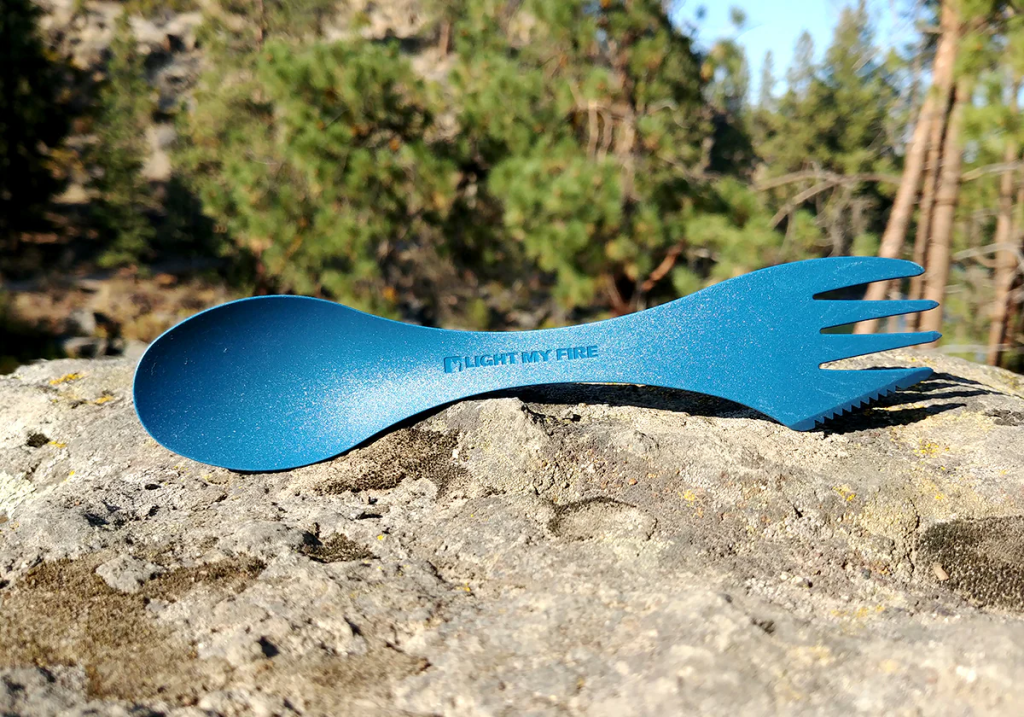
“The 15-Gram Mistake Every Minimalist Camper Makes”
For the minimalist camper—the person who meticulously weighs their gear in grams and thinks a toothbrush handle is “too much extra weight”—there is one product that consistently gets left behind more than any other.
The answer is, surprisingly, the Spoon (or Spork).
While it sounds trivial, in the world of ultralight and minimalist camping, the “Spoon Story” is a rite of passage.
Visit our review of the 5 Best Hiking Sporks.
Choose a Tent When You Are Still Building Shelter Skills
There is no shame in using a tent while you build your shelter judgment.
Tarp camping is not difficult once you understand it, but it is less automatic than setting up many tents. You need to learn knots or hardware. You need to manage guylines. You need to adjust the pitch to the weather. You need to recognize good and bad sites.
Those skills are worth learning. But it is better to learn them in stages.
A tent gives newer minimalist backpackers a safer base while they develop outdoor judgment. You can still practice the important skills: reading weather, choosing better campsites, managing condensation, staking properly, and packing efficiently.
Over time, you may decide to experiment with a tarp on low-risk trips. That is a good way to build confidence. For example, you might start with a short overnight, a calm forecast, a familiar campsite, and a simple tarp pitch. Your article on the flat tarp shelter system would be a good supporting resource here.
But you do not need to force a tarp into every trip just because you want to become a lighter backpacker.
Skill should give you more options, not fewer.
A tent is a good choice when the trip is not the right place to test an unfamiliar shelter system.
Choose a Tent When You Are Hiking With Someone Else
Shelter decisions change when you are not hiking alone.
A solo hiker may be willing to accept a less comfortable night. A group, partner, child, newer hiker, or dog may need something more predictable.
A tent creates a shared space that is easier to understand. Everyone knows where the sleeping area is. Gear can be kept together. Bugs are easier to manage. There is more privacy. A nervous or inexperienced hiker may feel more comfortable inside an enclosed shelter.
This matters because a backpacking trip is not only about your own tolerance. It is also about helping the people with you enjoy the experience.
If you are hiking with a child, a tent often makes camp feel more secure. If you are hiking with a dog, a tent may help contain movement and reduce exposure to insects. If you are hiking with a partner who does not enjoy open shelters, a tent may prevent a lot of stress.
Minimalist hiking should support the whole trip, not just the gear list.
When another person’s comfort and confidence matter, a tent may be the better shelter.
This section could also support future internal linking if you develop more content around hiking with dogs, family backpacking, beginner backpacking, or confidence-building trips.
Choose a Tent When Privacy Is Part of Comfort
Privacy is not always discussed in backpacking shelter choices, but it matters.
In remote places, an open tarp can feel peaceful. In busy areas, shared campsites, frontcountry-adjacent sites, or popular backcountry routes, it can feel exposed.
A tent gives you a private place to change clothes, organize gear, rest, or simply step away from the activity around camp. That may not sound like a major safety issue, but it can make the trip more comfortable.
Comfort is not the enemy of minimalism. Unnecessary comfort items can weigh you down, but useful comfort can help you sleep better and enjoy the outdoors more.
For some hikers, privacy is part of feeling settled at camp. If a tent gives you that, it has real value.
This is one of the reasons tents remain popular even among hikers who are careful about weight. They are not only weather shelters. They also create a small personal space at the end of the day.
Choose a Tent When It Reduces Decision Fatigue
This may be one of the most important reasons a tent belongs in a minimalist pack.
Backpacking already requires many decisions. You are watching the trail, managing water, checking the weather, pacing your energy, choosing layers, reading terrain, and thinking about camp before you arrive.
At the end of the day, you may not want your shelter to become another puzzle.
A tarp is not a bad shelter because it requires judgment. That judgment is part of its strength. But there are trips where you may want less mental load at camp. A tent can help.
You still need to choose a smart site. You still need to stake it well. You still need to ventilate it properly. But the shape, coverage, and sleeping area are already defined.
That can be valuable when you are tired, cold, hiking late, helping someone else, or setting up in poor weather.
A slightly heavier shelter that is easier to trust may be the more minimalist choice because it protects your attention as well as your body.
This idea fits closely with the larger MoreHiking approach to practical backpacking: the goal is not to make every decision harder. The goal is to make better decisions before the trip so you can enjoy the trail with more confidence.
A Simple Rule for Minimalist Backpackers
Here is a useful way to think about it:
Choose a tent when your shelter has to solve several problems at once.
That is the main idea behind the infographic below. A tent is not automatically the better shelter, and a tarp is not automatically the more advanced choice. The better choice depends on how many pressures the trip puts on your shelter system.
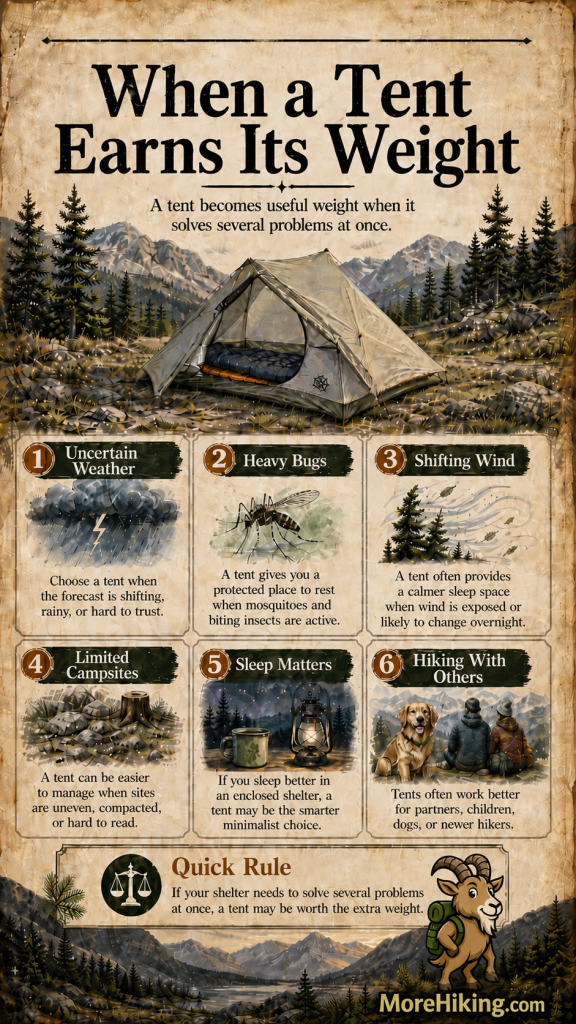
If the trip is dry, calm, warm, low-bug, and full of good campsite options, a lighter shelter may be enough. That is when a tarp or simple shelter system can make sense.
But if the trip includes several of the following concerns, a tent becomes easier to justify:
- unsettled weather
- steady rain
- shifting wind
- heavy insects
- colder nights
- limited campsites
- crowded areas
- newer hikers
- children or dogs
- poor sleep risk
- privacy needs
- longer trip length
You do not need all of these to be true. A few of them together may be enough.
The point is not to make a fear-based decision. The point is to match your shelter to the actual trip.
That is the heart of minimalist backpacking.
What Kind of Tent Fits a Minimalist Approach?
Choosing a tent does not mean choosing a heavy shelter.
A minimalist tent should be simple, dependable, and suited to the conditions you usually hike in. You do not need every feature. You need the right features.
Look for a tent that is easy to pitch, stable enough for your expected weather, and large enough for real sleep. Pay attention to packed weight, floor space, vestibule space, ventilation, and stake-out points.
A very light tent can be useful, but only if it still works for your conditions. If it saves a few ounces but has poor ventilation, weak weather protection, or too little room for your sleep system, it may not be the best choice.
A slightly heavier tent that is easier to use and more dependable may serve you better.
Also consider how often you deal with bugs, wet ground, windy campsites, or established tent pads. If those are normal parts of your trips, a lightweight tent may be one of the most practical pieces of minimalist gear you carry.
The right tent is not the one that looks best in a spreadsheet. It is the one that helps you sleep well and hike well.
Minimalist Tent Features That Actually Matter
| Tent Feature | Why It Matters for Minimalist Backpackers |
|---|---|
| Easy setup | Helps when you arrive tired, cold, or near dark |
| Good ventilation | Reduces condensation and keeps the shelter more comfortable |
| Reliable rainfly | Protects against rain, splashback, and changing weather |
| Solid stake-out points | Improves stability in wind and poor weather |
| Usable floor space | Helps you sleep better without feeling cramped |
| Vestibule space | Gives you a place for wet shoes or damp gear |
| Reasonable packed weight | Keeps the tent practical for longer hikes |
Tent or Tarp: The Better Question
The better question is not, “Are tents better than tarps?”
They are different tools, and each one makes more sense in certain conditions.
A tarp is often best when conditions are forgiving and the hiker has the skill to manage exposure. It can be lighter, more flexible, and more connected to the landscape.
A tent is often best when conditions are less predictable or when the hiker needs more protection in one simple system. It can provide better bug control, privacy, wind protection, and sleep confidence.
That is really the point: this is not a question of which shelter is more advanced. It is a question of matching the shelter to the trip. The infographic below offers a simple side-by-side way to think about that decision.
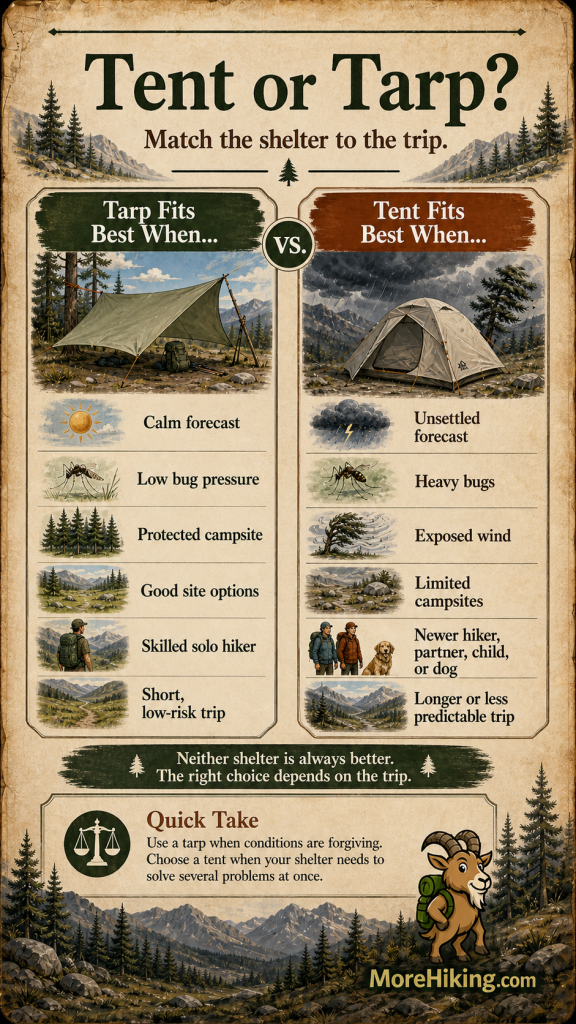
Both choices can fit minimalist backpacking.
The mistake is thinking that one shelter is always more advanced than the other. A skilled hiker may choose a tarp one weekend and a tent the next. That is not inconsistency. That is judgment.
The shelter should change when the trip changes.
For the lighter side of this decision, your guide on when a tarp is enough is the natural companion article.
Final Thoughts: A Tent Can Be the Minimalist Choice
A tent is not a failure of minimalist backpacking. It is not proof that you packed too much. It is not something you need to outgrow.
A tent is the right choice when it gives you the protection, sleep, and confidence the trip calls for.
There will be nights when a tarp is enough. There will be nights when a simple shelter system feels perfect. But there will also be trips where the weather is unsettled, the bugs are heavy, the campsites are limited, or the group needs more comfort.
On those trips, a tent earns its place.
Minimalism is not about carrying the least possible gear. It is about carrying the right gear with purpose.
When a tent helps you stay dry, sleep better, manage insects, reduce stress, and wake up ready to hike, it is not extra weight. It is useful weight.
And useful weight belongs in the pack.
If you have enjoyed this article, please also read our other post.
Leave a Reply