
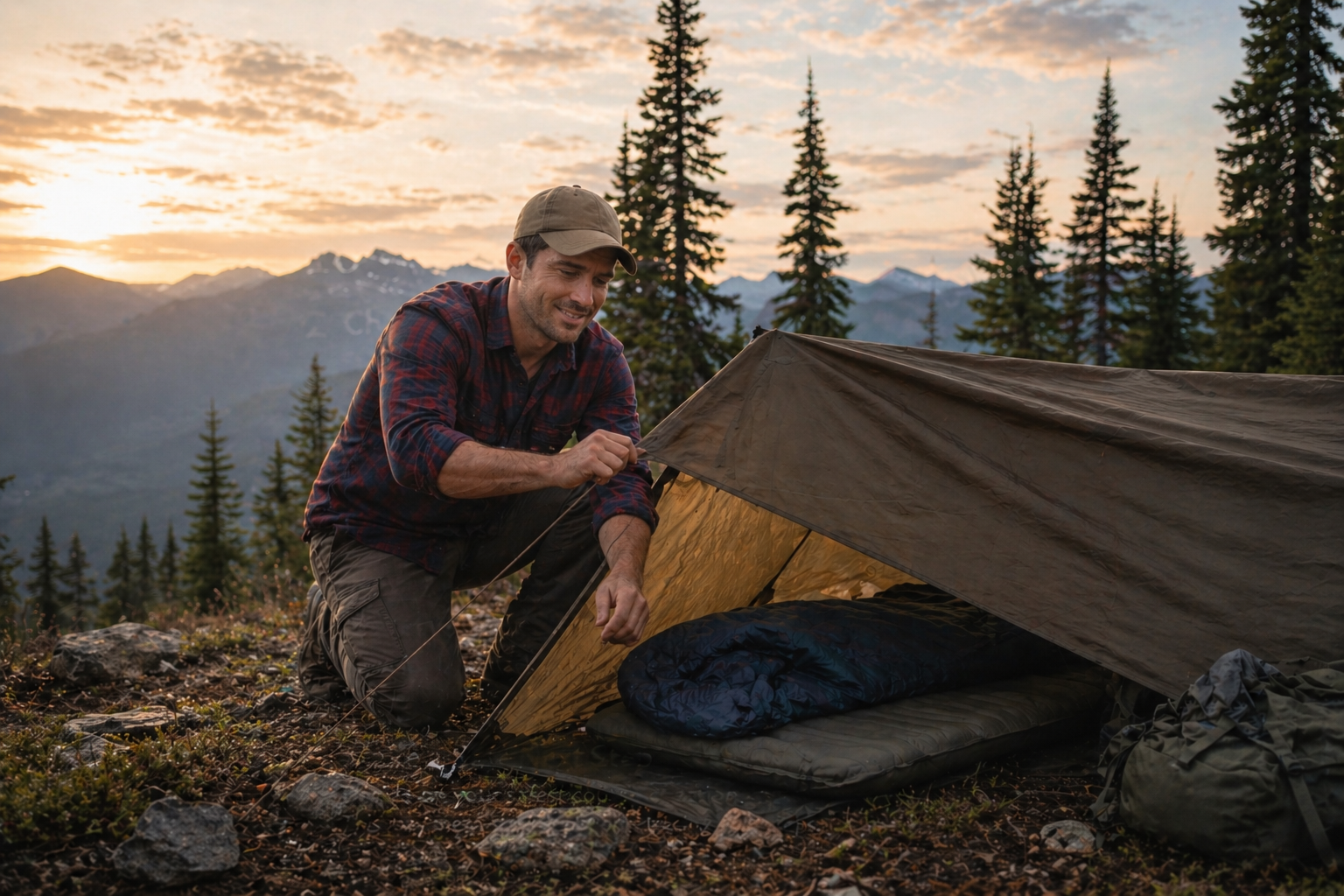
If you have ever felt unsure about your shelter setup on a trip, it usually comes down to one thing: trying to solve every problem with a single piece of gear.
A heavier tent can feel like the safe answer. It promises protection from rain, wind, cold ground, and insects all at once. And sometimes, that is exactly the right call. But many hikers eventually realize that comfort outdoors is not about one perfect shelter. It is about understanding the layers of protection around you.
Before you choose a tarp, tent, or bivy, it helps to understand what you are actually trying to protect yourself from.
That shift is where confidence begins.
This article contains affiliate links. If you purchase through these links, MoreHiking may earn a commission at no additional cost to you. We only recommend gear we trust and have carefully researched.
What Shelter Layering Really Means
Shelter layering is the idea that your comfort outdoors comes from four simple protections working together:
- Roof (rain and overhead exposure)
- Wind (air movement and heat loss)
- Ground (cold, moisture, and pressure)
- Bugs (insects and small nuisances)
Each layer solves a different problem. When all four are covered—whether by one shelter or several—you sleep warmer, drier, and more comfortably.
This is very similar to how a clothing system works. You would not rely on one heavy jacket for every condition. You layer based on what the environment is doing.
Shelter works the same way.
To make this easier to visualize, here is a simple way to think about it:
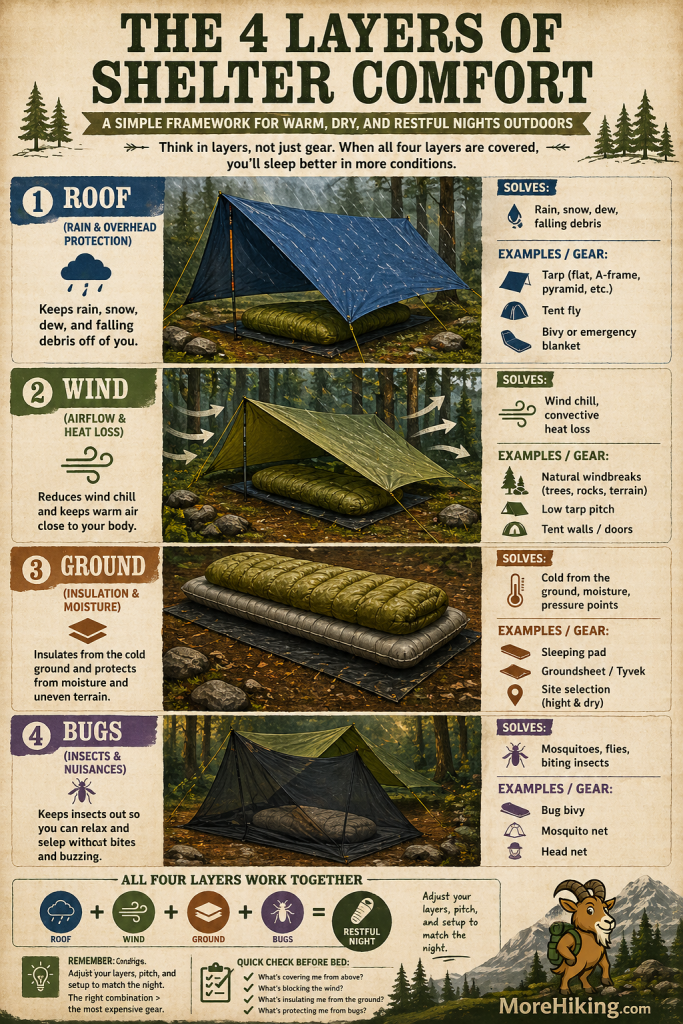
When you look at your setup through this lens, you stop thinking about gear and start thinking about problems being solved. That is what allows experienced hikers to stay comfortable in a wide range of conditions without always carrying more weight.
The Roof Layer: Managing Rain and Exposure
The roof layer is your first line of defense. It protects you from rain, falling debris, and even heavy dew.
For many hikers, this is where the conversation starts and ends. But focusing only on overhead protection can lead to heavier systems than necessary.
A simple tarp, when pitched well, can handle a wide range of conditions. The key is not just the material above you, but how it is positioned in relation to wind and terrain.
A flat tarp in calm weather feels open and comfortable. The same tarp, pitched low and tight into the wind, becomes a capable storm shelter.
The roof layer is not just about coverage. It is about control.
The Wind Layer: The Quiet Comfort Factor
Wind is often underestimated because you cannot always see it working against you.
Even light airflow can slowly pull heat away from your body through the night. This becomes more noticeable when using quilts or minimalist sleep systems.
The wind layer is what prevents that steady heat loss.
Sometimes your shelter blocks wind naturally. Other times, your environment does the work for you. Trees, rocks, and small rises in terrain can all reduce exposure.
This is where campsite choice becomes just as important as gear.
You do not always need more equipment. Sometimes you just need better positioning.
What every hiker/backpacker should carry, but 90% forget.
The Ground Layer: Where Most Cold Comes From
Many hikers focus on staying warm from above, but the ground is often where the real heat loss happens.
Cold earth pulls warmth from your body all night. If the ground is damp, that effect becomes even stronger.
The ground layer solves three problems:
- Insulation from cold
- Protection from moisture
- Comfort from uneven terrain
A sleeping pad is the core of this layer. A simple groundsheet adds protection when conditions are wet.
You can have a perfect shelter above you and still have a poor night’s sleep if the ground beneath you is working against you.
The Bug Layer: Comfort You Notice When It’s Missing
The bug layer is not always needed, but when it is, it becomes essential.
Insects can turn a comfortable setup into a frustrating night. Mosquitoes, flies, and other biting insects interrupt sleep and reduce recovery.
This layer can be as simple as a head net or as complete as a fully enclosed inner tent.
The key is matching your setup to the season and location.
A cool shoulder-season trip may not require any bug protection. A summer trip near water almost always will.
This is one of the easiest layers to adjust without changing your entire system.
Putting It All Together: Thinking in Systems, Not Gear
Once you start thinking in layers, your shelter decisions become much simpler.
A traditional tent combines all four layers into one system. A tarp-based setup separates them into parts.
Neither approach is better in every situation.
What matters is whether all four layers are covered.
Instead of asking, “What shelter should I bring?” ask:
- Will there be rain?
- How exposed is the campsite?
- How cold or wet is the ground?
- Are bugs active?
Those answers guide your setup far better than focusing on gear alone.
Different shelter types solve these four layers in different ways. Seeing them side by side can make it much easier to choose a setup that matches how and where you hike.
| Shelter Type | Roof | Wind | Ground | Bugs | Best For |
|---|---|---|---|---|---|
| Traditional Tent | Excellent (full rain protection) | Excellent (enclosed walls) | Excellent (built-in floor) | Excellent (mesh + enclosure) | All-around comfort, beginners, variable conditions |
| Tarp + Bivy | Very good (depends on pitch) | Good (low pitch improves protection) | Good (pad + bivy) | Good (bug bivy needed) | Lightweight hikers, adaptable setups |
| Tarp Only | Good (weather dependent) | Variable (site selection matters) | Basic (pad + groundsheet) | None | Fair weather, experienced hikers |
| Hammock System | Very good (rain fly) | Good (underquilt helps) | Excellent (off the ground) | Good (bug net required) | Wet ground, forested areas |
| Bivy Only | Limited (light precipitation) | Good (low profile) | Basic (pad required) | Limited (depends on design) | Minimalist, emergency, fast-and-light trips |
Understanding how the layers work is one thing. Choosing the right setup for your conditions is where it really starts to matter. The guide below shows how to match real hiking conditions to a simple, effective shelter setup.
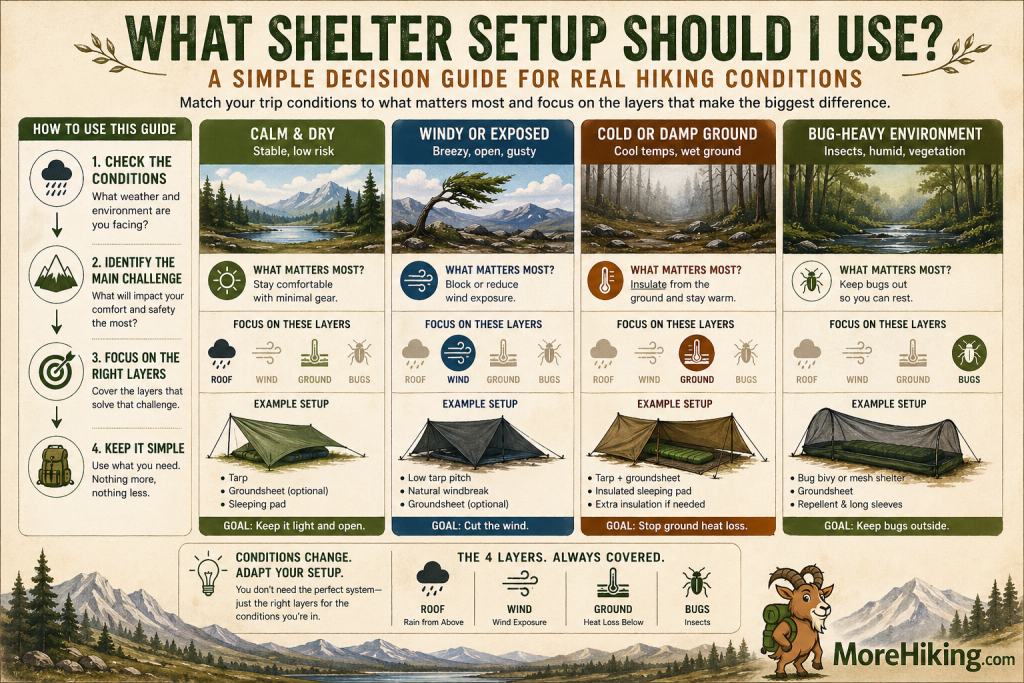
A Simple Way to Apply This on Your Next Trip
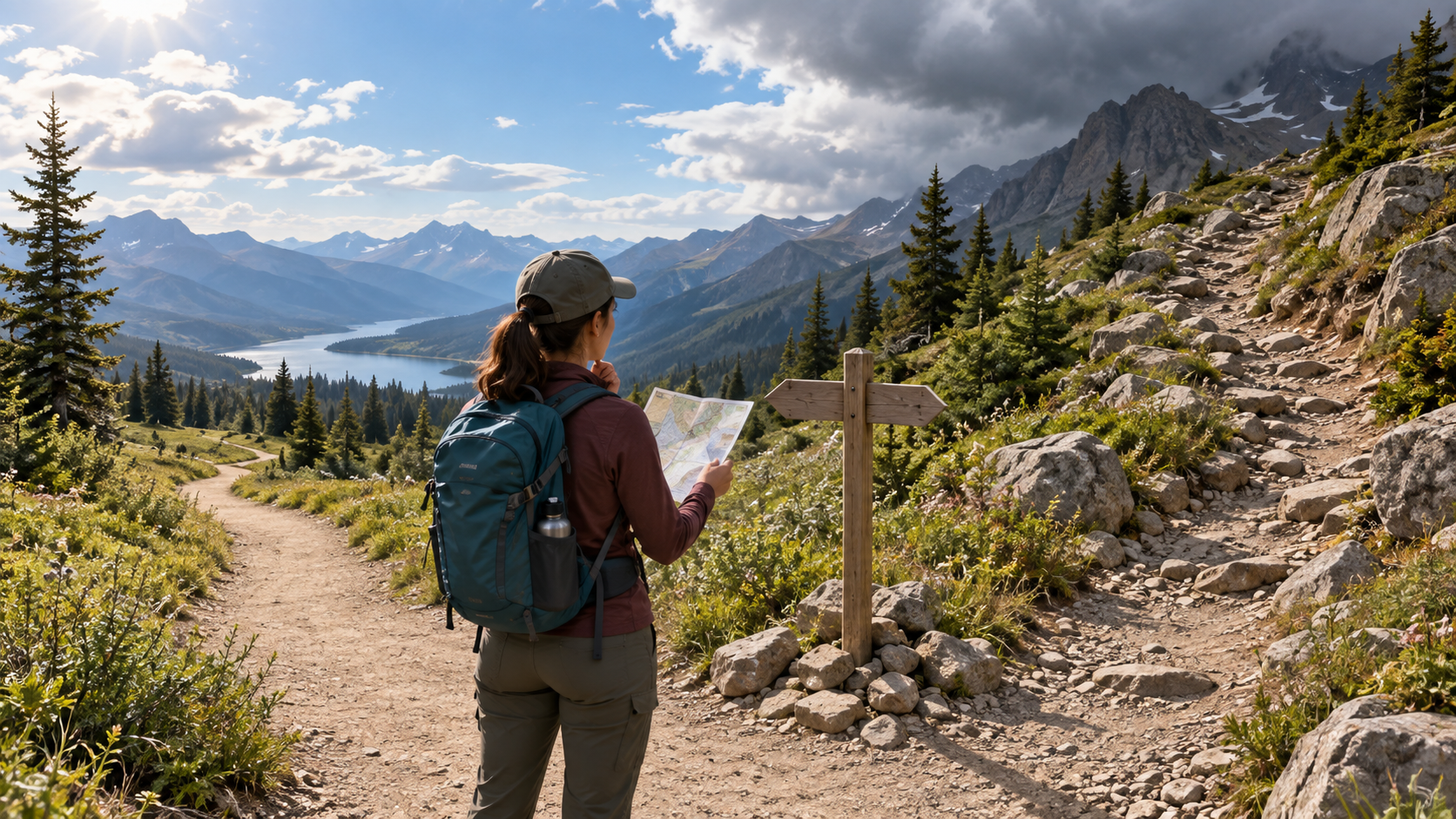
Before your next hike, walk through the four layers.
Ask yourself:
- What is covering me from above?
- What is blocking the wind?
- What is insulating me from the ground?
- What is protecting me from bugs?
If you can answer all four clearly, your system is likely balanced.
If one feels uncertain, that is where you focus your attention.
Final Thought: Confidence Comes from Clarity
A good shelter system does not need to be complicated. But it does need to be understood.
When you break shelter into roof, wind, ground, and bugs, each decision becomes clearer. Each piece of gear has a purpose.
And that is what allows you to hike lighter, sleep better, and feel more confident when conditions change.
FAQ: Shelter Layering for Hiking
What is shelter layering in hiking?
Shelter layering is the idea that staying comfortable outdoors comes from solving four separate problems: rain from above, wind exposure, heat loss to the ground, and bugs. Instead of relying on one piece of gear to handle everything, you think in layers and make sure each one is covered.
Do I need all four shelter layers every time I hike?
Not always. The conditions decide what matters most. On a cool, dry night with no bugs, you may only need a roof and ground layer. In wet or buggy conditions, all four layers become important. The key is adjusting your setup based on what the environment is doing.
Is a tarp enough for shelter when hiking?
A tarp can be enough if it covers the layers that matter for your conditions. It provides excellent roof protection, and with the right pitch and campsite, it can handle wind as well. If you are unsure how to judge that, it helps to understand when a tarp is enough for your conditions.
Why do I feel cold at night even with a good sleeping bag?
In many cases, the issue is not your sleeping bag—it is the ground. Cold earth pulls heat away from your body throughout the night. If your ground layer is not insulating properly, you can feel cold even with a warm sleep system. This is why learning how to stop ground seepage and heat loss can make such a noticeable difference.
How do I block wind when camping without a tent?
You can reduce wind exposure by using terrain. Setting up behind trees, rocks, or small rises can make a noticeable difference. A low tarp pitch can also help block airflow. If you want to improve this skill, it is worth learning how to choose a campsite that does the work for you.
What is the most important layer in a shelter system?
There is no single “most important” layer because they work together. That said, the ground layer is often overlooked and can have the biggest impact on comfort. Without proper insulation from below, even a well-covered shelter can feel cold.
Do I need bug protection for every trip?
No. Bug protection depends on the season and location. Cooler conditions often mean fewer insects, while warm, damp environments usually require some form of protection like a bug bivy or net. This is one of the easiest layers to adjust without changing your entire system.
Is a tent better than a tarp for beginners?
For many beginners, a tent is simpler because it combines all four layers into one system. A tarp setup can be lighter and more flexible, but it requires more awareness of weather and campsite selection. If you are comparing options, it can help to explore a minimalist shelter system for hiking to see how these pieces work together.
How do I know if my shelter setup is good enough?
A simple way to check is to walk through the four layers: What is covering you from rain? What is blocking the wind? What is insulating you from the ground? What is protecting you from bugs? If you can answer all four clearly, your setup is likely balanced. Many hikers also improve their decision-making by learning how to read weather forecasts for shelter decisions before heading out.
If you have enjoyed this article, please also read our other post.
Leave a Reply