
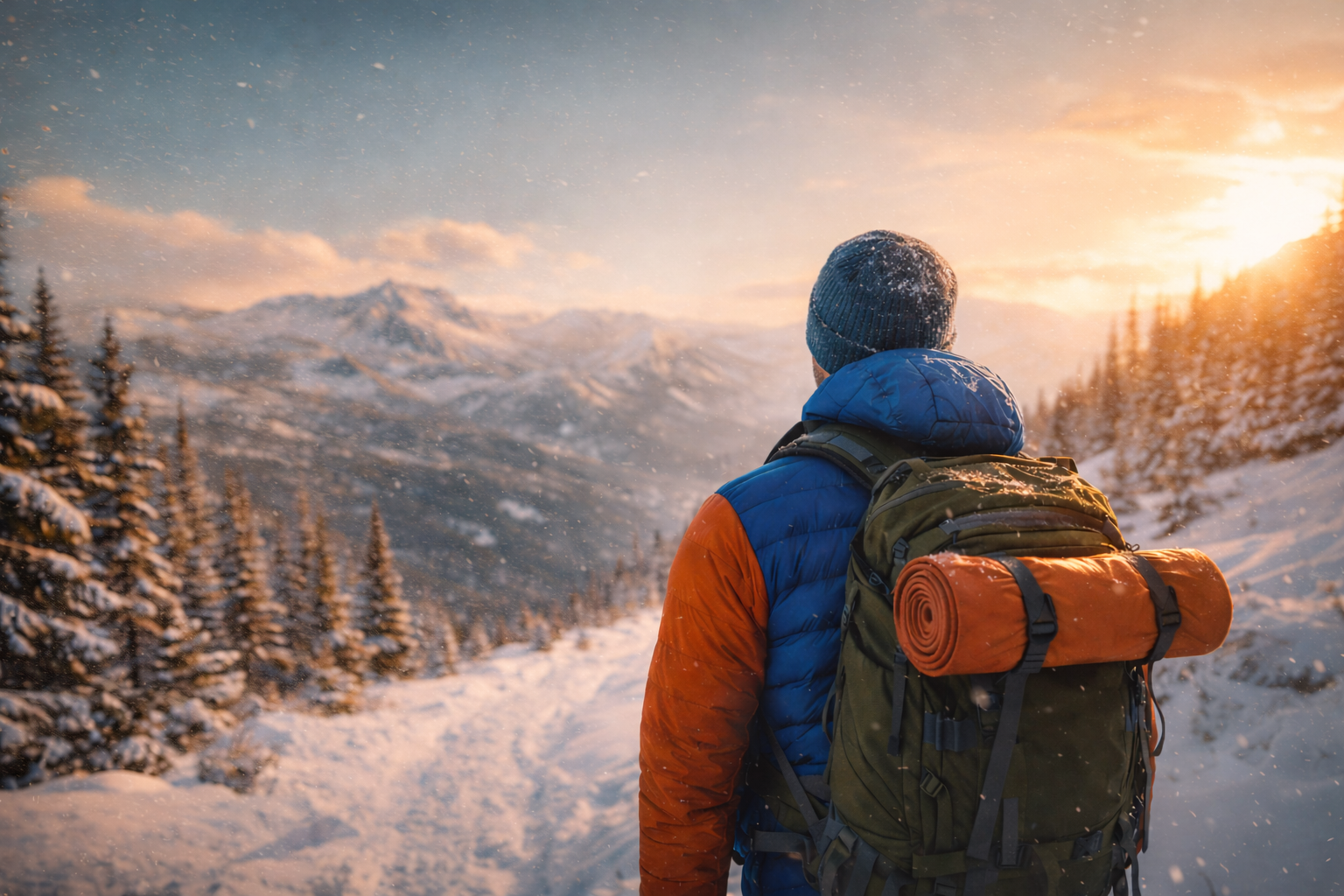
There is a specific kind of cold that catches new hikers off guard. It often starts when the sun drops behind the trees, the wind picks up, and the sweat from the last climb begins to cool against your skin. That is usually the moment when many people decide they need to carry more clothing next time. So they start packing extra hoodies, heavy jackets, thick pants, and backup layers for every possible problem.
The trouble is that staying warm on the trail is not mostly about carrying more. It is about managing heat better.
There is a reason that matters so much. When you sweat into your clothing, moisture starts working against you. It makes it harder for your layers to insulate well, and once you slow down or stop, that dampness helps pull heat away from your body faster. Shivering is your body’s emergency response when it is trying to make up for that heat loss. In other words, many hikers are not cold because they packed too little. They are cold because they got wet too early.
This article contains affiliate links. If you purchase through these links, MoreHiking may earn a commission at no additional cost to you. We only recommend gear we trust and have carefully researched.
This is why hikers often feel fine while moving, then suddenly cold once they slow down, stop, or hit wind.
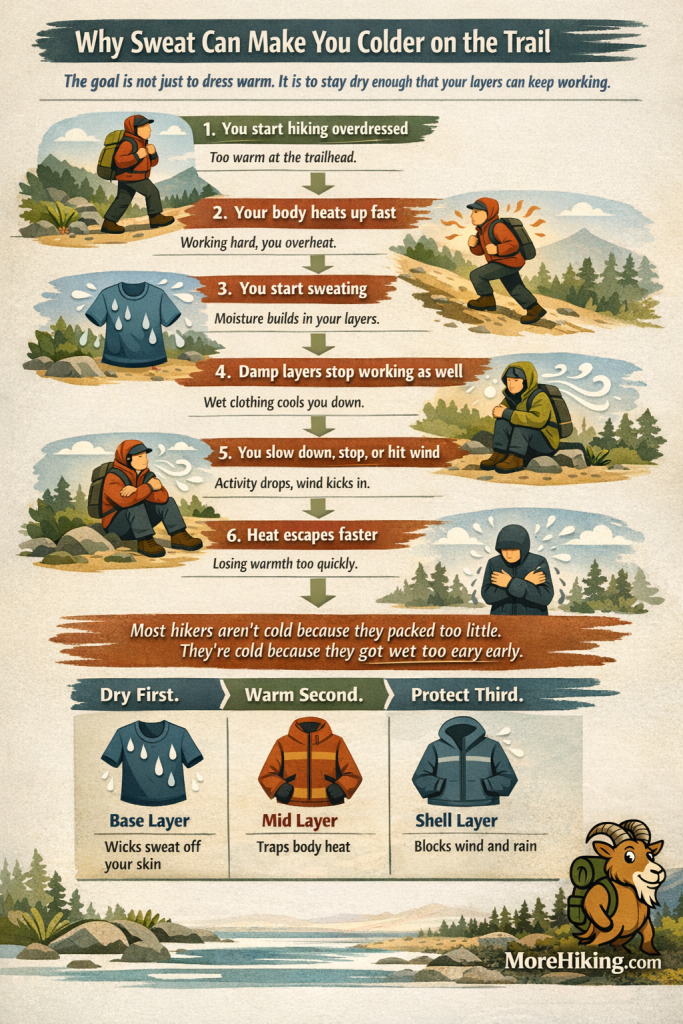
Your body is already producing warmth every time you move. The goal is not to bury that warmth under a pile of bulky clothing. The goal is to hold onto it when you need it, let excess heat escape when you are working hard, and avoid getting damp enough that your own clothing starts making you colder instead of warmer.
That is why hikers rely on the 3-layer system. It is simple, practical, and adaptable. Once you understand how it works, you can stay warmer with less gear, move more comfortably, and stop packing from fear. That idea fits naturally with a more minimalist gear mindset, because lighter packing usually starts with skill rather than with sacrifice.
If you remember nothing else from this article, remember this: stay dry, trap warmth, block wind, and change layers before you feel cold. That is the real foundation of trail warmth and knowing how to stay warm hiking.
This article contains affiliate links. If you purchase through these links, MoreHiking may earn a commission at no additional cost to you. We only recommend gear we trust and have carefully researched.
How to Stay Warm Hiking: the 3-Layer System Keeps You Warm on the Trail
The 3-layer system works because each layer has a different job. Instead of wearing one big heavy coat and hoping it handles everything, you build a clothing system that can respond to movement, weather, wind, and rest stops.
This matters because trail conditions change fast. A chilly trailhead can turn into a sweaty uphill climb in ten minutes. A warm body on the move can feel cold very quickly once you stop for water, lunch, or a map check. If your clothing cannot adjust with you, you usually end up either overheating or cooling down too fast.
The layer system solves that problem by helping you manage three things: moisture, insulation, and weather exposure.
Your base layer helps move sweat away from your skin. Your mid-layer traps warmth. Your shell blocks wind and rain so that warmth is not stripped away. Together, those layers create a system that is much more useful than one thick jacket.
The idea is simple, but it becomes much clearer when you see how each layer works together:
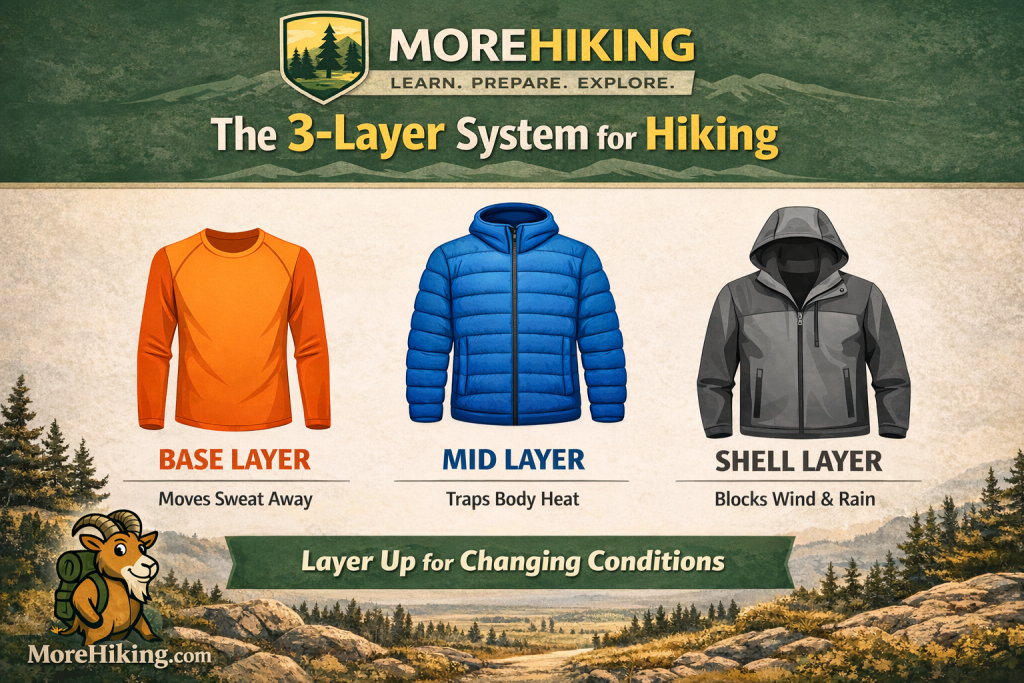
The real secret is that warmth is not just about insulation. It is also about staying dry enough that your clothing can keep doing its job.
The Base Layer: Stay Dry First
The base layer sits against your skin, and its main job is moisture management.
That surprises a lot of beginners because the first instinct is often to choose something that feels thick or cozy. But on the trail, staying dry is usually more important than feeling warm in the parking lot. If you start hiking in a shirt that traps sweat, that dampness can linger as soon as the temperature drops, the wind picks up, or you stop moving.
That is when many hikers start to feel confused. They assume they are cold because they did not wear enough. In reality, they are often cold because they are wet enough that their clothing is no longer helping them properly.
A good base layer helps pull moisture away from your skin so it can spread out and dry more easily. Synthetic materials like polyester do this well. Merino wool also works well, and many hikers like it because it stays comfortable over long days and does not hold odor as badly as many synthetics.
This is also why hikers are so cautious about cotton. Cotton absorbs moisture and holds onto it, which means it can stay damp long after your body has started cooling down. Once that happens, it becomes much harder to stay comfortable, especially if the wind picks up or you stop moving. A cotton t-shirt may feel harmless at the trailhead, but later in the day it can become the reason you cannot warm up. It is the kind of small clothing mistake that becomes more serious when hikers underestimate changing conditions and basic preparation.
For many beginners, the easiest starting point is simple: wear athletic shirts and base layers that are made for sweat, and leave the cotton at home.
The Mid-Layer: Trap the Heat You Already Made
The mid-layer is the part of the system that provides insulation. This is the layer that helps hold warm air close to your body after your muscles have generated it.
In practical terms, this is often a fleece or a puffy jacket. For a closer look at choosing the best mid-layer for hiking, it helps to think about whether you need better breathability while moving or more warmth when you stop.
That difference matters. A fleece is often more comfortable while you are still hiking. A puffy is often the better choice once you stop.
Many beginners make the mistake of wearing their warmest insulation too early. Then they sweat into it on the climb and become uncomfortable later. A better habit is to keep your mid-layer easy to reach and use it when your pace slows, when you stop, or when the weather shifts.
Warmth works best when you add it before you are cold, not after.
My reason for preferring this placement is that it feels helpful rather than promotional. The reader has just been introduced to the two main mid-layer paths, so the link answers the obvious next question.
The Shell Layer: Protect Your Warmth from Wind and Rain
The shell layer is what protects the rest of your system from the weather.
This layer does not always look impressive because it is often thin and light. That leads some hikers to underestimate how important it is. But wind and rain can break down your comfort very quickly, especially if you are already damp from effort.
A shell helps in two ways. First, it blocks wind that would otherwise pull heat away from your body. Second, it protects your inner layers from rain, mist, or wet snow. Even a strong insulating layer can lose a lot of usefulness if cold air is moving through it or water starts soaking in.
That is why a light shell can sometimes make a bigger difference than a heavier insulating layer. It is not adding much warmth by itself. It is protecting the warmth you already have.
On some hikes, a wind shell is enough. On others, especially when rain is part of the forecast, a waterproof shell makes more sense. Either way, the point is the same: do not let the weather steal heat faster than your body can replace it. This is one reason experienced hikers spend so much time thinking about weather patterns and shelter decisions before they leave home.
Don’t just hike—be prepared. Shop Camping Survival.
Why Hikers Still Get Cold Even with Good Layers
A lot of hikers assume that if they are cold, they simply did not bring enough clothing. Sometimes that is true, but often the real problem is timing, moisture, or poor heat management.
One of the most common mistakes is dressing for the trailhead instead of dressing for movement. If you feel perfectly warm while standing still at the start, there is a good chance you will be overdressed once the trail begins climbing. That can lead to sweating early, and sweat is often the beginning of the whole problem.
A better approach is to start a little cool. Not miserable, but not overly comfortable either. Once your body begins working, it will usually produce the warmth you need. From there, your job is to keep from trapping too much moisture.
Another common mistake is waiting too long to add a layer. Many people stop for lunch, feel fine for a minute or two, and then realize too late that the heat they built on the climb is already disappearing. That is the ideal time to put on an insulating layer right away, before the chill sets in.
There are also a few predictable clothing mistakes that show up again and again: hiking in a cotton hoodie, wearing a puffy too early, ignoring wind exposure, and stopping while still damp without adding protection. None of those mistakes look dramatic in the moment, but together they explain why many beginners feel colder than they expected.
The final issue is exposure. A short break in the shade, a windy ridge, or a damp resting spot can change how cold you feel much faster than many beginners expect. Good layering helps, but you still need to pay attention to where you stop, how long you stay there, and whether your clothes are still working the way they should.
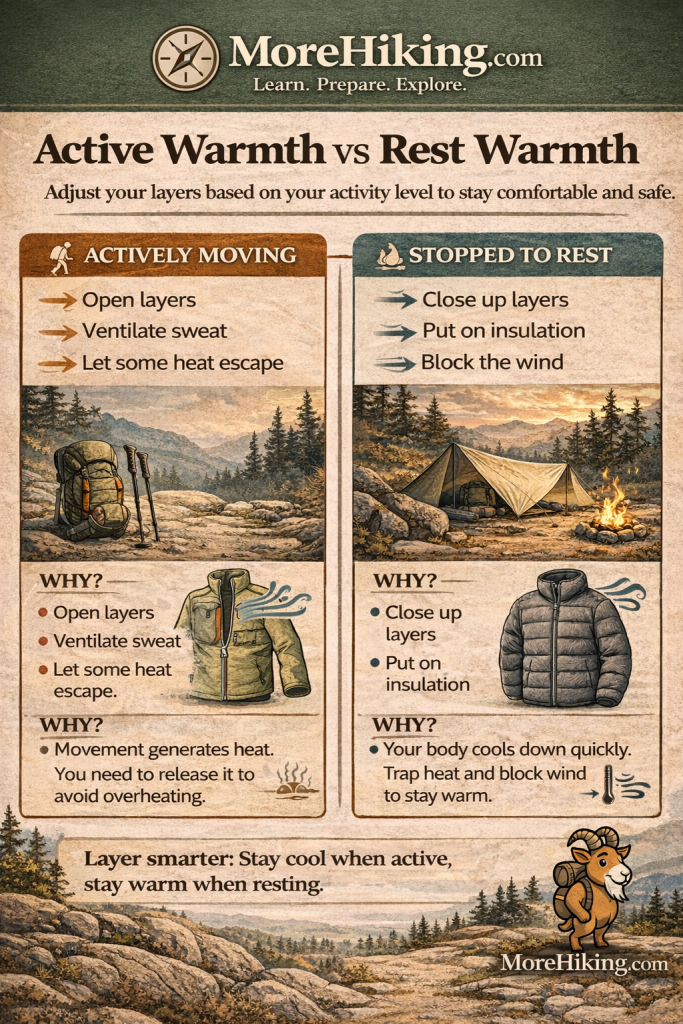
Active Warmth vs. Rest Warmth
One of the most useful things a hiker can learn is that the layers that work while moving are not always the layers that work while resting.
When you are hiking uphill or moving at a steady pace, your body generates a surprising amount of heat. In many cases, a base layer and a light shell are enough, even in cool weather. If you wear too much during this phase, you will likely trap heat and sweat more than you realize.
When you stop, that situation changes quickly. Heat production drops, and now the warmth you kept becomes more important than the warmth you can create. This is when your fleece, puffy, hat, or shell starts doing real work.
The key is to adjust before you feel uncomfortable. Vent layers while moving, then add insulation as soon as your pace slows or you stop.
The infographic below shows how to think about this in simple terms: stay cool while moving, and stay warm when resting.
5 Smart Hacks That Help You Pack Less
Good layering is the foundation, but it is not the whole story. Experienced hikers also rely on small habits that help them stay warm without carrying a lot of extra weight.
These are the kinds of habits that reduce fear-based overpacking. They do not make you careless. They make you more efficient.
1. Eat Before You Get Cold
Food helps fuel warmth. If you wait until you are already chilled, low on energy, and uncomfortable, it is harder to recover.
A quick snack before a long stop can make a real difference. Nuts, nut butter, cheese, energy bars, or chocolate can help give your body more fuel to work with when temperatures drop. This does not replace clothing, but it can reduce how hard your layers need to work. It also connects naturally with the wider idea of calorie density in backpacking, where small foods can do a lot of work for their weight.
That matters because hikers often try to solve every comfort problem with gear, when sometimes the better answer is better timing with food and movement.
2. Carry a Hat Before You Carry a Heavier Jacket
A light beanie or warm hat can do a surprising amount of work for its weight.
When your head and neck are exposed, heat escapes quickly and the rest of your body often feels that loss sooner than expected. A hat is one of the simplest ways to improve comfort without adding much bulk to your pack.
For many hikers, a hat is a better use of space than carrying an extra heavy top layer just in case. It is small, easy to use, and often enough to take the edge off during cool starts, windy breaks, or late-day temperature drops.
3. Keep One Dry Pair of Socks Protected
Dry socks should be treated like emergency comfort gear.
Even when your hiking socks do not feel soaked, they usually hold some moisture by the end of the day. Changing into a dry pair can make an enormous difference during a long rest, at camp, or if temperatures fall late in the hike.
This is one of those small items that earns its weight because it helps you avoid packing heavier backup comfort gear. Sometimes the issue is not that your feet need more insulation. They just need dryness.
4. Use Your Stop Locations Better
Where you stop matters almost as much as what you wear.
A snack break in a windy gap, damp grass, or deep shade can chill you much faster than the same break behind trees or beside a sun-warmed rock. Wind is especially good at stealing heat, and many hikers underestimate how much colder they feel simply because they sat down in a poor spot.
A little attention to site selection can make a lightweight clothing system work better. In that sense, smart positioning can sometimes replace the need for an extra layer. This is part of the same thinking behind choosing better shelter placement or using the landscape more wisely instead of only relying on more gear.
5. Add Warmth Early, Not Late
This may be the most valuable habit in the whole article.
Do not wait until you are already cold, shivering, or uncomfortable to put on your mid-layer or shell-layer. Once you have lost that stored body heat, it is harder to regain it quickly. Instead, add warmth as soon as you sense your pace dropping, the wind increasing, or the temperature shifting.
This is one of the easiest ways to stay comfortable with less gear. Better timing often does more than carrying more clothing.
What the 3-Layer System Looks Like on a Real Hike
Imagine a cool 45-degree morning with a slight breeze at the trailhead. You start hiking in a moisture-managing base layer, and maybe a light shell if the wind is noticeable. You keep your mid-layer near the top of your pack where you can reach it fast.
Within the first climb, you warm up. Now is the time to vent. You may unzip the shell, loosen your collar, or slow down briefly before you start sweating too heavily. If you keep pushing while soaked in trapped heat, you are setting yourself up to feel cold later.
Then you reach an overlook and stop. This is where many hikers make the mistake of waiting. A better move is to pull on your fleece or puffy right away, while you still have warmth to trap. That simple timing change often means the difference between a comfortable break and one where you cannot wait to start moving again.
Later in the day, the temperature begins to drop. The wind becomes sharper, and your body is not producing heat as easily because fatigue is setting in. Now your shell matters more. Your hat matters more. Your snack matters more. The point is not that you suddenly need a completely different system. It is that you need to use the same system well.
That is what good layering really is. Not a pile of clothing, but a series of decisions made at the right time.
What About the Ground?
If your hike includes long breaks, cold summit rests, shoulder-season conditions, or an overnight stop, it is worth remembering that the ground can pull heat from your body surprisingly fast.
That is why sitting directly on cold rock, wet soil, or packed snow can make you feel chilled even when your upper body layers are fine. At that point, warmth is not only about what you wear. It is also about what you are resting against.
This does not need to become a deep technical discussion in a basic hiking article, but it is useful to remember that cold from below is real. If you regularly take long breaks in colder conditions, even a simple sit pad can improve comfort far more than many people expect. The same basic principle shows up whenever hikers deal with ground seepage, cold camps, or damp resting spots.
Frequently Asked Questions
Do I need merino wool, or will workout clothes work?
Workout clothes can work very well for beginner hikes. Many synthetic athletic shirts do a good job of moving moisture away from your skin, which is the main thing a base layer needs to do. Merino wool has some real advantages, especially for comfort across longer days, changing temperatures, and odor control, but it is not a requirement for getting started.
The bigger issue is not brand or price. It is whether the fabric helps manage sweat instead of trapping it. If you already own synthetic workout clothing, that is often a perfectly reasonable place to begin.
Should I hike in my mid-layer, or keep it in my pack?
Most of the time, it is better to keep your warmest mid-layer in your pack at the start and add it when your pace slows, when you stop, or when conditions change. If you begin hiking in your warmest insulation too early, there is a good chance you will sweat into it on the first real climb.
That does not mean you should always leave it off. In very cold, windy, or slow-moving conditions, you may need it sooner. The key is to pay attention to effort and moisture. A good rule is that you want to start a little cool rather than perfectly warm, then adjust before you get chilled.
What should I do if I get wet on the trail?
That depends on how wet you are, how cold it is, and how far you are from a safe exit. If only a small area is damp and you are still moving, synthetic layers may dry gradually with body heat and airflow. But if your clothing is truly soaked and temperatures are dropping, that becomes much more serious.
In those conditions, getting into dry clothing, protecting yourself from wind, eating something, and making smart safety decisions becomes much more important than trying to push through. Moisture and cooling temperatures can turn a manageable hike into a much colder and more uncomfortable situation faster than many beginners expect.
Final Thoughts
Staying warm while hiking is not about carrying your whole closet into the woods. It is about understanding how heat is made, how it is lost, and how your clothing helps control that process.
The 3-layer system works because it gives each piece of clothing a clear job. Your base layer helps manage sweat. Your mid-layer traps warmth. Your shell protects that warmth from wind and rain. Once you understand that, you can stop guessing and start making better decisions on the trail.
That is also where lighter packing begins. Not by taking foolish risks, but by replacing fear with skill.
When you learn how to vent early, layer sooner, protect dry items, eat before you crash, and use the terrain around you well, you often need less than you thought. And that is a good feeling, because a lighter pack does not just save weight. It usually makes the whole day feel more calm, more capable, and more enjoyable.
The more experience you gain, the more you realize that carrying less is not always about owning less. Often, it is about understanding your gear well enough to use it at the right moment.
If you have enjoyed this post, perhaps you would like one of our other Posts.
Leave a Reply