
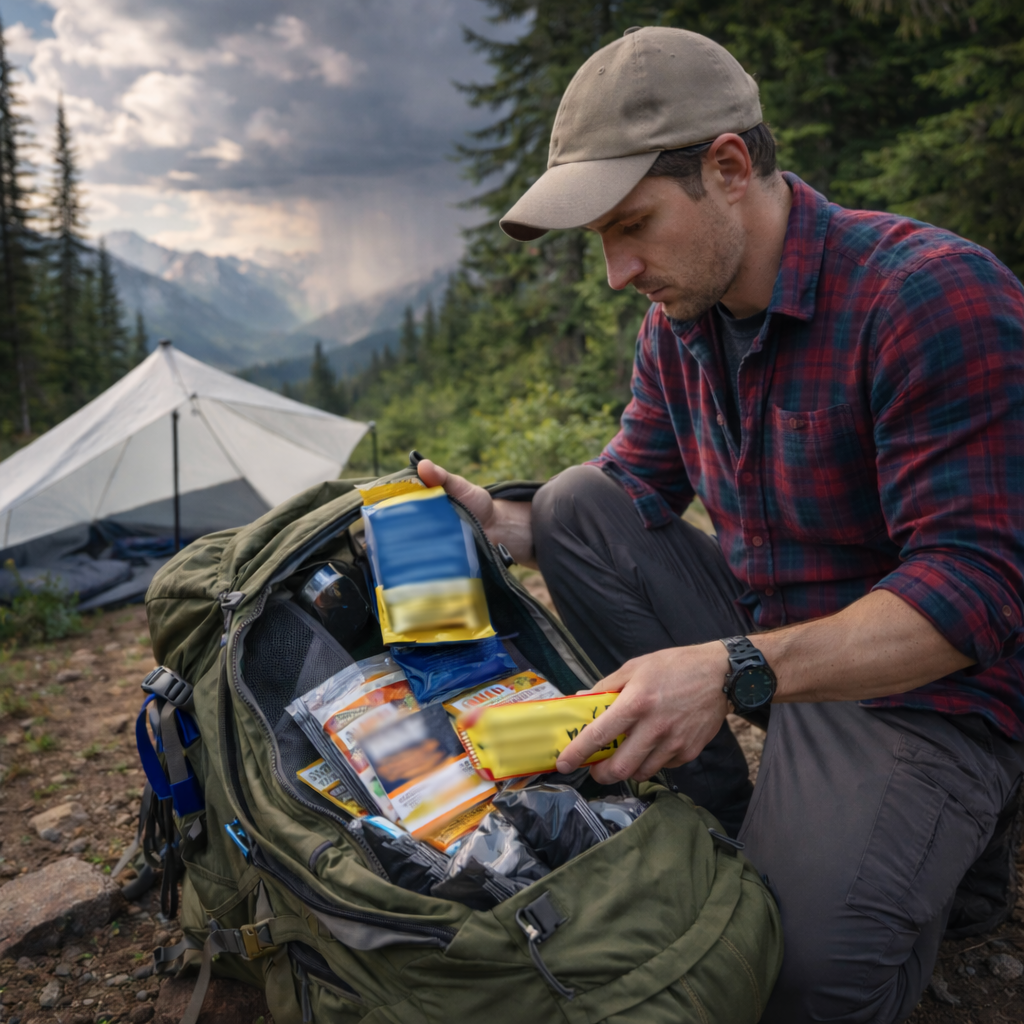
There is a specific moment, usually around the afternoon of day three, where the physical reality of a multi-day trek begins to settle into your marrow. Your pack, which felt manageable at the trailhead, now seems to have gained weight overnight. Your quads are signaling for more than just oxygen; they are demanding a steady stream of glucose and fat to keep the mechanical engine of your body moving over the next ridge. It is at this precise intersection of fatigue and distance that the quality of your fuel strategy is truly tested. Calorie-Dense food is something to consider.
For the backpacker who has graduated from overnight “s’mores and hot dogs” trips to sustained backcountry travel, food is no longer just a reward at the end of the day—it is a weight-to-performance ratio that must be managed as strictly as your base weight. Carrying a five-day supply of food that is heavy on water content or low in caloric density is a rookie mistake that results in unnecessary strain and premature exhaustion. The goal isn’t just to eat; it’s to provide the maximum amount of thermal energy with the minimum amount of gravitational penalty.
This article contains affiliate links. If you purchase through these links, MoreHiking may earn a commission at no additional cost to you. We only recommend products we trust and have carefully researched.
The Physics of Trail Fuel: Understanding Caloric Density
To master the art of the backcountry pantry, we have to look at food through the lens of energy density. In the front-country, we often focus on volume to feel full. On the trail, volume is the enemy. Every cubic inch in your bear canister or food bag is precious real estate. When we talk about “fuel without the bulk,” we are specifically targeting the calories-per-ounce (cal/oz) metric.
Ideally, a seasoned backpacker aims for an average of 120 to 150 calories per ounce across their entire food bag. To put that in perspective, a fresh apple provides about 15 calories per ounce, while a bottle of olive oil provides roughly 250. If your kit is leaning too heavily toward the “apple” end of the spectrum, you are carrying a lot of water weight and fiber that doesn’t actually help you climb a 2,000-foot pass. By prioritizing fats and dehydrated complex carbohydrates, you essentially compress your energy needs into a smaller, lighter footprint.
This shift in thinking requires a move away from “wet” foods. Anything that comes in a can or a heavy jar is out. We are looking for foods that have had their moisture removed—either through dehydration or freeze-drying—or foods that are naturally dry and fat-rich, like nuts, seeds, and hard cheeses. When you strip away the water, you are left with the raw macronutrients your body needs to repair muscle and maintain core temperature during cold mountain nights.
If you want more information to understand Caloric-Density better, check out our blog post Backpacking Calorie Density Explained: How to Pack More Energy in Less Weight
Key Considerations for the Efficiency-Focused Hiker
The “Fat Advantage” and Metabolic Efficiency
The most common oversight in trail nutrition is underestimating the role of fats. While carbohydrates are essential for immediate “burst” energy on steep inclines, fat is your long-burn fuel. Gram for gram, fat provides 9 calories, while carbohydrates and protein provide only 4. This means that a diet richer in healthy fats allows you to carry half the weight for the same amount of energy.
When you are hiking for six to eight hours a day, your body eventually enters a state of aerobic metabolism where it becomes quite efficient at burning fat. If you only provide your body with simple sugars (like candy or cheap energy gels), you will experience “bonking”—that sudden, crashing fatigue when your blood sugar drops. By incorporating calorie-dense fats like almond butter, MCT oil, or shelf-stable meats, you provide a steady, slow-release energy source that prevents the mid-afternoon slump.
Palatability vs. Practicality
There is a dangerous trap in the “ultra-efficient” mindset: choosing food solely based on numbers and ignoring whether or not you actually want to eat it. I have seen hikers carry nothing but flavorless “survival” bars or unseasoned soy protein because the cal/oz ratio was off the charts. By day four, they were so sick of the texture that they stopped eating enough, leading to a massive caloric deficit.
Your brain needs a “win” at the end of a hard day. This is why we look for products that balance high-density nutrition with actual culinary appeal. Items like those found at Camping Survival—high-calorie emergency rations that are vacuum-sealed—are excellent as a foundational “insurance policy” in your pack, but they should be supplemented with variety. You want a mix of savory, sweet, crunchy, and soft. If your food bag is a chore to open, your performance will suffer regardless of how “light” your pack is.
Gourmet meal kits that complete every day of hiking!
Packaging and Volume Reduction
Efficiency isn’t just about weight; it’s about volume. Most commercial backpacking meals are sold in “stand-up” pouches that are 30% air. For a weekend trip, this is fine. For a seven-day trek, those bags will fill an entire 60-liter pack.
An experienced hiker often “re-packages” their food. This involves taking those calorie-dense meals and moving them into heavy-duty freezer bags, then piercing a tiny hole in the corner (or using a vacuum sealer) to remove all excess air. This allows you to stack your meals like bricks. When you’re looking at survival-style foods or bulk calorie rations, they are often already vacuum-packed for long-term shelf life, which makes them accidentally perfect for the space-constrained backpacker.
Selecting Your Rations: The Hierarchy of Density
When building your menu, you should categorize your food into “tiers” of density. This helps you visualize where your weight is going.
| Food Category | Average Cal/Oz | Examples |
| The Gold Standard | 180 – 240 | Olive oil, Macadamia nuts, Nut butters, Pemmican |
| High Density | 120 – 160 | Hard cheeses, Salami, Dried coconut, Granola |
| Moderate Density | 90 – 110 | Dehydrated meals, Beef jerky, Tortillas, Dried fruit |
| The “Heavy” Tier | < 60 | Fresh fruit, Canned tuna (in water), Pre-cooked rice pouches |
Note: While “Heavy Tier” foods might taste great, they should be limited to the first meal of the trip to get the weight out of your pack as soon as possible.
(Internal link opportunity: Best lightweight stoves for rehydrating meals)
As you can see from the table, the difference between a high-density strategy and a moderate one can mean the difference of several pounds over a week-long trip. If you replace your standard tuna-in-water packets with tuna-in-oil, or swap your standard crackers for calorie-dense survival crackers or nut-based bars, you are effectively buying yourself more miles for the same physical effort.
Practical Use: Integrating Survival Rations and High-Density Foods
One of the most effective strategies I’ve seen adopted over the years involves using “survival” or emergency food rations as a core component of daily caloric intake, rather than just keeping them in the bottom of the pack for emergencies.
Modern survival bars, like those sourced from Camping Survival, are specifically engineered to be non-thirst-provoking and extremely calorie-dense (often 400+ calories per 3oz bar). Because they are shelf-stable for years and compressed into small blocks, they are the ultimate “no-cook” lunch.
Compact survival rations that don’t overload your kit!
The “Lunch on the Move” Strategy
Many intermediate hikers make the mistake of stopping for 45 minutes to pull out a stove and cook a hot lunch. This causes your muscles to stiffen and eats into your daylight hours. Instead, use your high-density rations during the day.
- Morning Snack: As you hike, graze on high-fat nuts or a calorie-dense survival bar. This keeps your blood sugar stable without a heavy “digestive load” that draws blood away from your legs to your stomach.
- The “Add-On” Method: If you are eating a standard dehydrated meal for dinner, it likely only contains 500-600 calories. For a multi-day hiker, that’s a snack, not a meal. I always carry small packets of olive oil or packets of almond butter to stir directly into the meal. This adds 200 calories of pure fat without increasing the volume of the meal at all.
- The Cold Soak Alternative: For the truly efficiency-obsessed, consider “cold soaking.” This involves putting your dehydrated food (like couscous or ramen) into a lightweight plastic jar with water a few hours before you plan to eat. By the time you reach camp, the food is rehydrated. This allows you to leave the stove and fuel at home, saving you another 15-20 ounces of “dead weight.”
Common Errors: The Salt and Water Balance
A common pitfall when moving toward a high-density, low-moisture diet is forgetting the physiological cost of digestion. Protein and dry, salty snacks require significant water to process. If you are eating survival-style rations or high-sodium meats like salami, you must increase your water intake.
I’ve seen hikers become “lethargic” and assume they need more food, when in reality, their bodies were struggling to digest the dense food they’d already eaten because they were mildly dehydrated. On trail, your thirst mechanism can be a lagging indicator. Drink consistently, especially when consuming foods with a high caloric density.
See some practical insights for hydration logistics in our Bog Post The Minimalist Gear Guide for Mastering Long-Distance Backcountry Treks
Final Thoughts: The Mindful Backpacker
Building a calorie-dense food plan is an evolving skill. It requires you to move past the instinct of “what do I want to eat right now?” and toward the strategic question of “what does my body need to perform tomorrow?”
By focusing on the calories-per-ounce ratio, leveraging the high energy density of fats, and utilizing shelf-stable survival foods for their space efficiency, you transform your pack from a burden into a finely-tuned support system. You’ll find that as your food bag shrinks in size, your range increases. You aren’t just carrying less; you are enabling yourself to see more, climb higher, and stay out longer.
The next time you’re prepping for a trip, look at every item in your food bag and ask: “Is this worth its weight in miles?” If the answer is no, it’s time to rethink your fuel.
FAQs: Fine-Tuning Your Nutrition for Trail Packing
Isn’t all that fat unhealthy for my heart?
In a sedentary environment, a high-fat diet can be a concern. However, on a multi-day trek, you are essentially a professional athlete. Your body will burn through those fats for fuel long before they can contribute to long-term arterial issues. On the trail, fat is your best friend.
How do I know if I’m carrying too much food?
The “Day Six Rule” is a good metric. If you return to the trailhead with more than two full meals left in your bag, you overpacked. Keep a “food log” after each trip. Note what you craved and what you couldn’t stand to look at. Over time, you’ll find your personal “sweet spot” of caloric density.
Should I rely entirely on meal replacement bars?
No. While they are efficient, your digestive system needs some fiber to keep things moving. Incorporating some dried fruits (like mango or apricots) or a small amount of dehydrated vegetables in your dinner will prevent the “trail backup” that often plagues hikers who eat nothing but processed bars and jerky.
If you have enjoyed this post, perhaps you would like one of our other Posts.
Leave a Reply