
The Minimalist Gear Guide for Mastering Long-Distance Backcountry Treks”
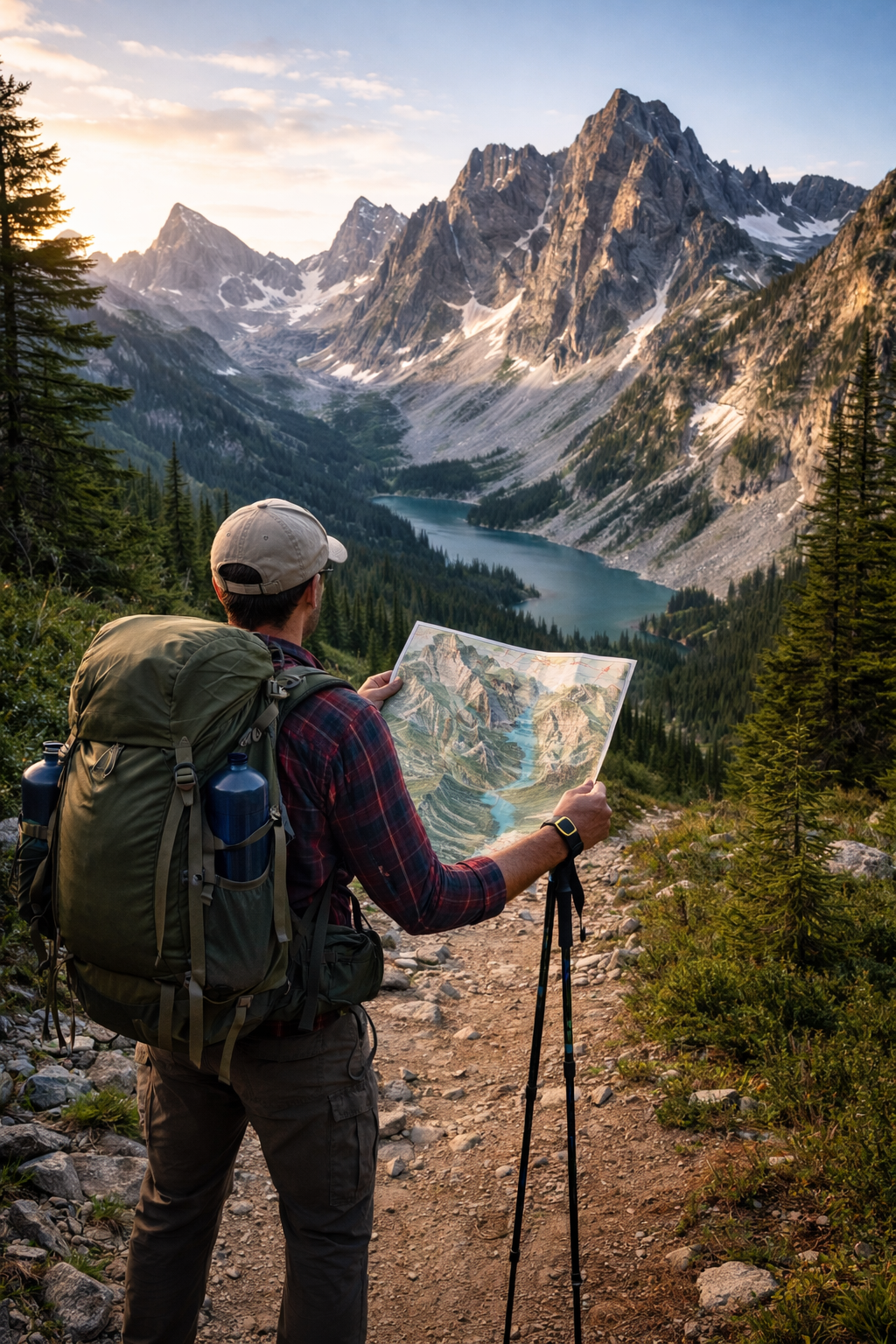
You’re standing at the trailhead of a route you’ve stared at on your screen for months. The topo map shows a jagged climb into the alpine, a string of turquoise lakes, and a ridge line that looks like the spine of a sleeping giant. You want that view. You want the quiet that only exists five miles away from the nearest paved road. But then you look at your pack. It’s heavy, pulling at your shoulders before you’ve even tightened the hip belt. You think about the eleven miles ahead and that nagging doubt creeps in: Is my body going to hold up, or am I just going to spend the whole day suffering?
We’ve all been there. The “traditional” way of hiking often feels like a test of endurance rather than a source of joy. We pack for every “what if” until our bags weigh forty pounds, and then we wonder why our knees ache and why we’re looking at our boots instead of the horizon. What if the secret to those impossible destinations isn’t doing more leg presses, but simply carrying less weight?
This article contains affiliate links. If you purchase through these links, MoreHiking may earn a commission at no additional cost to you. We only recommend products we trust and have carefully researched.
The Philosophy of Minimalist Trekking: Why Less Weight Equals More Adventure
Minimalism in the backcountry isn’t about deprivation. It’s not about being cold or hungry for the sake of a lighter bag. It’s about metabolic efficiency. Every extra pound you carry requires more oxygen, more calories, and more effort from your heart. Some minimalists stretch for that sub-10 pound base weight. When you drop your base weight—the weight of your gear excluding food and water—your daily mileage ceiling naturally rises.
Think of it this way: if you reduce your pack weight by ten pounds, it’s the physiological equivalent of losing ten pounds of body fat or significantly increasing your VO2 max overnight. You’re not just moving faster; you’re moving with less impact. Your joints take less of a beating on the descent, and your aerobic base stretches further.
| Metric | Heavy Traditional Pack (35 lbs) | Minimalist Pack (15 lbs) |
| Energy Expenditure | High (Rapid glycogen depletion) | Optimized (Fat-burning zone) |
| Joint Impact | High (Increased risk of “hiker knee”) | Low (Greater agility) |
| Mental Focus | Internal (Managing discomfort) | External (Navigating and enjoying) |
| Average Daily Pace | 1.5 – 2.0 mph | 2.5 – 3.5 mph |
Does carrying a lighter load mean you’re less safe? Actually, it’s often the opposite. A lighter hiker is more agile, less prone to fatigue-related stumbles, and can outrun a weather window if a storm starts brewing on a high ridge.
The “Big Three” Overhaul: Cutting Grams Where It Counts
If you want to see a massive shift in how you feel on the trail, you have to look at the “Big Three”: your shelter, your sleep system, and your pack. These are usually the heaviest items in any kit.
Shelter Systems: Transitioning to Dyneema and Ultralight Tents
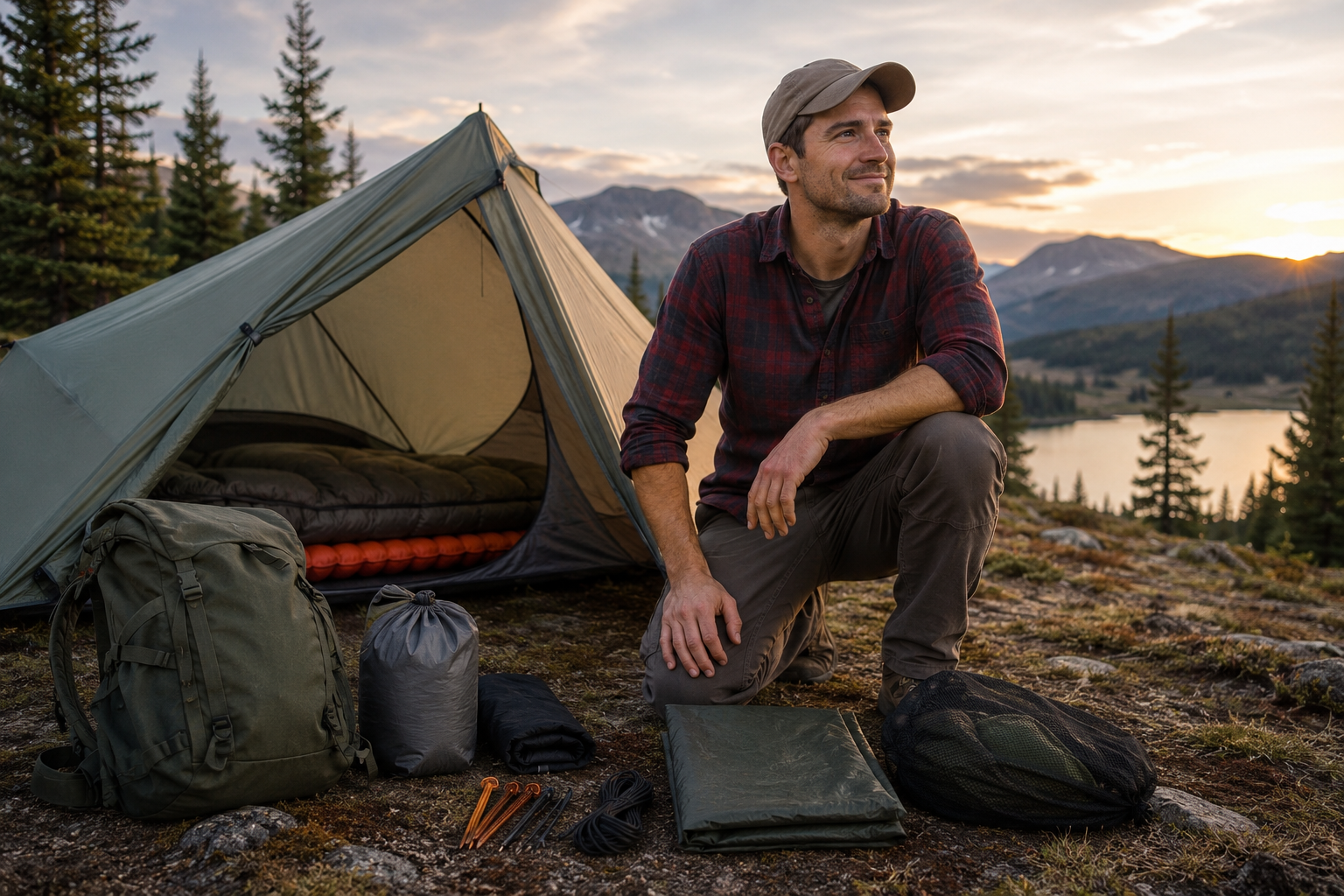
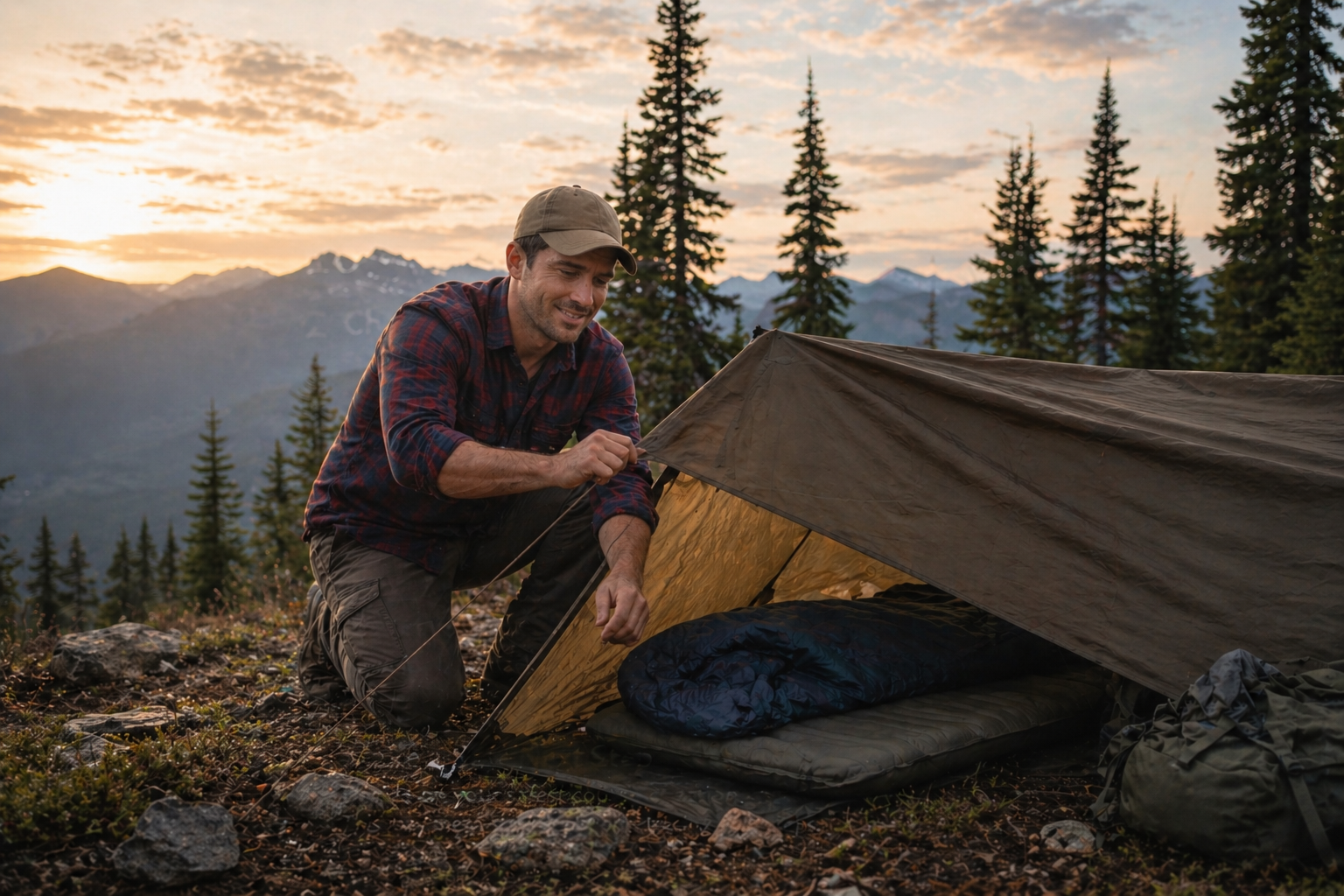
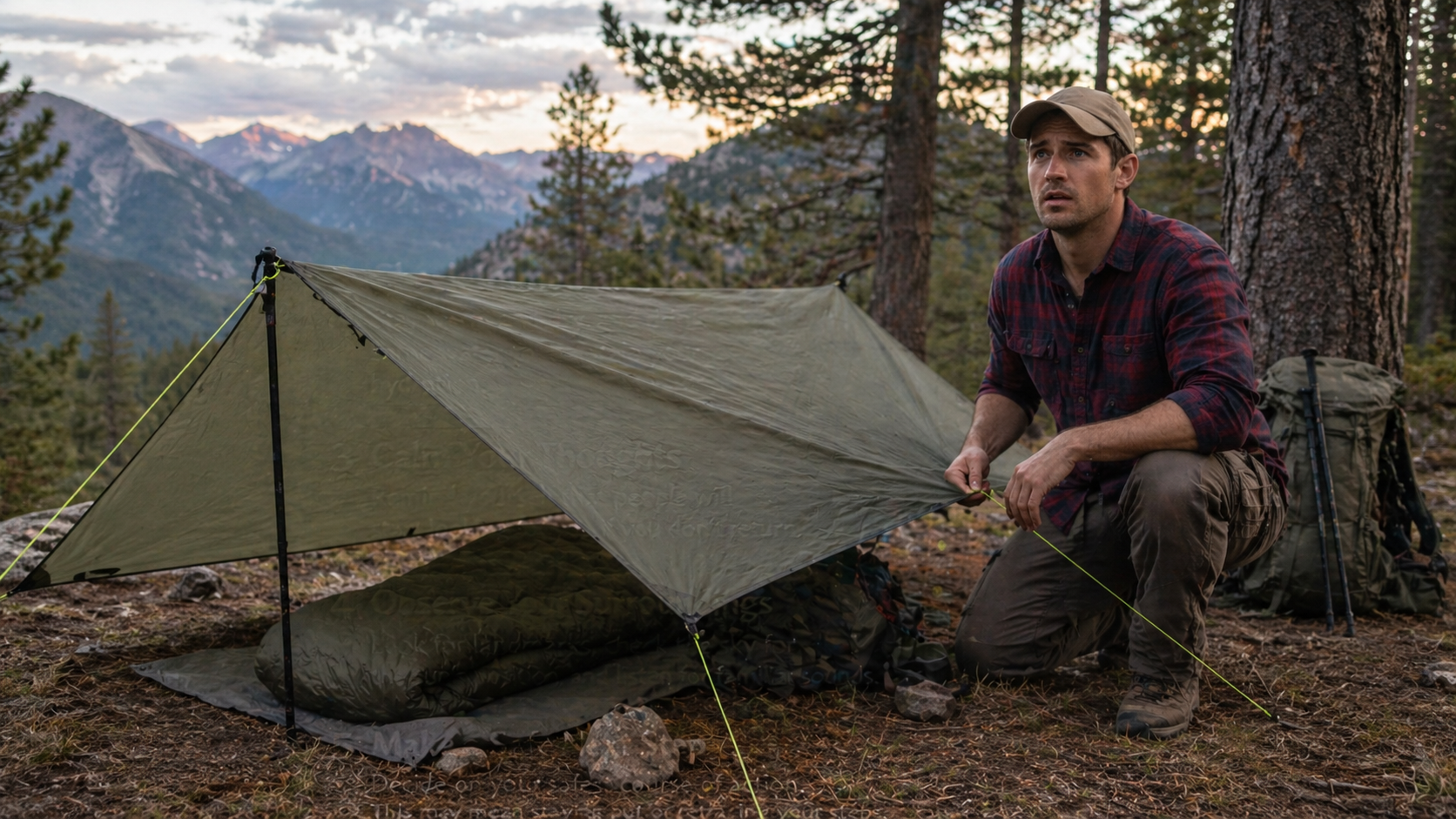
Traditional double-wall tents are great, but they often weigh four or five pounds. By switching to a shelter made of Dyneema Composite Fabric (DCF) or high-silicon nylon, you can cut that weight in half. Have you ever considered a trekking pole-supported shelter? Since you’re already carrying the poles, why not let them act as your tent frame? It’s a rock-solid system that handles wind better than most “freestanding” tents because the geometry is reinforced by your own carbon fiber or aluminum poles.
If you want to learn more about ultralight tents you can visit our article Ultralight Hiking Tents for Ultimate Outdoor Adventures. This article will provide an overview of some of the best commercially accessible ultralight tents available from trusted providers.
At MoreHiking.com we have developed a blog post discussing alternative shelter systems called: The Shelter System Minimalist Backpackers Actually Trust.
The Sleep System: Quilts vs. Sleeping Bags
Most of us grew up in mummy bags. They’re cozy, but the insulation you’re laying on is compressed—which means it’s not actually keeping you warm. It’s just dead weight. A backcountry quilt eliminates the hood and the back fabric, relying on your sleeping pad for insulation from the ground. When you pair a high-loft quilt (800+ fill power down) with a pad that has a high R-value, you get the same warmth for a fraction of the weight.
Minimalist Backpacks: Carrying Only What You Need
Once your gear is smaller and lighter, you don’t need a massive, heavy-framed backpack to carry it. A minimalist pack with a simple frame (or even a frameless one) moves with your body rather than against it. You’ll find that without all those extra zippers and compartments, you become more organized. Everything has a place, and you aren’t digging through five liters of “brain” pockets to find your headlamp.
Physiological Performance: How a Lighter Pack Unlocks Your “Impossible” Routes
Let’s talk about that “impossible” route again. Maybe it’s a 2,000-foot climb over three miles. If you’re carrying a heavy load, your heart rate is going to redline almost immediately. You’ll be gasping for air, stopping every ten minutes, and by the time you reach the summit, you’ll be too drained to actually appreciate it.
When you lighten the load, you stay in your aerobic base. This is the “all-day” pace where your body is efficient. You can maintain a conversation, your legs don’t feel like lead, and you can actually look around. This is how people master long-distance treks. It isn’t because they are superhuman athletes; it’s because they’ve managed the physics of the hike.
Lightweight hiking also changes your vertical gain potential. If you aren’t fighting a massive pack, that 2,000-foot climb feels like 1,000. Suddenly, routes that used to require a three-day expedition become manageable overnighters or even long day-hikes. The world opens up because your physical limits have been recalibrated through efficient selection of the pack you carry.
Consumables and “Invisible” Weight Management
You can have the lightest tent in the world, but if you carry six liters of water and five pounds of heavy, wet food, you’re still going to suffer.
Caloric Density is Key
When you’re out for multiple days, your food should be nutrient-dense. Look for things that have at least 120–150 calories per ounce. Peanut butter, olive oil (to add to meals), nuts, and dehydrated meals are your best friends. Avoid “wet” foods like tuna packets or heavy fresh fruit if you’re trying to crush miles. Have you ever tried cold-soaking? Some hikers ditch the stove and fuel entirely, soaking their oats or couscous in a lightweight jar. It’s not for everyone, but it saves a pound and removes the “camp chore” of cooking.
Hydration Logistics
Water is heavy—roughly two pounds per liter. Instead of carrying a massive reservoir that’s always full, learn to read your map. If there’s a stream every three miles, carry one liter and filter as you go. Use a high-flow filter like a Katadyn BeFree or a Sawyer Squeeze, check out our blog providing an overview of the best water filters. It takes two minutes to fill up, and you save yourself four pounds of constant weight on your back.
Safety is the Only “Non-Negotiable”
One of the biggest fears people have about going “minimalist” is that they won’t be prepared for an emergency. This is where the distinction between “light” and “stupid light” comes in.
Minimalism is about self-sufficiency. You don’t take less because you’re lazy; you take less because you’ve refined your skills to the point where you don’t need “stuff” to save you. However, there are some items you never cut.
- Satellite Communication: A Garmin InReach or similar device is worth every ounce. If you get disoriented or injured on a challenging route, this is your lifeline.
- Emergency Bivouac: A tiny, 3-ounce emergency bivy can save your life if you get stuck on a ridge overnight.
- The Ten Essentials: You can find lightweight versions of all of them (a tiny Swiss Army knife instead of a heavy multi-tool, a small LED instead of a massive lantern).
Trail-Tested Strategies for a Successful Gear Shakedown
Before you head out on your next big trek, do a “gear shakedown.” Lay everything out on your living room floor. Ask yourself: Did I use this on my last three hikes? If the answer is no, and it isn’t a safety item, leave it at home.
The goal is a modular layering system. Instead of one big heavy jacket, use a thin base layer, a light fleece, and a wind shell. This allows you to adjust to temperature shifts without stopping to take off your pack every twenty minutes.
Are you ready to stop enduring the trail and start mastering it? The sense of accomplishment you get from standing on a peak that once felt impossible is worth every ounce you leave behind. It’s not just about the gear; it’s about the freedom that comes when you realize you don’t need as much as you thought to be safe, happy, and capable in the wild.
Go ahead, look at that map again. That route doesn’t look so impossible now, does it?
If you have enjoyed this post, perhaps you would like one of our other Posts.
Leave a Reply