

Finding a hiking backpack with good back support is about more than choosing the pack with the thickest shoulder straps or the most padding. A backpack can feel soft when you first put it on and still become uncomfortable once it is loaded with water, food, clothing, and other hiking gear.
Useful support comes from how the backpack fits your body and manages the weight you are carrying. Torso fit, the hip belt, the pack’s internal structure, shoulder-strap adjustment, and the way the load sits against your back can all make a significant difference.
The right amount of support also depends on how you hike. Someone carrying a light day-hiking load may not need the same suspension system as a hiker carrying gear for an overnight or multi-day trip.
In this guide, we look at hiking backpacks with those differences in mind. Rather than judging packs simply by capacity or padding, we focus on the features that help hikers carry an appropriate load comfortably and securely—and on which type of hiker each backpack is best suited for.
What Does Back Support Mean in a Hiking Backpack?
A supportive hiking backpack does not hold your back in place or prevent back problems. Instead, a well-designed carrying system helps distribute the weight of your gear and keeps the backpack stable while you move.
One of the most important factors is torso fit. A backpack that is too long or too short for your torso can place the hip belt and shoulder straps in the wrong positions, even if the pack itself has a good suspension system.
The hip belt also plays an important role, particularly as pack weight increases. A properly fitted hip belt helps transfer part of the load away from the shoulders and onto the hips. On larger hiking and backpacking packs, a frame or internal stays can help maintain the pack’s shape and transfer that weight more effectively.
Shoulder straps and load lifters help position and stabilize the pack, but they should work with the hip belt rather than carrying the entire load themselves. Extra padding can improve comfort where the pack contacts your body, but padding by itself is not the same as structural support.
There is also a tradeoff between ventilation and load control. Some backpacks hold the load closer to your body for stability, while others create additional airflow between the pack and your back. The better choice depends on the weight you are carrying, the conditions you hike in, and your personal preference.
For that reason, the best backpack with back support is not necessarily the pack with the most features. It is the pack whose fit, carrying system, capacity, and intended load match the way you actually hike.
How Much Backpack Support Do You Actually Need?
The amount of support you need depends largely on how much weight you carry and how long you plan to carry it. A lightweight day-hiking pack does not need the same suspension system as a backpack designed to carry overnight gear.
If you are still building toward longer trails, our guide to how far a beginner should hike can help you judge distance, time, elevation, and trail difficulty before deciding how much gear you realistically need to carry.
For short day hikes with a light load, a comfortable shoulder harness, secure hip or waist belt, and stable fit may be enough. In this situation, keeping the pack light and properly sized can matter more than having a heavy internal frame.
As the distance and carried weight increase, load transfer becomes more important. A more substantial hip belt, better pack structure, and additional adjustment points can help keep the load stable and reduce how much of the weight is carried by the shoulders alone.
For overnight and multi-day hiking, the carrying system deserves even more attention. Food, extra clothing, shelter, water, and other equipment can quickly increase pack weight. Adjustable torso sizing, a supportive frame or stays, a well-shaped hip belt, and useful load-control adjustments become much more valuable.
This also means that a larger backpack is not automatically the better choice. Extra capacity can encourage hikers to carry equipment they do not really need. The goal is to choose enough capacity for the trip while keeping the total load appropriate for the backpack and comfortable for the person carrying it.
| Typical Use | What to Prioritize |
|---|---|
| Short, light day hikes | Good fit, comfortable straps, a stable waist or hip belt, and low pack weight. |
| Longer day hikes | A stronger hip belt, better load stability, ventilation, and useful adjustment points. |
| Heavy day-hiking loads | More structure, effective load transfer, and a secure hip belt. |
| Overnight or multi-day trips | Correct torso fit, a supportive frame or stays, a substantial hip belt, and load-control adjustments. |
On a phone or small screen, swipe sideways to view the full table.
Our Top Hiking Backpacks With Back Support
| Backpack | Best For | Why It Stands Out |
|---|---|---|
| Osprey Stratos 34 | Longer day hikes and hikers who prioritize ventilation | A supportive carrying system combined with a highly ventilated back panel. |
| Osprey Kestrel LT 35 | Heavier day hikes and light overnight trips | A closer-fitting carrying system that emphasizes load stability and adjustment. |
| Gregory Zulu 45 | Long day hikes and day-to-overnight crossover use | Strong torso adjustment and load-transfer features with more capacity for additional gear. |
| TETON Signal 65 | Budget-conscious multi-day backpacking | A larger internal-frame pack with adjustable fit features at a lower price tier. |
On a phone or small screen, swipe sideways to view the full table.
1. Osprey Stratos 34 — Best for Ventilated Support on Longer Day Hikes
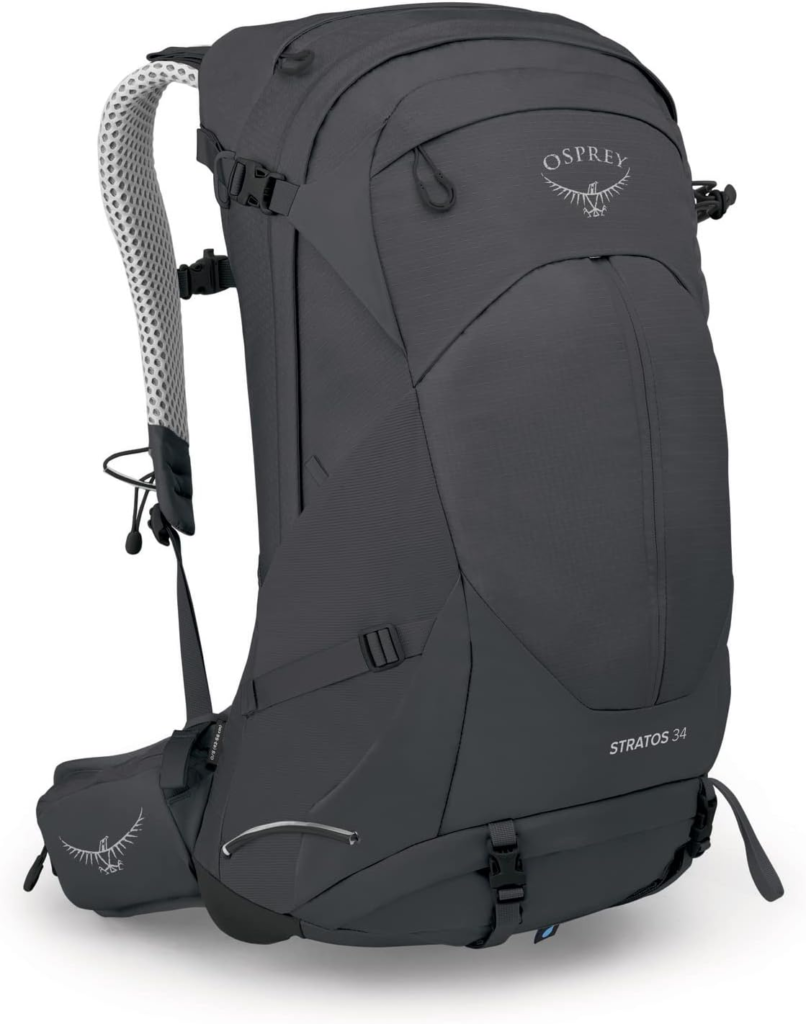
Best for: Longer day hikes and hikers who want strong load support without sacrificing back ventilation.
The Osprey Stratos 34 stands out because its back support comes from a complete carrying system rather than simply adding extra padding. Its 34-liter capacity is large enough for longer day hikes, changing weather, extra water, food, and emergency gear while remaining smaller than a traditional multi-day backpack.
At the center of the Stratos 34 is Osprey’s AirSpeed suspension system. A LightWire perimeter frame provides structure while a tensioned mesh back panel creates space between the pack and the hiker’s back. This combination allows considerably more airflow than a conventional padded back panel while still giving the pack a structure capable of supporting the load.
The pack also has an adjustable torso system, which is particularly important for back support. Being able to position the shoulder harness correctly for your torso length helps the hip belt and shoulder straps work together instead of relying on the shoulders to carry most of the weight.
A padded ErgoPull hip belt helps transfer the load toward the hips, while the load lifters allow the upper portion of the pack to be brought into a more controlled position. Osprey rates the Stratos 34 for loads between 10 and 30 pounds, making it a good match for hikers carrying more equipment than a lightweight daypack would normally handle.
Key Specifications
- Capacity: 34 liters
- Recommended load range: 10–30 lb
- Pack weight: approximately 3.36 lb
- Support structure: LightWire perimeter frame
- Back system: tensioned AirSpeed mesh suspension
- Torso adjustment: yes
- Load lifters: yes
- Hip belt: padded ErgoPull hip belt
- Rain cover: included
- Hydration compatible: yes
Why It Made Our List
The Stratos 34 is a particularly good example of why back support is not the same thing as back padding. Its frame, adjustable torso, hip belt, load lifters, and suspended back panel each serve a different purpose within the carrying system.
It is also a useful choice for hikers who find conventional backpacks hot against their backs. The suspended mesh creates airflow without requiring the pack to give up the structural features needed to manage a moderate hiking load.
Important Limitations
The Stratos 34 is not especially light for a 34-liter backpack. At more than three pounds before any gear is added, hikers who routinely carry very light loads may be better served by a simpler daypack.
Its 34-liter capacity may also be more space than needed for short hikes where only water, food, a few layers, and basic safety equipment are being carried.
Osprey describes the Stratos 34 as a men’s-fit backpack. The adjustable torso improves the available fit range, but it does not mean the pack will suit every body shape. Fit should still be checked with realistic weight in the pack before deciding to keep it.
Who Should Consider a Different Pack?
Choose something smaller and lighter if most of your hiking consists of short outings with minimal gear. Hikers who regularly carry more than about 30 pounds or need enough capacity for several days of backpacking should instead look at a larger pack designed for heavier loads.
For a hiker carrying a moderate load on longer day hikes, however, the Stratos 34 provides one of the strongest combinations of torso adjustment, load transfer, structural support, and ventilation in this group.
Check Current Price & Availability at Amazon
2. Osprey Kestrel LT 35 — Best for Stable Load Control
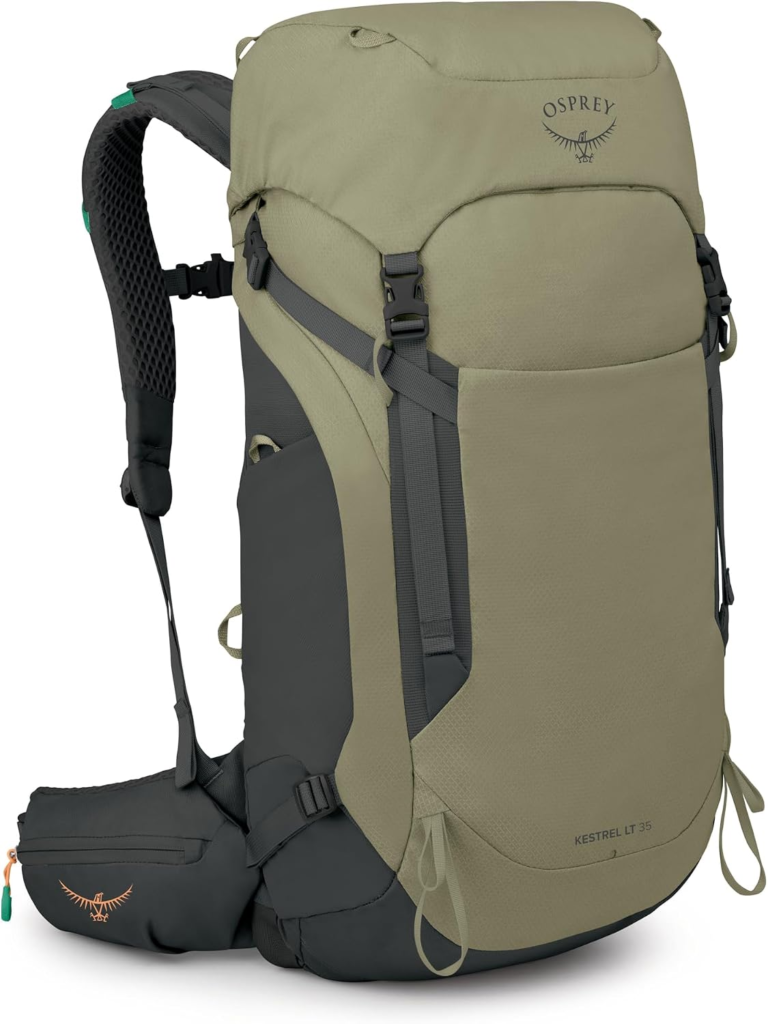
Best for: Heavier day hikes and lightweight overnight trips where keeping the load stable and close to the body is more important than maximum back ventilation.
The Osprey Kestrel LT 35 takes a different approach to support than the Stratos 34. Instead of suspending the pack away from the back with a tensioned mesh system, the Kestrel uses Osprey’s AirScape backpanel, which keeps the load closer to the body while providing cushioned support and ventilation channels.
That closer-fitting design can be useful when carrying a moderate load over uneven terrain, where pack movement and stability become increasingly important.
The Kestrel LT 35 has an adjustable torso system, allowing the shoulder harness to be positioned for the hiker’s torso length. An injection-molded framesheet adds structure to the backpanel, while the padded hip belt and load lifters help manage how the weight is distributed between the shoulders and hips.
Osprey rates the Kestrel LT 35 for loads between 10 and 30 pounds. Its 35-liter capacity makes it suitable for gear-heavy day hikes and potentially a lightweight overnight trip, depending on the size and amount of equipment being carried.
Key Specifications
- Capacity: 35 liters
- Recommended load range: 10–30 lb
- Pack weight: approximately 3.19 lb
- Support structure: injection-molded framesheet
- Back system: AirScape mesh-covered foam backpanel
- Torso adjustment: yes
- Load lifters: yes
- Hip belt: padded ErgoPull hipbelt
- Rain cover: included
- Hydration compatible: yes
Why It Made Our List
The Kestrel LT 35 earns its place because its support features work together as a complete carrying system. The adjustable torso helps position the pack correctly, the framesheet provides structure, the hip belt helps transfer load, and the load lifters help control the upper portion of the backpack.
Its close-to-body design also distinguishes it from the Stratos 34. Hikers who prefer greater pack stability or who regularly travel over uneven terrain may prefer this type of carrying system over a more suspended, ventilation-focused design.
Important Limitations
The tradeoff for keeping the pack closer to the body is ventilation. The AirScape backpanel includes airflow channels, but it does not create the same amount of separation between the backpack and the hiker’s back as the suspended-mesh system used on the Stratos 34.
At just over three pounds empty, the Kestrel LT 35 is also not an ultralight backpack. Hikers carrying very small day-hiking loads may not need this much structure.
Its 35-liter capacity can work for an overnight trip if the rest of the gear is relatively compact, but hikers carrying bulkier camping equipment or several days of food will likely need a larger backpack.
Osprey also identifies the Kestrel LT 35 as a men’s-fit model. Adjustable torso length improves fit flexibility, but hikers should still confirm that the shoulder harness, torso range, and hip belt suit their body.
Who Should Consider a Different Pack?
Hikers whose main priority is keeping as much airflow as possible between their back and the backpack may prefer the Osprey Stratos 34.
Those carrying only a light day-hiking load can probably use a smaller and lighter pack, while hikers consistently carrying more than about 30 pounds should look for a backpack designed for a higher load range and greater capacity.
For hikers who want a structured, adjustable pack that keeps a moderate load stable and close to the body, the Kestrel LT 35 provides a strong balance of support, capacity, and load control.
Check Current Price & Availability at Amazon
3. Gregory Zulu 45 — Best for Day-to-Overnight Crossover Hiking
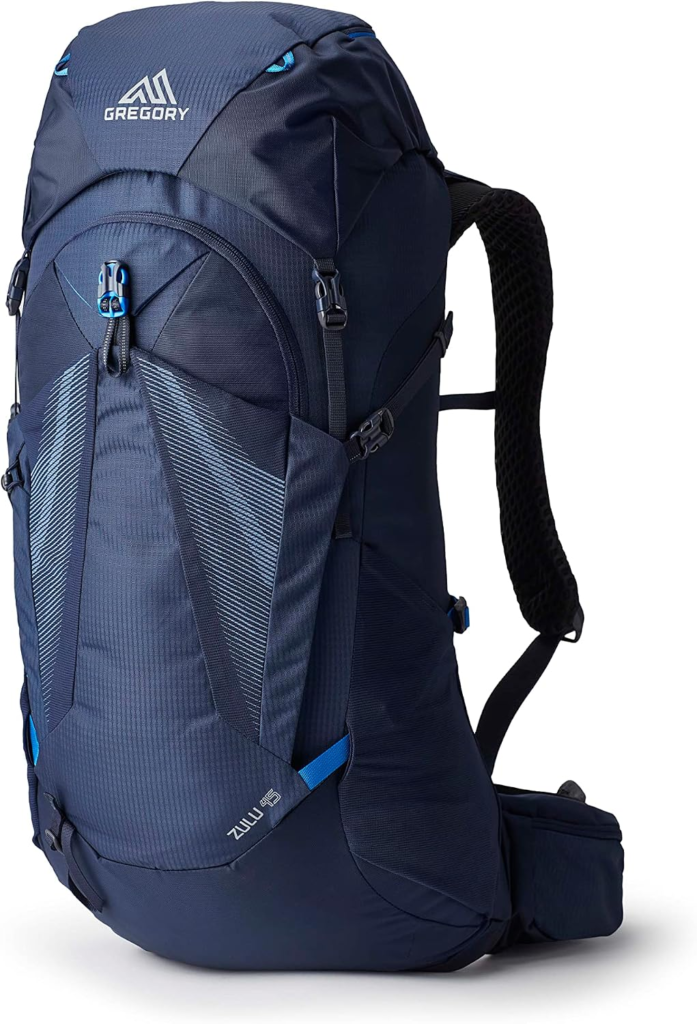
Best for: Hikers who want enough capacity and load support for long day hikes or short overnight trips without moving all the way to a large multi-day backpack.
The Gregory Zulu 45 fills the gap between a supportive daypack and a traditional backpacking pack. Its 45-liter capacity provides considerably more room than the Osprey Stratos 34 or Kestrel LT 35, while its carrying system is designed to manage loads of up to 40 pounds.
A major strength of the Zulu 45 is its adjustable torso system, which provides 3.5 inches of adjustment. This helps the hiker position the shoulder harness and hip belt correctly rather than trying to compensate for a poorly fitting fixed-length pack.
The Zulu also uses Gregory’s FreeFloat dynamic hipbelt. Instead of functioning only as a padded strap around the waist, the hipbelt is connected to the pack’s frame and is designed to move with the hiker. This allows the hipbelt to help support and control the load while accommodating some of the natural movement that occurs during hiking.
Structural support comes from an alloy-steel perimeter frame. A full-length tensioned-mesh backpanel creates space between the backpack and the hiker’s back, providing ventilation while the frame maintains the structure needed to manage a heavier load.
Key Specifications
- Capacity: 45 liters
- Maximum carry weight: 40 lb
- Pack weight: approximately 3.56 lb for the MD/LG size
- Support structure: alloy-steel perimeter frame
- Back system: full-length tensioned-mesh suspension
- Torso adjustment: 3.5 inches
- Hip belt: FreeFloat dynamic padded hipbelt
- Internal frame: yes
- Hydration compatible: yes
- Main access: top opening plus U-Zip access
Why It Made Our List
The Zulu 45 earns its place because the additional capacity is matched by a carrying system designed to manage the additional weight.
Its perimeter frame provides structural support, while the FreeFloat hipbelt connects directly to that frame to help manage the load around the hips. Adjustable torso length makes it possible to position that system more accurately for the individual hiker.
The 45-liter capacity also makes the Zulu particularly useful for hikers whose needs fall between day hiking and backpacking. It can accommodate extra clothing, food, water and emergency equipment on long day hikes while providing enough room for a compact overnight setup.
The tensioned-mesh backpanel adds ventilation without removing the frame structure that helps support the load.
Important Limitations
At about three and a half pounds empty, the Zulu 45 is not a lightweight choice for hikers who normally carry minimal gear. Its larger capacity can also make it tempting to pack more equipment than a trip actually requires.
Although Gregory rates the pack for loads up to 40 pounds, that does not mean every hiker will find a 40-pound load comfortable. Pack fit, physical conditioning, terrain and the amount of time spent carrying the load all matter.
The Zulu 45 is also a men’s-fit backpack and comes in different torso-size ranges. The adjustable torso provides useful flexibility within those ranges, but choosing the appropriate pack size is still important.
Who Should Consider a Different Pack?
Hikers who mainly take short or moderate day hikes will probably find the Zulu 45 larger and heavier than necessary. The Osprey Stratos 34 or Kestrel LT 35 provides similar fit and load-management advantages in a smaller package.
Hikers planning several nights on the trail, particularly when carrying bulkier shelter, sleep systems, food or cold-weather equipment, may instead benefit from a larger backpack designed specifically for multi-day loads.
For hikers who regularly move between long day hikes and lightweight overnight trips, however, the Gregory Zulu 45 provides a strong combination of capacity, adjustable fit, frame support, hip-belt load transfer, and ventilation.
Check Current Price & Availability at Amazon
4. TETON Signal 65 — Best Budget-Conscious Choice for Multi-Day Backpacking
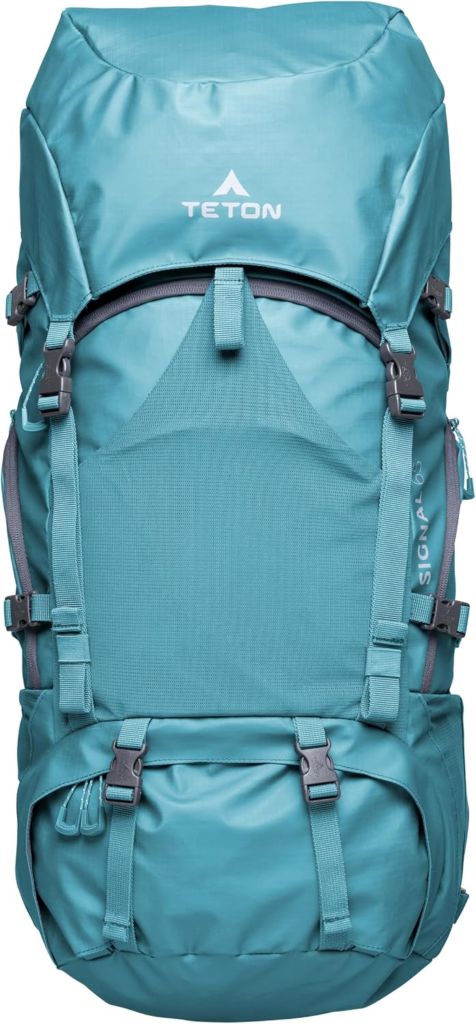
Best for: Hikers who need the capacity and adjustability of a multi-day internal-frame backpack but do not want to move immediately into the higher-priced premium-pack category.
The TETON Signal 65 is substantially different from the first three backpacks in this guide. With 65 liters of capacity, it is designed for multi-day trips rather than ordinary day hiking. That extra space provides room for a sleep system, shelter, cooking equipment, additional clothing, food, and other equipment needed when staying on the trail for several days.
Food can become one of the heavier parts of a multi-day load as trip length increases. Our guide to backpacking calorie density explains how to carry enough trail energy without adding unnecessary food weight.
More importantly for this guide, the Signal 65 combines that capacity with an internal frame and adjustable back system rather than relying only on padded shoulder straps.
TETON’s adjustable back panel accommodates torso lengths from 18 to 24 inches, while the shoulder, chest, and waist adjustments allow the carrying system to be positioned around the individual hiker. The pack also uses a substantial waist belt intended to help manage the larger loads associated with backpacking.
A padded, ventilated back panel provides airflow against the back. Unlike the suspended-mesh designs used on some of the other backpacks in this guide, the Signal keeps the carrying system relatively close to the body.
Key Specifications
- Capacity: 65 liters
- Suggested trip length: 3–5 days
- Pack weight: approximately 4.9 lb
- Support structure: internal frame
- Torso range: 18–24 inches
- Waist-belt range: 35–70 inches
- Back system: adjustable padded ventilation panel
- Fit adjustments: waist, chest, and shoulders
- Hydration compatible: yes, up to a 3L bladder
- Sleeping-bag compartment: yes
- Rain cover: included
Why It Made Our List
The Signal 65 gives hikers a more affordable way to move into an adjustable internal-frame carrying system designed for multi-day trips.
Its most important advantage is not simply the 65-liter capacity. The internal frame, adjustable torso range, waist belt, and multiple fit adjustments give the pack the basic structural features we expect from a backpack intended to carry multi-day gear.
It also provides a useful contrast with the smaller packs in this guide. A hiker carrying equipment for several days needs more than extra storage space. As load weight increases, correct torso positioning, frame structure, and effective transfer of some of that load toward the hips become increasingly important.
For a beginner preparing for longer backpacking trips, the Signal 65 provides those core structural features without requiring the same investment as many premium backpacking packs.
Important Limitations
The Signal 65 is the heaviest backpack in this group. At approximately 4.9 pounds before any equipment is added, a significant part of the hiker’s total carrying weight comes from the backpack itself.
Its 65-liter capacity is also unnecessary for most day hikers. Choosing a large pack simply because it offers more room can encourage carrying equipment that is not needed.
TETON provides torso and waist adjustment ranges, but it does not publish the same detailed recommended load range for the Signal 65 that some premium backpack manufacturers provide. We therefore would not choose this pack based on an assumed maximum carrying weight. The amount a hiker should comfortably carry still depends on fit, equipment, conditioning, terrain, and trip length.
The Signal’s back panel provides padding and ventilation, but hikers whose highest priority is maximum airflow may prefer a suspended-mesh system such as the one used on the Osprey Stratos 34 or Gregory Zulu 45.
Who Should Consider a Different Pack?
Day hikers should generally choose a smaller backpack. Even hikers carrying extra clothing, food, and emergency gear are unlikely to need 65 liters for a normal day hike.
Hikers who place a high priority on reducing the empty weight of their backpack may also prefer a lighter multi-day model, although that may involve a higher purchase price or different compromises in durability, capacity, or features.
For a beginner moving into multi-day backpacking who wants an adjustable internal-frame pack without immediately entering the premium price range, the TETON Signal 65 provides a practical combination of capacity, fit adjustment, structural support, and value.
If you are still determining how much shelter equipment your backpack needs to accommodate, our 3-season shelter system guide can help you decide what the conditions actually require before choosing pack capacity.
Check Current Price & Availability at Amazon
How to Check Backpack Fit Before You Keep It
A backpack can have an excellent suspension system and still be the wrong choice if it does not fit your body properly. Before removing tags, taking it onto the trail, or deciding that a pack feels comfortable, test it with a realistic load.
Start by adding enough weight to approximate what you normally expect to carry. An empty backpack can feel comfortable even when the torso length, hip belt, or shoulder harness is not positioned correctly.
1. Position the Hip Belt First
Loosen the shoulder straps slightly and position the hip belt around the top of your hip bones. Tighten it until it feels secure without being excessively tight.
The goal is for the hip belt to help support the load rather than allowing the entire pack weight to hang from the shoulders.
If the hip belt consistently rides too high, too low, or cannot wrap comfortably around your hips, the pack may not be the right size or shape for you.
2. Check the Torso Length
Once the hip belt is positioned correctly, tighten the shoulder straps until they sit comfortably around the shoulders without pulling the backpack excessively upward.
On an adjustable-torso backpack, change the torso setting if the shoulder harness does not sit naturally against your shoulders or if there is an obvious gap between the harness and your upper back.
You should not need to move the hip belt away from the proper position simply to make the shoulder straps fit.
3. Adjust the Load Lifters
If the backpack has load lifters, tighten them gently after the shoulder straps are positioned.
Load lifters help control the upper part of the backpack and bring the load into a more stable position. They should not be tightened so aggressively that the shoulder straps lift away from your shoulders or become uncomfortable.
4. Fasten the Sternum Strap
The sternum strap helps keep the shoulder straps positioned comfortably across the chest.
Adjust it so that the straps remain secure without restricting normal breathing or pulling the shoulder harness unnaturally inward.
5. Walk Around With the Pack Loaded
Do not judge the fit while standing still for only a few seconds.
Walk around, climb a flight of stairs if possible, bend slightly, and move your upper body from side to side. Pay attention to whether the pack shifts excessively or creates uncomfortable pressure points.
A properly adjusted hiking backpack should feel stable enough that the load moves with you rather than swinging independently from side to side.
6. Recheck the Weight on Your Shoulders
Your shoulders will still help stabilize the backpack, but they should not feel as though they are supporting the entire load.
If tightening the hip belt and adjusting the torso length does not improve the weight distribution, the pack may not fit correctly or may not have enough structure for the amount of weight you are carrying.
7. Test the Pack With Your Real Gear
Before committing to a backpack for longer hikes, load it with the equipment you actually intend to carry.
Water bottles, a hydration bladder, food, clothing, shelter, and heavier equipment can change the way weight sits inside the backpack. A pack that feels balanced with random household items may behave differently once your normal hiking gear is packed inside.
The final test is not whether the backpack has the most padding or the longest list of features. It is whether the pack can be adjusted to fit your torso and hips, remain stable while you move, and carry your expected load without forcing one part of your body to do all the work.
Final Decision: Choose the Fit and Support System First
The best hiking backpack with back support is not necessarily the one with the most padding, the largest capacity, or the highest price. The better choice is the pack that fits your torso and hips correctly, provides enough structure for the load you intend to carry, and matches the type of hiking you actually do.
For longer day hikes where ventilation is a priority, the Osprey Stratos 34 offers a strong combination of adjustable fit, load transfer, and suspended-mesh airflow.
If you prefer a pack that holds the load closer to your body for greater stability, particularly on uneven terrain, the Osprey Kestrel LT 35 is the stronger fit.
Hikers who regularly move between long day hikes and lightweight overnight trips may benefit from the additional capacity and load-management features of the Gregory Zulu 45.
For multi-day backpacking on a more limited budget, the TETON Signal 65 provides substantially more capacity along with an adjustable torso and internal-frame carrying system.
Whichever backpack you choose, resist the temptation to judge it while empty. Load it with the gear you expect to carry, adjust the hip belt and torso correctly, and spend some time moving around with it before deciding whether the fit works for you.
A backpack cannot eliminate the physical demands of carrying weight on the trail. What a well-fitted carrying system can do is help distribute that load more effectively and keep the pack stable as you move.
For beginners especially, fit first, carrying system second, capacity third, and extra features after that is a much better way to choose a hiking backpack than simply looking for the thickest padding or the longest feature list.
Frequently Asked Questions
What features actually provide back support in a hiking backpack?
Useful backpack support comes from the complete carrying system rather than padding alone. Important features can include correct torso fit, a well-positioned hip belt, a frame or structural stays when appropriate, properly fitted shoulder straps, and load lifters or other load-control adjustments. These features work together to distribute and stabilize the weight you are carrying.
Is an internal-frame backpack always better for back support?
No. An internal frame becomes more valuable as pack weight and trip length increase, but a lightweight day hiker may not need that much structure. For short hikes with a light load, good fit, comfortable shoulder straps, and a secure waist or hip belt may be enough. The goal is to match the carrying system to the weight and type of hiking you actually do.
Where should the hip belt sit on a hiking backpack?
The hip belt should generally sit around the top of your hip bones rather than hanging around your waist. It should feel secure without being excessively tight. When properly positioned, the hip belt can help transfer part of the pack’s weight away from the shoulders and toward the hips.
How do I know if the torso length of a backpack is correct?
Start by positioning the hip belt correctly, then adjust the shoulder harness. The shoulder straps should sit naturally around your shoulders without forcing the hip belt out of position. If an adjustable-torso pack still leaves a large gap around the shoulders or requires the hip belt to sit too high or too low, the pack may not be the right size or shape for your body.
Do load lifters make a hiking backpack more comfortable?
Load lifters can help control the upper portion of a backpack and bring the load into a more stable position, but they are only one part of the fit system. They work best when the torso length, hip belt, and shoulder straps are already adjusted correctly. Tightening load lifters cannot compensate for a backpack that does not fit properly.
How much backpack capacity does a beginner hiker need?
Capacity depends on the trip rather than the hiker’s experience level alone. Short day hikes usually require far less space than overnight or multi-day trips. A larger backpack is not automatically better because unused capacity can encourage unnecessary packing. Choose enough room for the food, water, clothing, safety equipment, and overnight gear your trip actually requires.

Leave a Reply