
Lightweight & Military-Grade Options Reviewed for Trail Use
Why Serious Hikers Still Carry a Rain Poncho
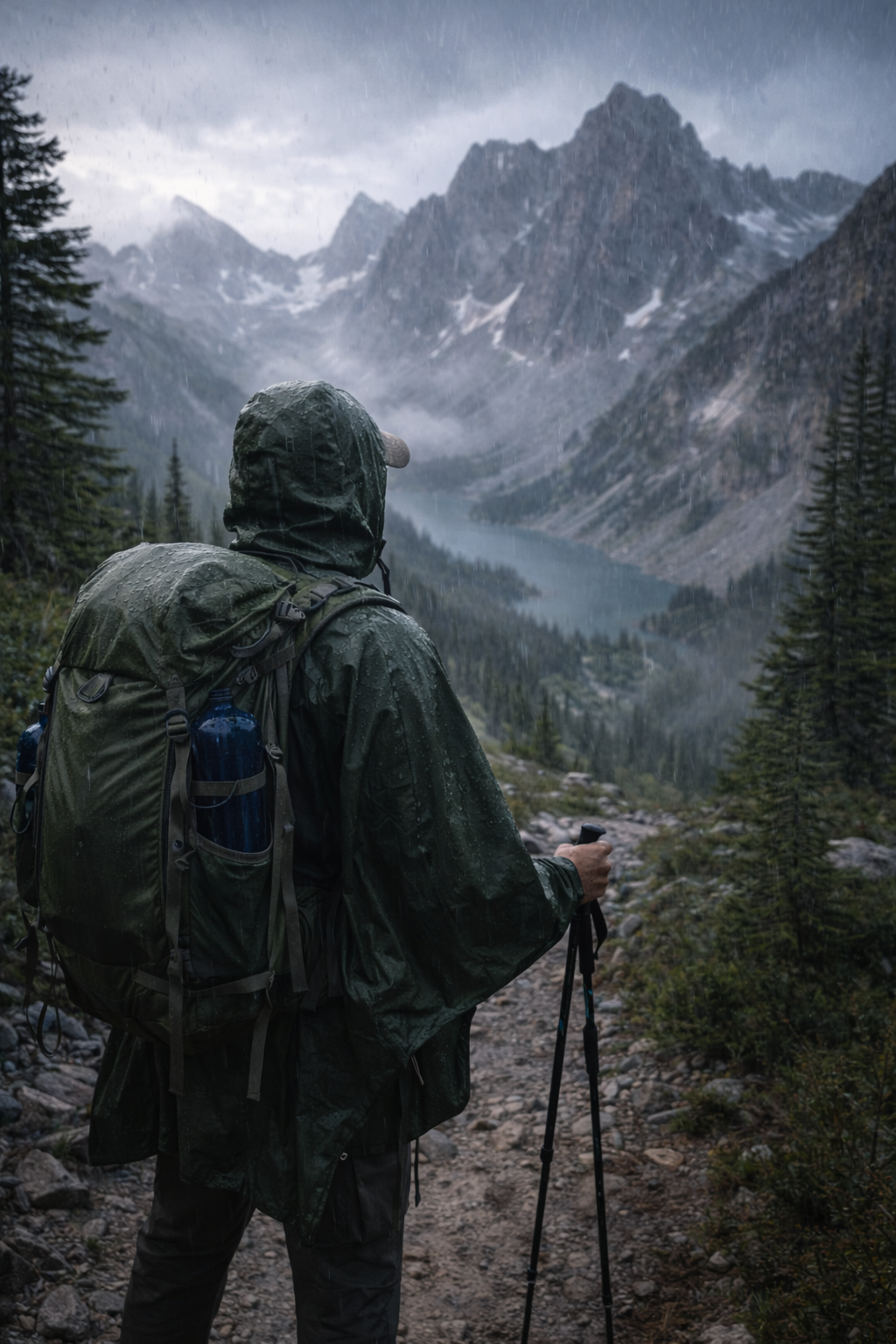
There’s a reason rain ponchos for hiking haven’t disappeared, even in an era dominated by technical waterproof shells and three-layer membranes.
When you are climbing steadily uphill in cool rain, working harder than you expected, something uncomfortable happens inside most rain jackets. You stay dry from the outside, but your own body moisture builds up on the inside. Even high-end breathable membranes struggle when exertion increases. Eventually, you feel damp anyway.
A rain poncho approaches the problem differently. Instead of sealing you in, it hangs over you. Air moves freely underneath. Moisture escapes. Your insulation layers stay protected from falling rain without trapping heat the same way a close-fitting shell does.
For hikers, that difference matters.
A poncho can also cover your pack. That eliminates the need for a separate rain cover. In some designs, it can even serve as an emergency tarp. That multi-function capability is why ponchos continue to show up in ultralight kits, bushcraft setups, and even military field systems.
But not all ponchos are built the same. The material determines durability. The cut determines wind stability. The reinforcement determines whether it can realistically function as shelter. And weight differences matter far more on a multi-day hike than on a short afternoon loop.
In this guide, we’re not just listing features. We’re examining how each poncho behaves in real hiking conditions so you can decide which trade-offs make sense for your style of travel.
Please enjoy our reviews below, some links on this page are affiliate links. If you buy through these links, we may earn a commission at no extra cost to you. This helps support our site and allows us to continue producing helpful content.
Rain Poncho Comparison Summary
| Product | Weight Class | Durability | Shelter Capability | Best For |
|---|---|---|---|---|
| Globotrekker | Light | Moderate | Minimal | Budget backpacking |
| onewind Silnylon | Ultralight | Moderate | Excellent | Thru-hikers |
| longsinger Sleeved | Moderate | Moderate | Limited | Windy mountain hikes |
| Arcturus Ripstop | Midweight | High | Moderate | Brush-heavy terrain |
| USGI Industries | Heavier | Very High | Excellent | Preparedness & bushcraft |
1. Adventure World Globotrekker Backpack Poncho
Best Budget Option for Pack Coverage and Casual Backpacking
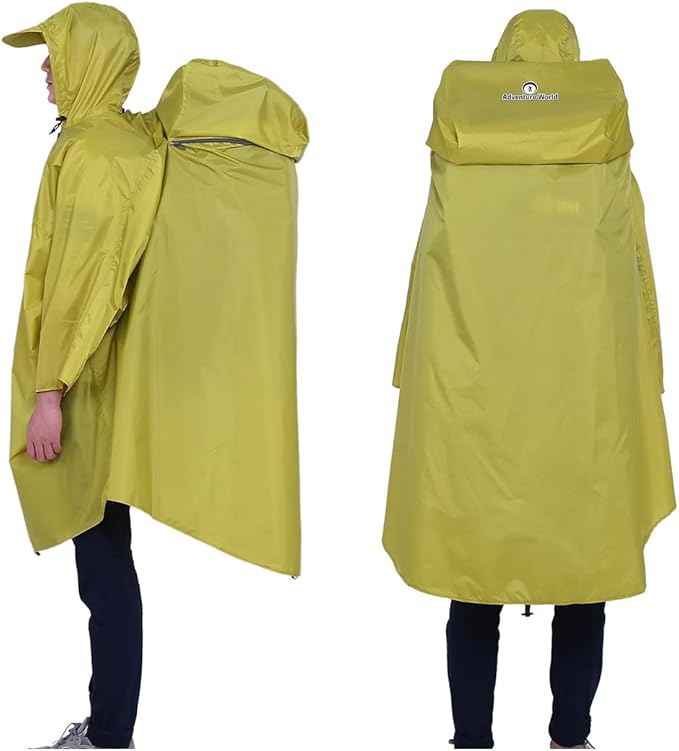
The Globotrekker Backpack Poncho is built around simplicity. It uses a waterproof polyester fabric with a protective coating that prevents rain penetration. The defining feature is its extended rear volume, designed specifically to drape over a loaded backpack without compressing it.
On wooded trails in steady rain, this poncho performs well. Because it hangs loosely, airflow remains strong. When hiking in humid conditions where sweat management becomes a challenge, this open design can feel far more comfortable than a rain jacket.
However, the looser cut reveals its limits when wind becomes a factor. Above treeline or on exposed ridgelines, the poncho can lift and shift if not secured properly. The fabric is lightweight enough that repeated abrasion from brush could eventually create wear points.
This poncho works best when terrain is moderate and wind exposure is limited. It is especially appealing to newer backpackers who want effective rain protection without investing heavily in more technical gear.
Pros
- Affordable entry point
- Covers both hiker and backpack
- Good ventilation in humid conditions
- Quick to deploy during sudden rain
Cons
- Moderate durability in heavy brush
- Wind can cause billowing
- Limited use as a structural shelter
If most of your hiking happens in forested environments and your pack size is under 60 liters, this poncho offers strong value without unnecessary complexity.
Check Current Price & Availability at Amazon
2. onewind Hooded Silnylon Rain Poncho
Best Ultralight Multi-Use Option for Thru-Hikers
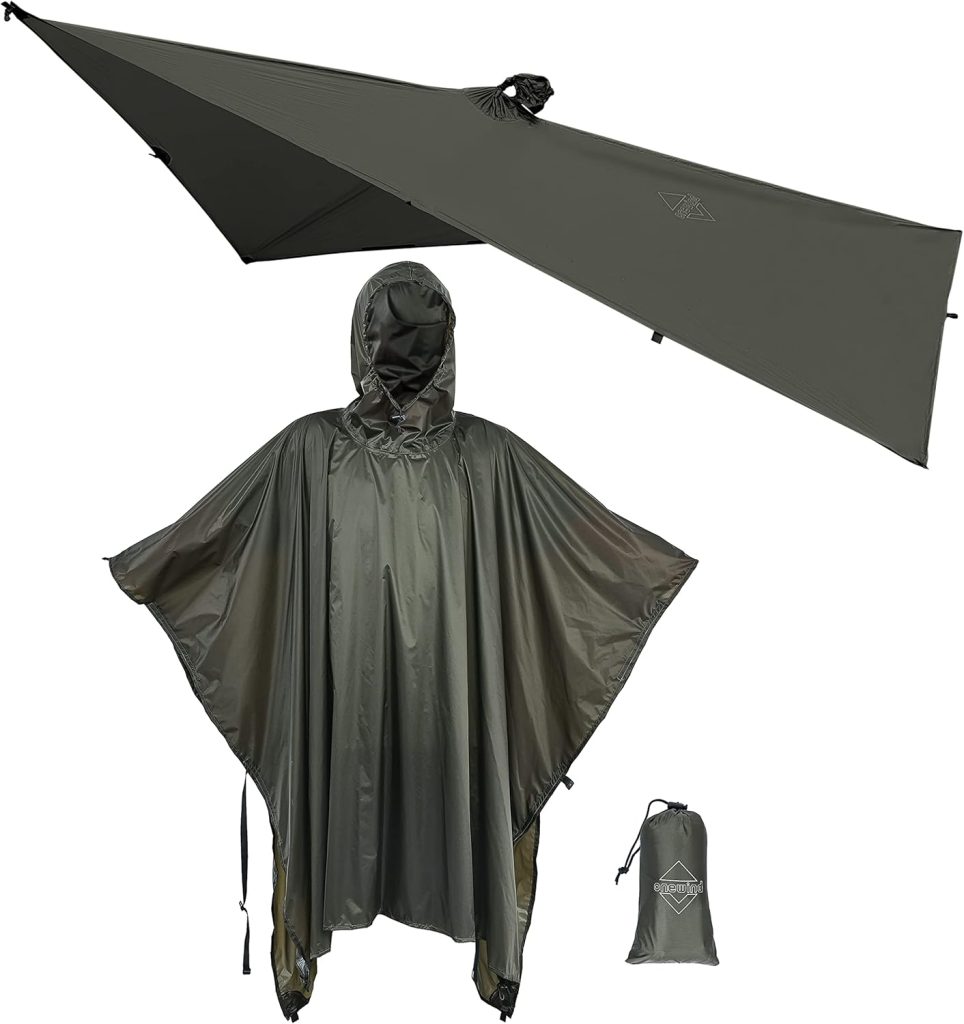
The onewind poncho moves into a different category entirely because of its material choice. It uses silnylon, which is silicone-coated nylon. This is the same class of fabric found in many ultralight tarps and shelters.
Silnylon is valued for its exceptional strength relative to weight. It compresses extremely small in a pack while maintaining reliable waterproof performance. The addition of tie-out loops transforms this poncho from simple rainwear into a legitimate multi-use tool.
On trail, the difference becomes clear. In light to moderate rain, it behaves like any poncho, ventilating effectively and covering both hiker and pack. But when paired with trekking poles or lightweight cordage, it can be pitched as a minimalist tarp. That dual function appeals strongly to ultralight hikers who prioritize gear that performs more than one role.
There is a trade-off. Silnylon requires a bit more care around sharp branches or heavy abrasion. It is durable for its weight class, but not indestructible. Shelter pitching also requires some familiarity. It is not a plug-and-play tent replacement without practice.
For hikers who intentionally build systems around weight reduction and multi-use efficiency, this poncho stands out as one of the most versatile options available especially when paired with a good ultralight groundsheet.
Pros
- Extremely lightweight
- Packs very small
- Converts into emergency tarp
- High waterproof reliability
Cons
- Requires practice to use as shelter
- Thin material needs careful handling
- Higher cost than entry-level ponchos
If you are hiking long distances where every ounce matters, this design begins to make more sense than a traditional rain jacket.
Check Current Price & Availability at Amazon
3. longsinger Rain Poncho with Hood and Sleeves
Best for Windy Conditions and Trekking Pole Use
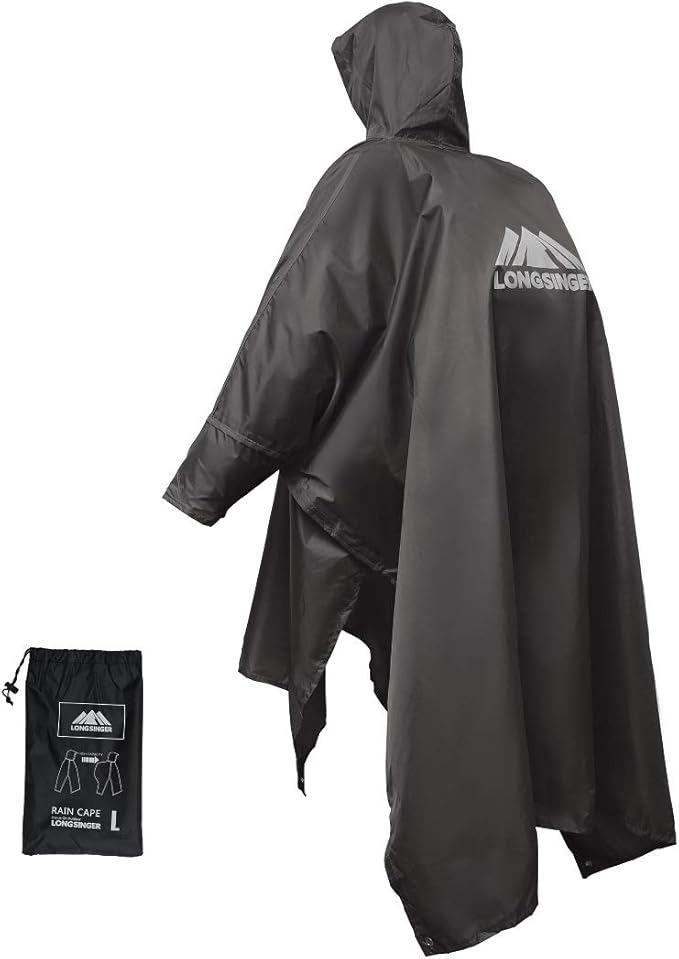
Traditional ponchos leave the arms exposed. That openness improves ventilation, but it can also allow wind-driven rain to soak sleeves underneath.
The longsinger design modifies the classic shape by adding partial sleeves. This small change has a noticeable effect in exposed environments. When using trekking poles in steady wind, the additional arm coverage increases comfort and reduces flapping fabric.
The material is typically a coated synthetic that offers reliable waterproof performance but does not prioritize ultralight weight savings. It packs larger than silnylon and carries slightly more mass.
On windy ridgelines or in alpine conditions where rain moves sideways, this design offers more control than fully open ponchos. The trade-off is slightly reduced airflow, meaning you may feel warmer during strenuous climbs.
This poncho is less about minimalism and more about stability in variable weather.
Pros
- Improved wind management
- Better arm coverage for pole use
- More stable fit
- Affordable price range
Cons
- Heavier than ultralight options
- Slightly reduced ventilation
- Bulkier in pack
If you frequently hike in mountainous terrain where weather changes quickly, the sleeve modification can be more significant than it initially appears.
Check Current Price & Availability at Amazon
4. Arcturus Rain Poncho (Ripstop Nylon)
Best Durable Option for Brush and Rugged Terrain
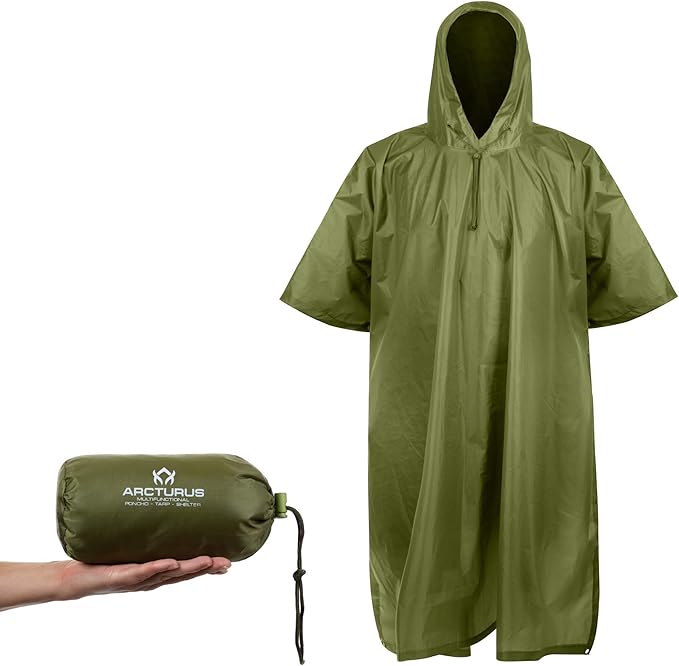
The Arcturus poncho shifts the focus toward durability. Ripstop nylon is engineered with reinforced grid patterns that prevent small tears from spreading. That structural advantage becomes valuable in dense forest, bushwhacking, or off-trail travel.
On trail, the added structure of ripstop fabric improves wind behavior compared to thinner polyester ponchos. It feels more substantial and less prone to uncontrolled flapping. This added resilience makes it attractive for hunters, anglers, and backcountry hikers who move through uneven vegetation.
The weight increases compared to ultralight silnylon, but durability increases dramatically as well. For hikers who frequently encounter branches, rock edges, and heavy weather, that added confidence matters.
This poncho is not the lightest, but it strikes a balance between protection and longevity.
Pros
- Strong ripstop nylon construction
- Better resistance to abrasion
- More stable in wind
- Reliable long-term durability
Cons
- Heavier than ultralight designs
- Larger packed size
- Less appealing for gram-counters
If your hiking includes off-trail sections or dense forest environments, durability often becomes more important than shaving a few ounces.
Check Current Price & Availability at Amazon
5. USGI Industries Military Style Multi-Use Ripstop Poncho
Best Military-Inspired Option for Preparedness and Shelter Flexibility
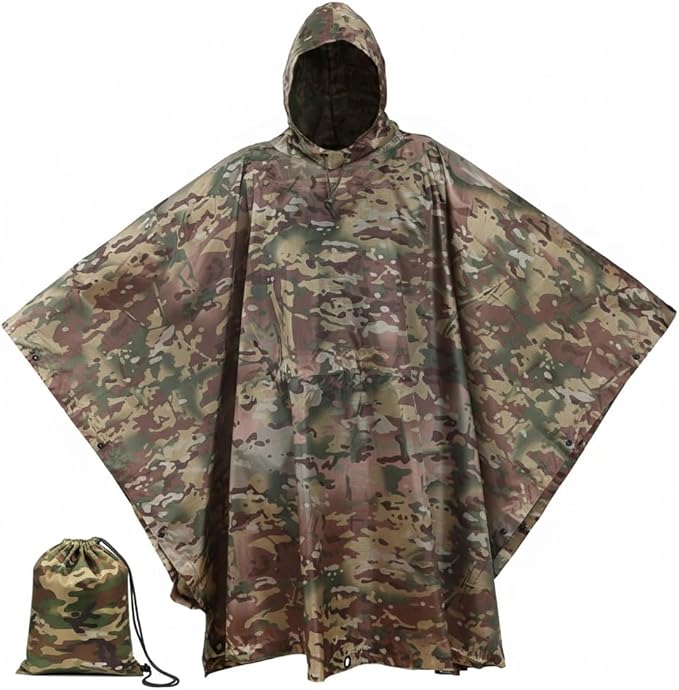
The USGI Industries poncho is modeled after military field ponchos that have been used for decades. It emphasizes durability, reinforced grommets, and multi-use capability.
This is not a disposable rain layer. The ripstop nylon construction and reinforced attachment points allow it to function as a legitimate tarp when configured correctly. When paired with cordage, it can create an A-frame shelter, lean-to, or emergency cover.
On trail, it performs similarly to other ripstop ponchos in rain protection. Where it stands apart is its adaptability. The reinforced structure handles repeated pitching more confidently than lightweight alternatives.
The additional material and reinforcement add weight, so it is not designed for ultralight hikers. It appeals more strongly to preparedness-focused hikers, bushcrafters, or those who want a dependable backup shelter system integrated into their rain gear.
Pros
- Durable ripstop nylon
- Reinforced grommets for tarp setup
- Reliable field-tested design
- Strong multi-use functionality
Cons
- Heavier than minimalist options
- Bulkier packed profile
- Camouflage styling may not suit everyone
If you prioritize redundancy and shelter adaptability over weight savings, this poncho offers peace of mind in unpredictable conditions.
Check Current Price & Availability at Amazon
Which Rain Poncho Makes Sense for You?
If you primarily hike short forested trails in moderate climates, the Globotrekker provides practical protection without unnecessary cost.
If you are building a lightweight system for multi-day backpacking or thru-hiking, the onewind silnylon poncho offers unmatched versatility relative to weight.
If your hiking often includes exposed ridgelines or wind-driven storms, the longsinger’s sleeve design improves stability and comfort.
If durability in brush-heavy terrain matters most, the Arcturus offers stronger fabric resilience.
If you value preparedness and want a poncho that can confidently serve as a shelter system in emergencies, the USGI military-style design provides that added structural confidence.
Final Thoughts: Rain Protection Is About Temperature Control, Not Just Staying Dry
Cold rain combined with wind lowers core temperature faster than most hikers expect. Wet insulation layers compound the problem. A poncho that covers both you and your pack can prevent that cascade.
But no rain system works alone. Your layering strategy, route planning, shelter knowledge, and weather awareness all play a role.
The best rain poncho for hiking in 2026 is not about brand preference. It is about understanding your terrain, your hiking style, and the conditions you realistically encounter.
Choose accordingly.
And if you have taken one of these ponchos into real storm conditions, your experience matters. Trail-tested feedback is what helps other hikers make better decisions.
If you have enjoyed this article, please also read our other post.



Leave a Reply