
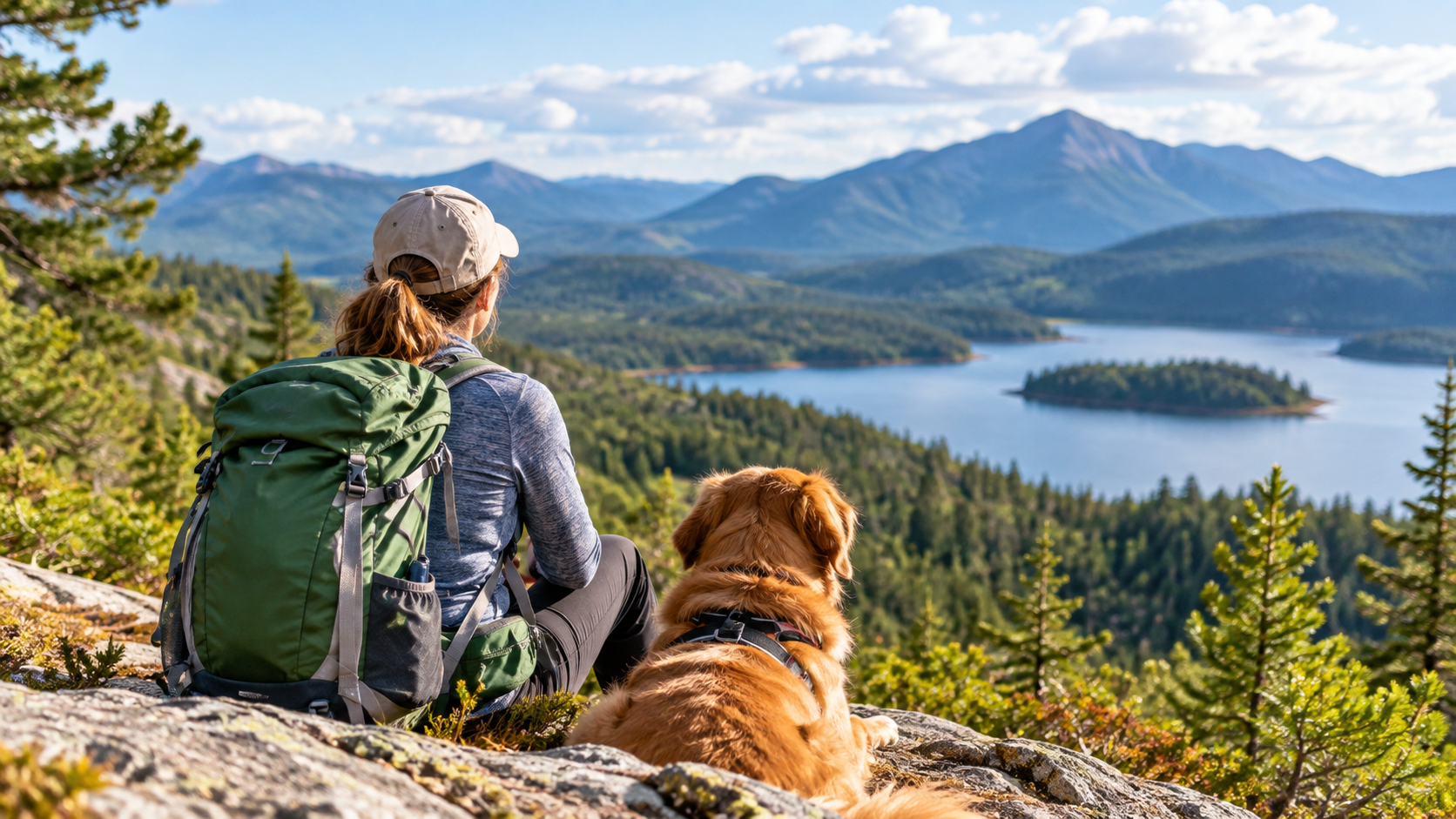
A beginner hiking roadmap doesn’t need to start with a big goal, expensive gear, or weeks of preparation. Your first job is much simpler: choose an outing that fits where you are today, prepare well enough for that outing, and come home with a better idea of what you want to try next.
That matters because beginner hiking can quickly feel more complicated than it really is. One person tells you how many miles you should walk. Another gives you a long equipment list. Trail descriptions introduce elevation gain, difficulty ratings, terrain, navigation, and weather. Before long, a simple walk outdoors can start to feel like something you need to study for.
You don’t.
A better way to begin is to build your hiking skills in layers. You learn enough to make one reasonable decision, go hiking, notice what you learn, and use that experience to make the next decision a little better.
This roadmap shows you how those pieces fit together and where to go when you need more help with one of them.
1. Start With the Hike You Can Do Now
Your first hike does not need to be impressive.
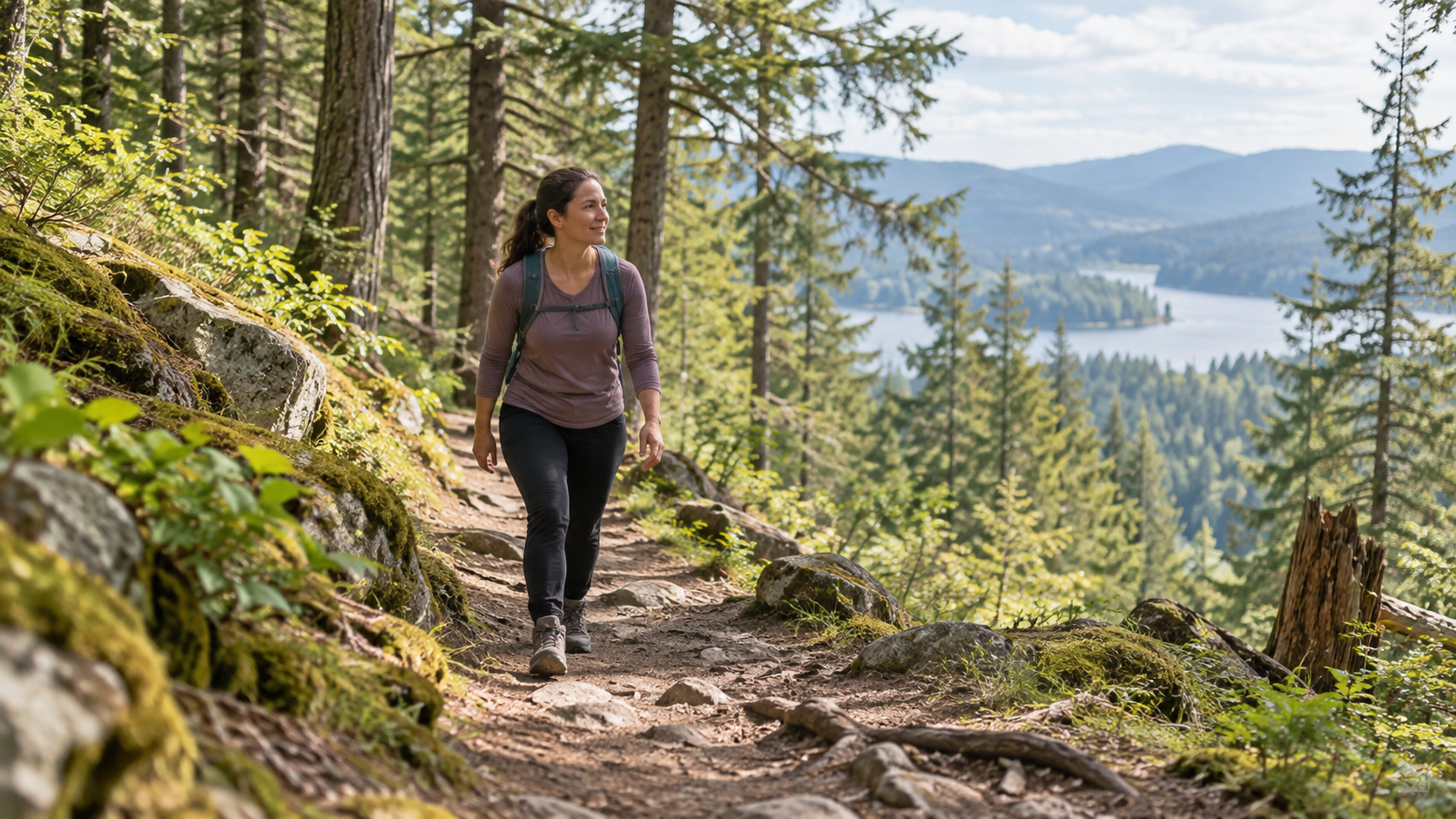
A nearby nature trail, conservation area, park loop, or other clearly marked route can be an excellent starting point. What matters is that the outing gives you room to learn without requiring too many unfamiliar skills at once.
- Is the route clearly marked?
- How much climbing is involved?
- What is the trail surface like?
- How long might the outing reasonably take?
- What weather and temperatures are expected?
- Will you have enough daylight?
- Are there current closures, hazards, permits, or access restrictions?
A three-mile trail can sometimes be much more demanding than a five-mile trail. Steep climbing, loose footing, heat, mud, snow, difficult navigation, or exposure can change the character of an outing considerably.
That is why the goal isn’t to find the maximum distance you can complete. It is to choose a hike that gives you enough margin to deal with something taking longer or feeling harder than expected.
If distance is your main uncertainty, our guide to how far a beginner should hike helps you think about distance, time, elevation, and your current walking experience together.
If you’re still wondering what actually happens on a first hiking outing, How to Start Hiking as a Complete Beginner takes you through that first experience in more detail.
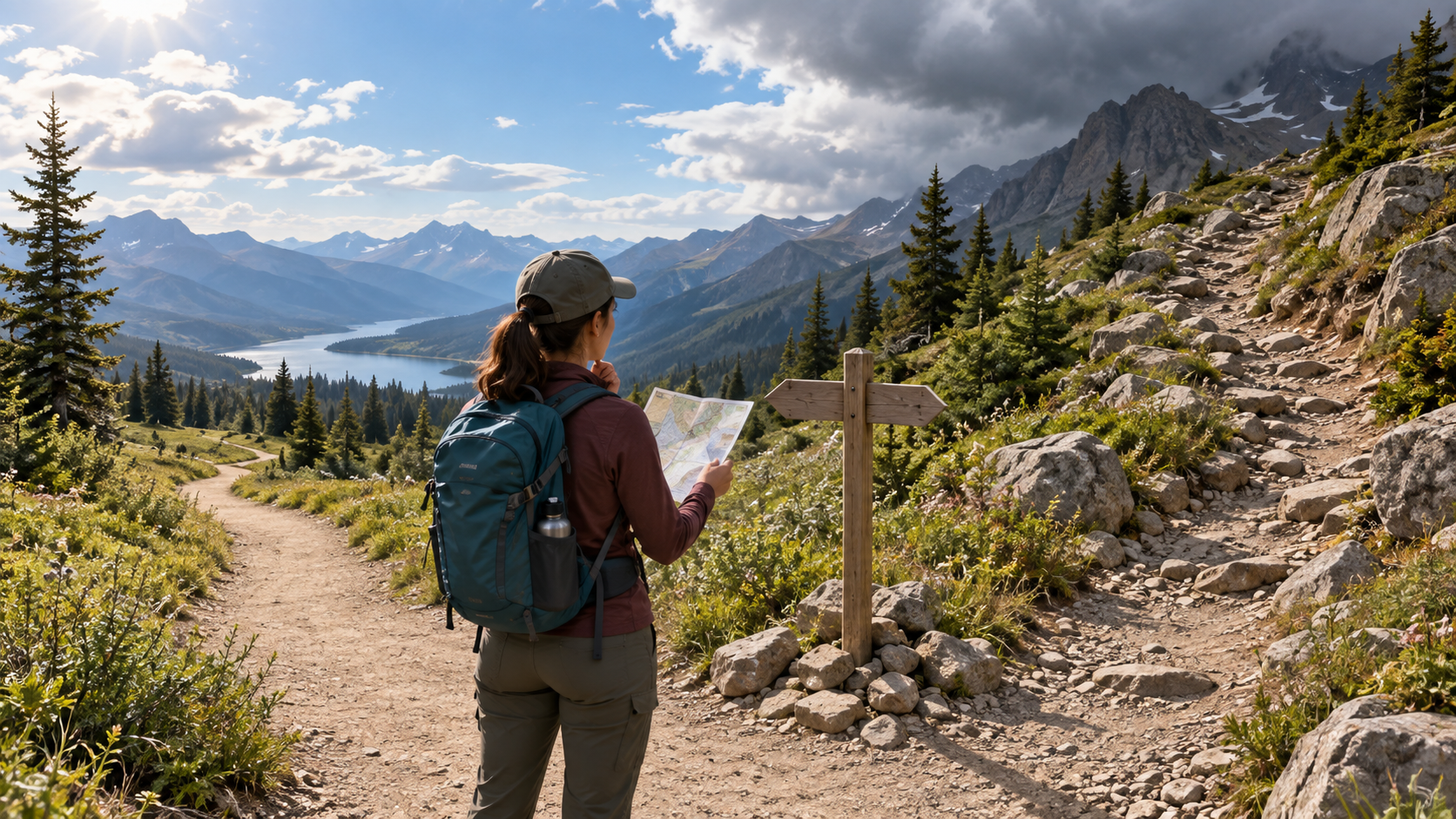
2. Make a Simple Plan Before You Leave
Once you have a trail in mind, turn the idea into a basic plan.
Start with the official website or managing agency for the trail. Check current conditions, closures, access requirements, permits or reservations, and any warnings that apply to the area. Then check the weather for the period when you expect to be outside.
Know where you intend to start, approximately how long you expect to be gone, and what you will do if the original plan no longer makes sense.
Tell someone where you’re going and when you expect to return.
The National Park Service recommends matching an activity to your abilities and current conditions, carrying appropriate essentials, and sharing a trip plan with someone you trust. Its Trip Planning Guide provides a useful overview.
The Forest Service similarly recommends understanding the terrain and route, checking weather, considering timing and alternate routes, and telling someone where you’re going.
Preparation should fit the outing. A short, familiar park trail doesn’t require the same planning as an isolated mountain route, but “easy” should not mean “unplanned.”
The NPS Ten Essentials are useful as categories to think through rather than as a rigid packing list. What you actually carry should reflect your trail, conditions, duration, location, and the consequences if your outing takes longer than expected.
One principle is worth learning early: your phone is useful, but it shouldn’t be your entire plan. Batteries die, devices break, and service disappears.
3. Learn to Judge the Whole Trail, Not Just the Mileage
As you gain experience, one of the most useful hiking skills is learning why one trail feels harder than another.
Distance is only one part of the answer.
Consider four things together:
Distance: How long is the route, including the return?
Elevation: How much climbing and descending will you do?
Terrain: Is the surface smooth, rocky, muddy, loose, rooted, steep, or difficult to follow?
Conditions: What will heat, cold, rain, wind, snow, altitude, or other conditions add to the outing?
This explains why a shorter hike can sometimes require more effort and attention than a longer one.
Our guide to what makes a hike hard goes deeper into these factors. You don’t need to master them before hiking, but you should begin noticing them.
Each outing gives you information about yourself as well as the trail.
4. Find a Pace You Can Sustain
Beginners sometimes treat the first part of a hike as though getting somewhere quickly is the objective.
It usually isn’t.
Starting at a comfortable effort gives you time to see how the trail, weather, and your body actually feel that day. Hills may require slowing down. Rough terrain may require more concentration. Hot weather may make an otherwise familiar effort feel different.
You should be able to adjust without feeling that you’ve somehow failed the hike.
A useful question is not simply, “Can I keep going?”
Ask instead:
“Am I using my energy in a way that still leaves enough for the return?”
That shift matters, particularly on an out-and-back trail where reaching the turnaround point means only half the outing is complete.
If pacing is something you’re trying to understand, How to Pace Yourself on a Hike explains how to manage effort rather than chase a particular speed.
5. Treat Turning Around as Part of Hiking
One of the most important beginner lessons is that the original plan is not a contract.
Weather changes. Trails can be harder to follow than expected. Someone in the group can become tired. A stream crossing may look different from the description you read. You can simply take longer than expected and begin running short of daylight.
Changing the plan in response to new information is good judgment.
Before starting, think about what would cause you to shorten, change, or cancel the outing. Once you’re hiking, periodically reassess:
- How is everyone doing?
- How much time and daylight remain?
- Are conditions still what you expected?
- Do you still have the supplies and energy needed for the return?
- Has anything changed that increases the consequences of continuing?
Sometimes the right decision is to keep going. Sometimes it is to rest or shorten the route. Sometimes it is to turn around.
The important skill is recognizing that you still have a decision to make.
Our guide to when to turn around on a hike gives you a fuller framework for making that decision without treating the destination as something you must reach.
6. Let Each Hike Teach You Something
Your first few hikes aren’t tests you either pass or fail. They’re information.
After an outing, take a minute to think about it.
What felt easier than expected?
What felt harder?
Did the trail description match what you experienced?
Were you comfortable with your pace?
Did you carry something you never needed—or discover something you wished you had?
Did the distance feel right?
Was there a moment when you weren’t sure whether to continue?
Those observations help you choose the next hike more intelligently.
You might repeat the same trail. You might choose something slightly longer. You might keep the distance similar but try more climbing. Or you may discover that the challenge you want next has nothing to do with mileage.
Try not to increase several major demands at once. If you simultaneously choose a longer trail with much more climbing, rougher terrain, and unfamiliar navigation, it becomes difficult to know which change made the outing harder.
Gradual progression lets experience accumulate instead of constantly resetting the challenge.
When you’re ready to deliberately build toward longer outings, From First Hike to Longer Day Hike: A Beginner Progression Plan shows how to increase the challenge without turning hiking into a race.
Your Beginner Hiking Roadmap
You don’t need to complete these steps once and then leave them behind.
Think of them as a cycle:
Choose → Plan → Hike → Assess → Adjust → Repeat
As your experience grows, the decisions become more informed.
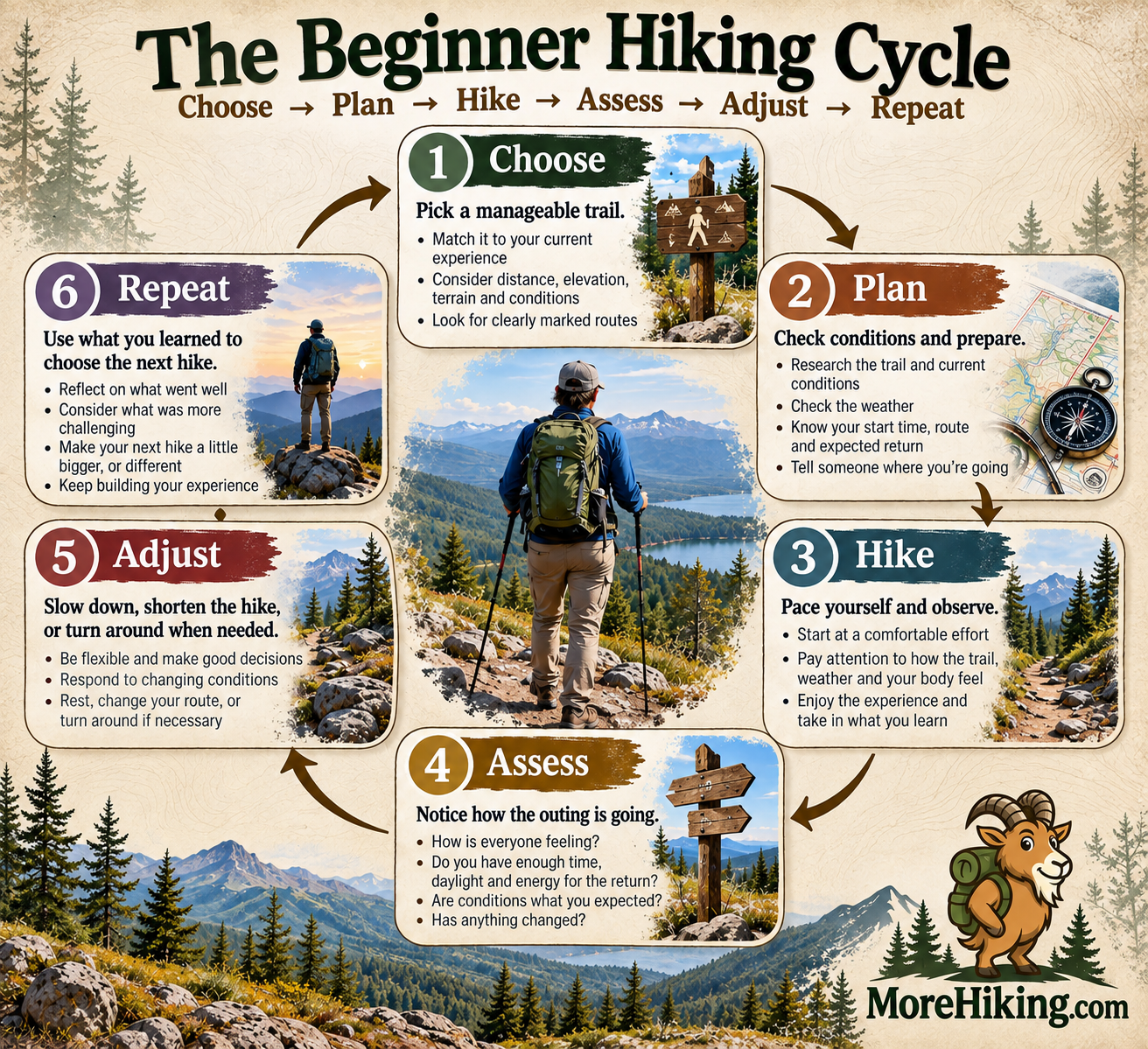
Use this roadmap according to the question you have now:
| If you’re wondering… | Start here |
|---|---|
| How do I actually get started hiking? | How to Start Hiking as a Complete Beginner |
| How far should my hike be? | How Far Should a Beginner Hike? |
| Why does one trail seem harder than another? | What Makes a Hike Hard? |
| How should I manage my effort? | How to Pace Yourself on a Hike |
| How do I decide whether to continue? | When to Turn Around on a Hike |
| How do I progress to longer hikes? | Beginner Hiking Progression Plan |
You don’t have to read every guide before your first hike. Use the one that answers the decision you’re facing, then return to the roadmap as your questions change.
Frequently Asked Questions About Starting Hiking
Do I need to be fit before I start hiking? +
You don’t need to reach a particular fitness level before you start hiking. The more useful approach is to choose a trail that matches your current walking ability and experience. Starting with a manageable route gives you a chance to learn how terrain and elevation affect you before increasing the challenge.
How long should my first hike be? +
There isn’t one correct distance for every beginner. Your normal walking experience, elevation, terrain, weather, available daylight, and the route itself all matter. A shorter, manageable first outing generally gives you more room to learn without making distance the main objective.
Do I need hiking boots for my first hike? +
Not necessarily. Footwear should match the trail and conditions. A maintained, relatively smooth trail may not require the same footwear as rocky, muddy, steep, wet, or cold terrain. Start by understanding where you’re actually going rather than assuming every beginner needs the same equipment.
Is it okay to hike the same trail more than once? +
Absolutely. Repeating a trail can be one of the best ways to build confidence because familiarity removes some uncertainty. It also lets you notice how weather, pacing, fitness, or seasonal conditions can change the experience even when the route stays the same.
When am I no longer a beginner hiker? +
There isn’t a mileage threshold that suddenly makes someone an experienced hiker. What changes is your judgment. You become better at selecting suitable trails, anticipating conditions, preparing for the outing, managing your effort, recognizing problems, and changing plans when necessary. Those skills develop through experience rather than by completing a particular distance.
The Goal Is Confidence, Not a Checklist
A successful beginning in hiking isn’t measured by how quickly you move to longer or harder trails.
It is measured by whether your decisions improve.
Choose an outing that makes sense. Prepare for it. Pay attention while you’re outside. Change the plan when circumstances call for it. Afterwards, use what happened to make the next choice.
Over time, things that once required deliberate thought become familiar. Trail descriptions make more sense. You understand your pace better. You recognize what conditions change an outing for you. You become more comfortable saying yes to an appropriate challenge—and no to one that isn’t right today.
That’s how hiking confidence grows.
Not from proving how far you can go, but from learning how to make good decisions about where you go next.
Leave a Reply