
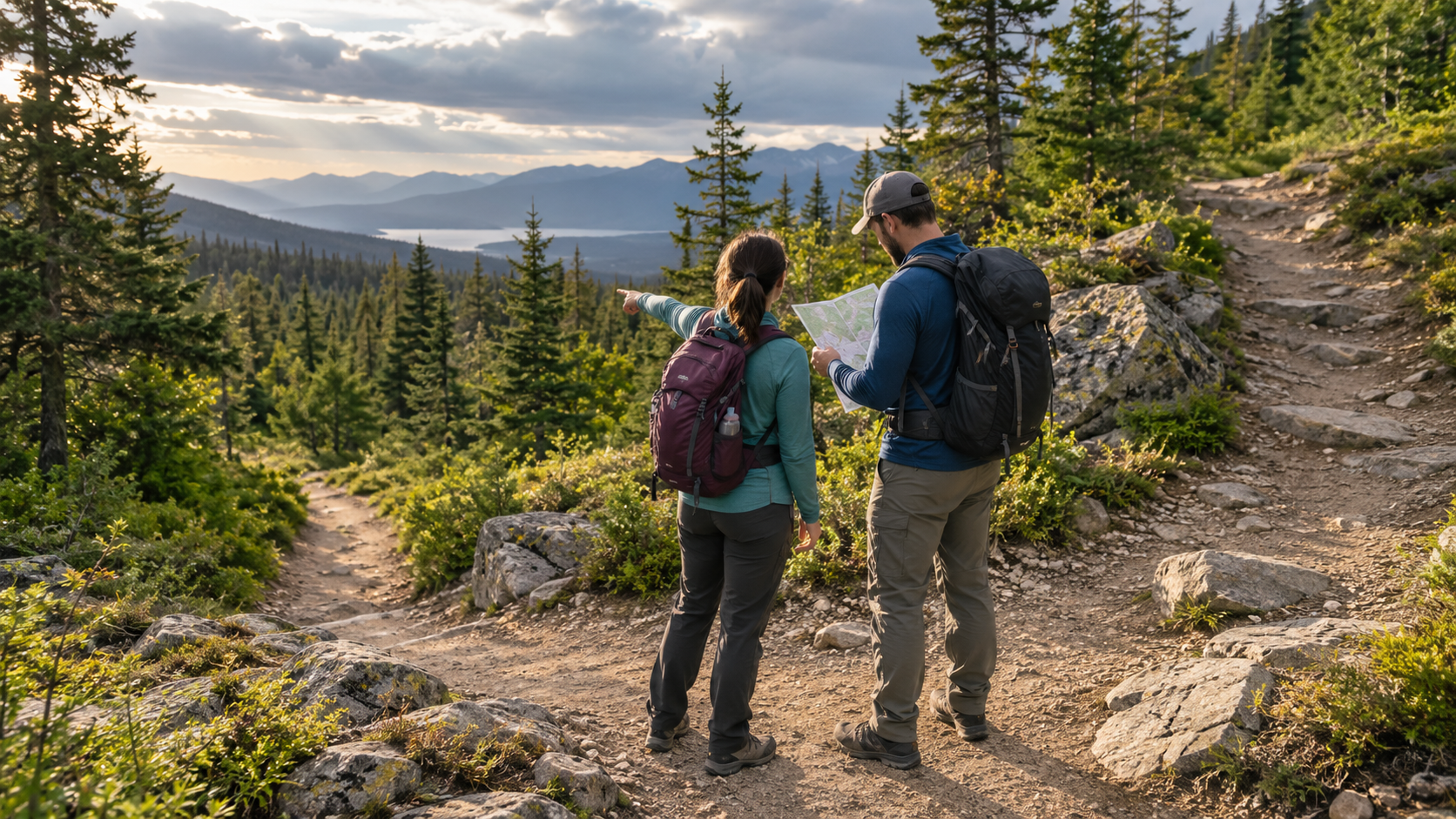
Knowing when to turn around on a hike comes down to five safety margins: time and daylight, weather, your body and group, trail conditions, and confidence that you are still following the intended route. If one margin becomes clearly unsafe—or several are steadily getting worse—stop moving toward the destination and begin the return while you still have choices.
That is not failure. Turning around at the right time is a trail skill. The summit, waterfall, or viewpoint is optional; the return is part of the hike.
Check Five Safety Margins
| Margin | Keep going only while | Turn around when |
|---|---|---|
| Time and daylight | The full return still fits your plan with a useful buffer | Your turnaround time arrives or delays remove the buffer |
| Weather | Conditions remain within the forecast and your preparation | Thunder, fast deterioration, or conditions beyond your skills appear |
| Body and group | Everyone can move steadily, think clearly, and return safely | Pain, illness, exhaustion, distress, or loss of coordination is worsening |
| Trail conditions | The route remains open and passable for every group member | A closure, flooded crossing, ice, damage, or exposure exceeds the group’s ability |
| Route confidence | You can identify the intended trail and the known way back | You are no longer confident you are on the planned route |
Set a Turnaround Time Before the Hike
A turnaround decision is easier when part of it is made before excitement, fatigue, or summit pressure enters the picture.
Check the official route description, current trail alerts, weather forecast, expected daylight, and the difficulty of the return. If you are still choosing between routes, What Makes a Hike Hard? explains how distance, elevation, terrain, and weather interact.
Then choose a latest turnaround time. This is not the time you hope to reach the destination. It is the time forward progress ends, even if the destination appears close.
The National Park Service advises hikers to count both the outward and return portions of the trip, set a turnaround time when a hike is taking longer than planned, and stick to it. NPS also cautions that an uphill direction may take at least twice as long as the downhill direction. That is not a universal timing formula, but it is an important reminder: the return may not take the same time or effort as the trip out.
There is no single daylight buffer that fits every day hike. Leave more margin when the group is inexperienced, the trail is rough, the weather is changing, or the return includes a climb or difficult descent. Share your route and expected return time with a trusted contact before leaving, as the NPS Trip Planning Guide recommends.
Know the Signs That End the Debate
Some triggers should stop forward progress without a vote about how badly everyone wants the destination.
Your turnaround time has arrived
Honor the time you set. “Ten more minutes” becomes twenty easily, and reaching the destination does not shorten the return. If delays have already consumed your planned buffer, turning around before the set time may be the better decision.
Weather has moved beyond the plan
Do not continue toward an exposed viewpoint, ridge, or summit when you hear thunder. The National Weather Service says there is no completely safe place outside during a thunderstorm. The safe objective is a substantial building or hard-topped vehicle—not a tent, open picnic shelter, or isolated tree. If you cannot reach recognized safe shelter immediately, follow current NWS or park-specific backcountry guidance; simply reversing direction does not remove the lightning danger.
Heavy rain, fast-rising water, unexpected snow or ice, extreme heat, or sharply reduced visibility can also put the route outside your preparation. A forecast is not a promise. Act on the conditions around you.
The trail is closed or no longer safely passable
Do not go around a closure. Turn back from a flooded crossing, unstable slope, damaged bridge, unexpected ice, or exposed section that the least-experienced group member cannot cross and recross safely. The fact that another hiker continues does not establish that the obstacle is right for you.
Someone is getting worse
A short pause may help with ordinary breathlessness, hunger, or a pace that started too fast. Reassess honestly after the pause. Turn around if pain, weakness, distress, repeated stumbling, or inability to move safely is worsening instead of settling.
Do not diagnose serious symptoms on the trail or assume everyone can walk out. Confusion, slurred speech, fainting, loss of consciousness, a serious injury, or inability to travel safely requires emergency help. Call 911 where service is available, contact a ranger or the local emergency system, and follow professional instructions. Turning around is an ordinary safety decision; a medical or rescue emergency needs an emergency response.
Route confidence has broken down
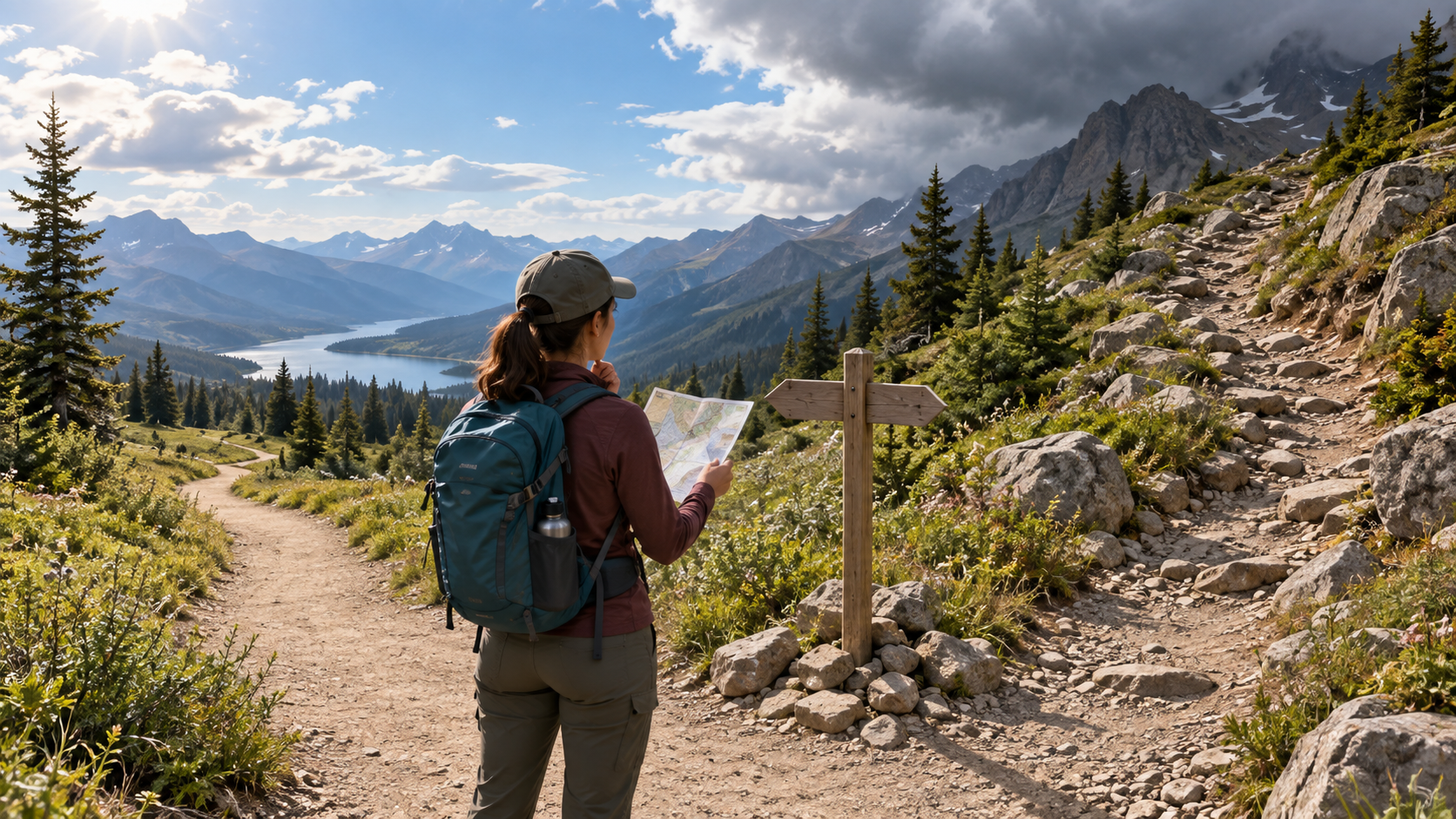
Stop advancing when you are no longer confident that you are following the intended trail. Forward motion is not a substitute for knowing the route. If the known route back is clear and safe, use it rather than trying an unplanned shortcut.
This article does not teach navigation or the full response to becoming lost. If you cannot identify a safe return route, use the emergency plan prepared for the trip and seek appropriate help rather than wandering in search of a familiar feature.
Several Smaller Warnings Can Mean Turn Around
Not every turnaround begins with one dramatic red flag. Often the clock is a little behind, water use is higher than expected, one hiker is tiring, clouds are building, and the trail has become slower. Each concern may look manageable by itself. Together, they can consume the margin needed for a safe return.
Use a pause to collect facts, not to bargain away the warning signs. Ask whether the problem is stable and reversible. A snack and a slower pace may resolve ordinary low energy. They do not restore lost daylight, make thunder safe, reopen a closed trail, or fix a group member who is becoming less coordinated.
Consider this hypothetical example: a group planned to turn around at 2:00 p.m. At 1:20, a sign says the viewpoint is only half a mile away. The group is moving more slowly than planned, the return includes a rocky descent, water is running low, and dark clouds are building. No single number decides the outcome. The shrinking time, pace, supplies, terrain, and weather margins do. Turning around at 1:20 is the confident choice.
Use a 60-Second Trail Check
Pause when something changes: at a major junction, before steeper terrain, after a weather shift, or when the group slows noticeably. Check five questions:
- Time: Can the whole group complete the return with a conservative buffer?
- Weather: Are present and expected conditions still within the plan?
- People: Can everyone move, think, eat, drink, and communicate normally enough for a safe return?
- Trail: Are the route ahead and the route back within everyone’s ability?
- Direction: Are we confident of the intended route and the way back?
One clear no is enough to act. Several uncertain answers should also push the decision toward turning around. Do not wait for a collection of yellow flags to become one red emergency.
Make the Decision for the Whole Group
The group must make the return together. The National Park Service recommends staying together and letting the slowest hiker set the pace. Do not divide the group so some people can reach the destination while a tired, injured, or uncomfortable person returns alone.
Ask directly, “Can every person make the return safely with the time, conditions, and supplies we have?” Give everyone permission to answer honestly. A hiker should not need to prove that discomfort is severe enough before the group responds.
If one person raises a safety concern, pause and assess it. The concern may be resolved, or it may reveal a shrinking margin that others had not noticed. Either result is more useful than pressure to keep quiet.
Turn Around Calmly, Not Carelessly
Once the decision is made, say it clearly and keep the group together. Use the known route back; do not improvise a shortcut. Adjust layers, food, water, and pace as conditions require. If the main problem was an unsustainable effort and the other margins remain sound, MoreHiking’s guide to pacing yourself on a hike can help on future outings.
Do not rush simply because you feel relieved to be heading back. Descents, tired legs, wet surfaces, and road crossings still deserve attention. Continue reassessing the same five margins until everyone is safely off the trail.
If a trusted contact has your trip plan and communication is available, update them about a significant delay or route change. When the hike is over, record what caused the turnaround. Perhaps the route took longer than expected, the group started too late, the terrain was more demanding, or the weather window was too narrow. That lesson improves the next plan.
Beginners selecting their next outing can use How Far Should a Beginner Hike? to choose a route that better matches current ability. The goal is not to eliminate every turnaround. It is to make the decision early enough that you retain a safe return.
A Safe Return Is a Successful Hike
Good judgment often looks ordinary. It may be a quiet decision at a junction, a change of plan before the rain arrives, or a group agreeing that the view can wait.
Set a turnaround time. Watch your five margins. Act on hard stops, and take combined warnings seriously. The destination will still be there another day; the best outcome is getting everyone back with more experience and confidence than they had before.
Frequently Asked Questions
Should I turn around if I am close to the summit or viewpoint?
Yes, if a hard stop has been reached or your safety margins are shrinking. Being close to the destination does not shorten the full return to the trailhead, restore daylight, or improve deteriorating conditions.
How much daylight should remain when I turn around?
There is no single buffer for every hike. Allow enough time for the expected return plus a conservative margin for slower pace, breaks, terrain, route checks, and changing conditions. Set the time before the hike and protect it.
What if one person in the group wants to turn back?
Pause and assess the concern without pressure. Base the decision on whether every person can return safely, and keep the group together. Do not send a tired, injured, or uncomfortable hiker back alone.
Is turning around a failed hike?
No. A hike includes the return. Acting before a warning becomes an emergency is evidence of improving judgment, even when you do not reach the planned destination.

Leave a Reply