
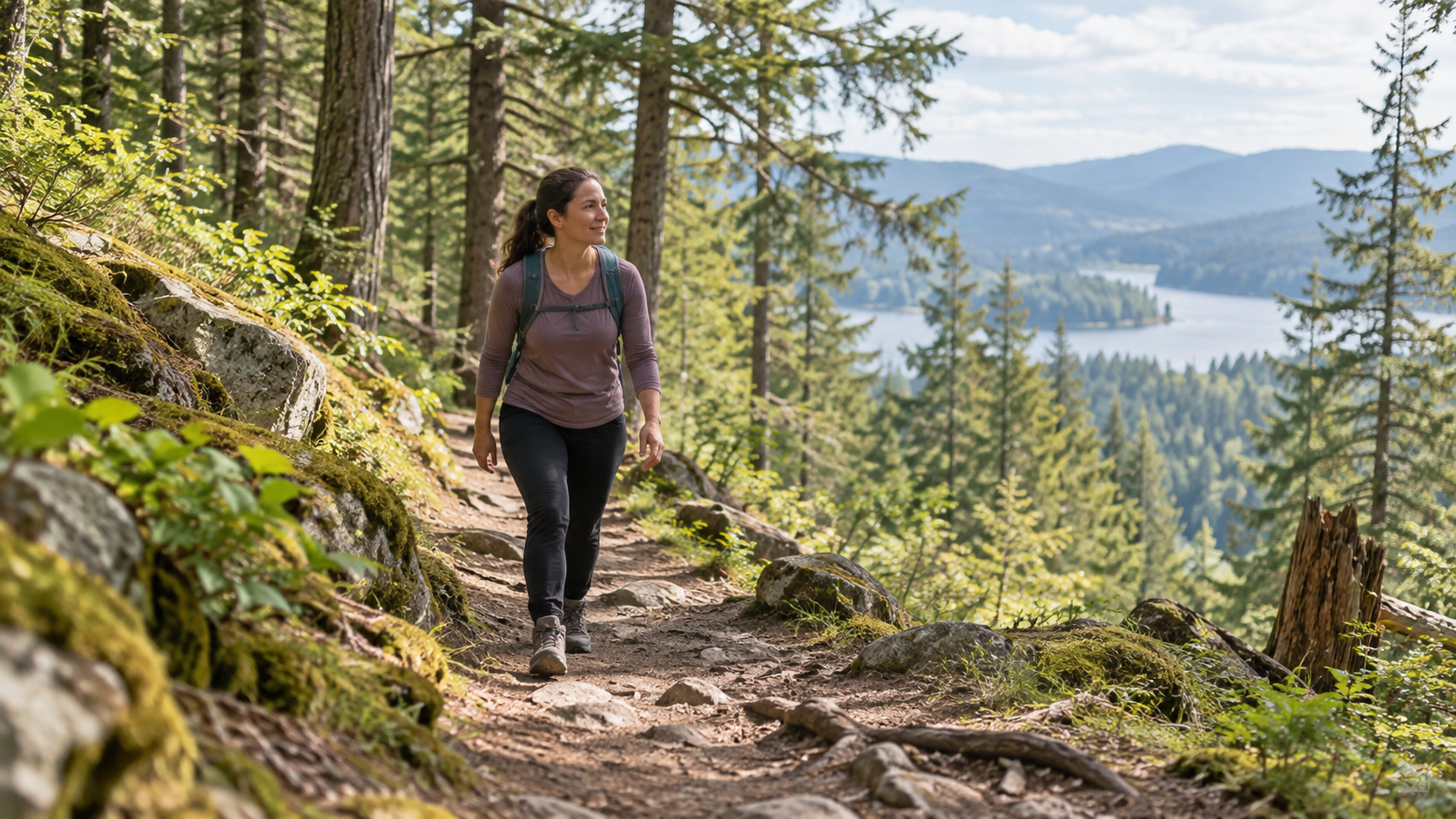
Learning how to pace yourself on a hike is not about hitting a particular number on your watch. It is an effort you can maintain while breathing steadily, moving carefully and keeping enough energy for the trail ahead—and for the return.
For most beginners, that means starting more slowly than feels necessary, easing off on climbs and checking in with your body before you feel exhausted. If you can speak in comfortable sentences, your legs feel controlled and your steps remain deliberate, you are probably near a sustainable pace. If your breathing becomes ragged, your legs begin to burn early or your footing gets sloppy, slow down.
That may sound simple, but it changes how you hike. Instead of trying to hold the same speed everywhere, you learn to adjust your effort as the trail changes.
What a Good Hiking Pace Feels Like
A good pace should feel almost restrained during the opening part of a hike. You are working, but you are not spending energy as fast as possible. Your breathing is noticeable without feeling out of control. Your steps are smooth enough that you can watch the trail, choose your footing and notice signs or junctions.
The National Park Service recommends taking breaks, knowing your limits and paying attention to how you feel. It also offers a useful rule of thumb: if you can talk while walking, your speed is probably appropriate. The CDC uses a similar “talk test” for physical-activity intensity. At a moderate effort, most people can talk but not sing; at a vigorous effort, they may manage only a few words before needing a breath.
Treat that as a practical clue, not a rigid medical test. A steep climb may briefly make conversation harder. The important question is whether you can reduce your effort and regain controlled breathing without feeling distressed.
Start More Slowly Than You Think You Need To
The first few minutes of a hike often feel easy. You are rested, excited and moving with fresh legs. That is exactly when beginners are most likely to go too fast.
Start at a pace that feels easy enough to maintain a conversation. Give your breathing and legs time to settle before deciding whether to speed up. On a short flat section, this may feel slower than your normal walking speed. That is fine. You are not trying to win the first ten minutes; you are protecting the last hour.
If you still feel smooth and controlled after the opening stretch, increase your pace slightly. If the trail begins climbing, resist the urge to keep your flat-ground speed. Keep the effort steady and allow the speed to drop.
Use Three Signals Instead of Chasing Speed
Trail speed changes with elevation, footing, weather, pack weight and fatigue. A fixed miles-per-hour goal can encourage you to push when the trail calls for patience. Use these three signals instead.
| Signal | Sustainable effort often feels like | You may be going too fast when | Useful adjustment |
|---|---|---|---|
| Breathing | Steady; you can speak in sentences | You can manage only a few words for more than a brief climb | Slow down until speech and breathing regain control |
| Legs | Working without an early, growing burn | Thighs or calves feel heavily loaded near the start | Shorten your stride and reduce climbing speed |
| Movement | Steps remain deliberate and footing choices are calm | You stumble, rush steps or stop watching the trail | Ease off, reset posture and focus on the next safe steps |
On a small screen, swipe sideways to compare every column.
No single signal is perfect. Together, they give you a useful picture. If breathing, legs and movement all begin to deteriorate, do not wait for a scheduled rest point. Adjust now.
Slow Down on Climbs Before You Need a Full Stop
Uphill hiking is where many beginners burn through energy. They attack the slope at their flat-ground pace, become breathless and then need a long stop. A steadier approach usually feels better.
Shorten your steps. Let your speed fall while keeping a smooth rhythm. On a steep section, it can help to take several controlled steps, ease the effort for a moment and continue without turning every climb into a test.
You do not need to reach the top before slowing down. Reducing effort early is pacing; stopping only after you are spent is recovery.
Downhill travel also deserves attention. It may be easier on your breathing, but loose rocks, roots and tired legs can demand more control. Do not rush just because gravity makes faster movement possible. A pace that protects your footing is the right pace.
Take Breaks Before Exhaustion
Breaks are part of a good pace, not proof that your pace has failed. The goal is to interrupt fatigue before it becomes a struggle.
A useful break has a purpose: settle your breathing, drink, eat if needed, adjust a layer, check the route or give your feet a moment of relief. Many breaks can be brief. A longer stop may help at a viewpoint or meal, but sitting until you become stiff or chilled can make restarting less comfortable.
Do not wait for a stopwatch to grant permission. Trail conditions and your body matter more than an exact schedule. Take a short break when your breathing no longer settles at a slower pace, when your movement becomes careless or when you notice that fatigue is affecting your decisions.
Expect Your Pace to Change
Good pacing is responsive. The same person may move comfortably at very different speeds on two trails of equal distance.
You will normally slow down when the trail is steep, rocky, muddy, sandy or crowded; when you are carrying more weight; and when conditions are hot, humid, cold or windy. You may also be slower after poor sleep, during a first hike at elevation or late in the day.
This is why pace should not be separated from route choice. If you are deciding how much trail is reasonable, MoreHiking’s guide to beginner hiking distance, time and elevation explains why mileage alone can be misleading.
When effort rises, reduce speed before assuming you need to push harder. A slower pace in difficult conditions is not lost performance. It is an appropriate response to a harder trail.
Set a Group Pace That Keeps the Group Together
Mixed-ability groups often create accidental pressure. A faster hiker walks ahead, waits, then leaves as soon as the slower person arrives. The slower hiker gets no real break and may surge repeatedly to catch up.
The National Park Service recommends letting the slowest hiker set the pace and keeping the group together. A practical way to do that is to place the slowest comfortable hiker near the front. The leader can then choose an effort that the whole group can maintain.
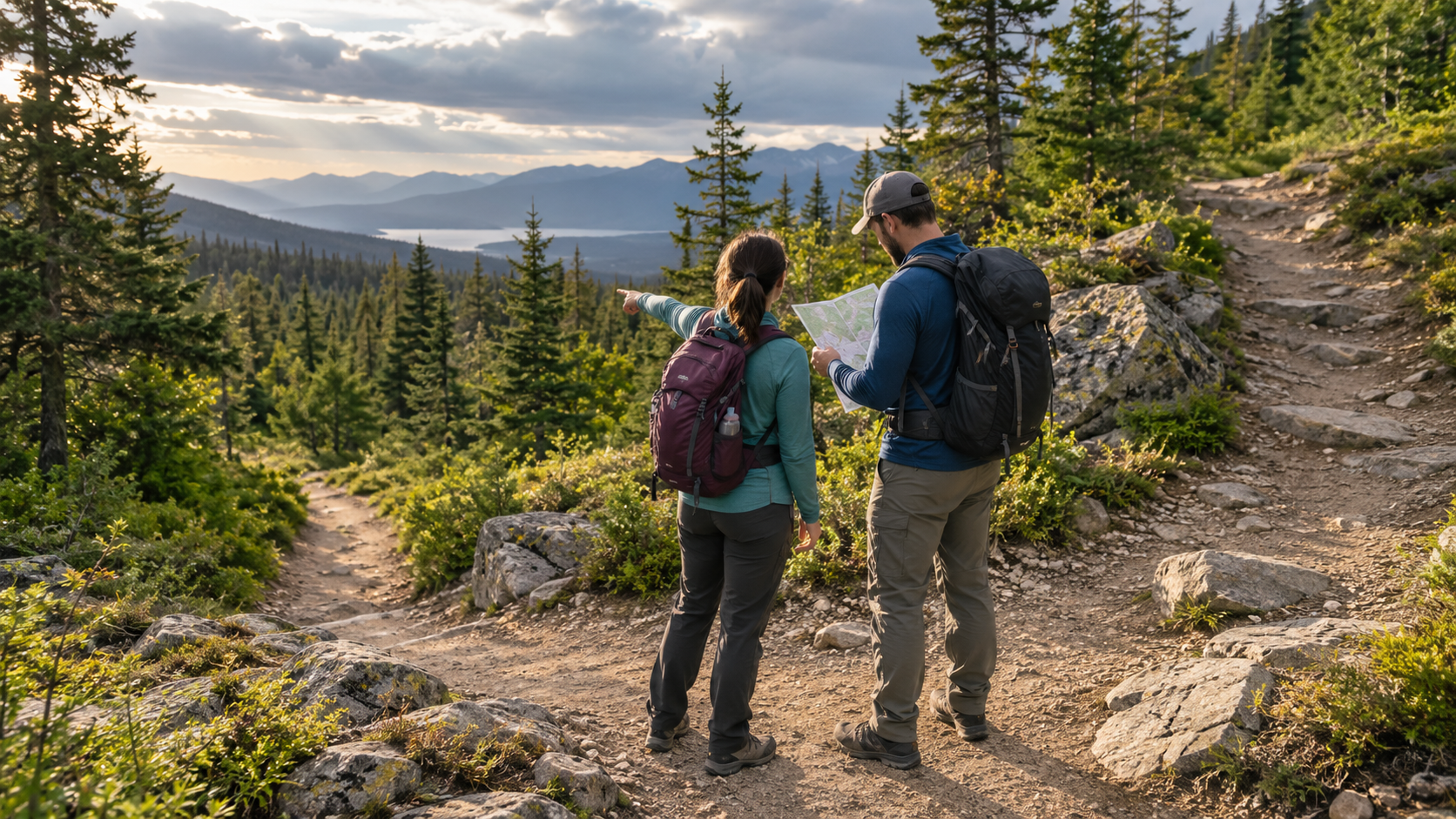
Agree before the hike that anyone can ask to slow down without embarrassment. Regroup at junctions and other decision points. If the group cannot stay together at a pace everyone can sustain, the route or plan needs adjustment—not criticism of the slower hiker.
What to Do If You Started Too Fast
Starting too quickly does not mean the rest of the hike is ruined. Reset early instead of trying to defend the original pace.
- Slow to an easy walk until your breathing becomes controlled.
- Take a brief stop if slowing alone is not enough.
- Drink and eat if that matches your needs and plan.
- Restart at a noticeably easier effort and keep your steps short on the next climb.
For the next ten minutes, ignore average speed. Watch breathing, legs and movement quality. If all three improve, continue at the easier effort. If they do not, reconsider how far you should go and whether conditions have changed.
Know When Fatigue Is More Than a Pacing Problem
Normal exertion should improve when you slow down and rest. Symptoms such as unusual weakness, headache, dizziness or nausea—especially in heat—should not be dismissed as simply being out of shape. Stop, move to a safer or cooler place when possible and assess what is happening.
Confusion or loss of consciousness—especially in heat—can signal a medical emergency. Seek emergency help rather than trying to “walk it off.” The CDC identifies confusion and loss of consciousness among heat-stroke warning signs.
Pain that changes your stride, worsening weather, dwindling daylight or a group member who cannot recover may also require changing the plan. The full decision about when to turn around belongs in a separate trail-judgment guide, but good pacing always leaves room to make that decision before exhaustion removes your options.
A Simple Pacing Plan for Your Next Hike
You do not need a watch, heart-rate monitor or complicated formula to practice pacing.
- Begin the first ten to fifteen minutes at an intentionally easy effort.
- Check whether you can speak comfortably and whether your steps feel controlled.
- Shorten your stride and slow down as soon as the trail climbs or footing becomes rough.
- Take a purposeful break before fatigue affects movement or judgment.
- At the halfway point, ask whether your current effort still leaves enough energy for the return.
After the hike, remember when your pace felt easiest and where it began to fall apart. That information is more useful than comparing your speed with someone else’s. On your next outing, make one adjustment—start slower, shorten steps earlier or take the first break sooner.
If you are still building your first few trail experiences, MoreHiking’s guide on how to start hiking as a complete beginner can help you keep the whole outing simple and manageable.
Final Thoughts
Pacing yourself on a hike means managing effort, not forcing one speed from trailhead to finish. Start conservatively. Use conversation, leg effort and movement quality as your main signals. Slow down before a climb overwhelms you, and take breaks before fatigue begins making decisions for you.
The right pace may look slow beside someone else. It may also change several times during one hike. That is not inconsistency. It is trail awareness.
A well-paced hike should help you finish steady enough to learn from the experience and willing to go again. Speed can come later. Control comes first.
Frequently Asked Questions
Quick answers to common questions about hiking pace, hills and group pacing.
What is a good hiking speed for a beginner?
There is no single good speed for every beginner. Terrain, elevation, weather, pack weight and fitness all change how fast a sustainable effort looks. Begin at a pace that allows comfortable speech and controlled steps, then adjust as the trail changes.
How do I know if I am hiking too fast?
You may be going too fast if you can say only a few words, your legs begin burning early, your steps become rushed or you repeatedly need long stops. Slow down and check whether breathing and movement return to control.
Should I walk more slowly uphill?
Usually, yes. Let speed fall so the effort remains manageable. Shorter steps and an easier rhythm can help you climb without exhausting yourself early.
Who should set the pace in a hiking group?
The slowest comfortable hiker should generally set the group pace. Putting that person near the front helps the group stay together and reduces repeated catch-up surges.
Leave a Reply