
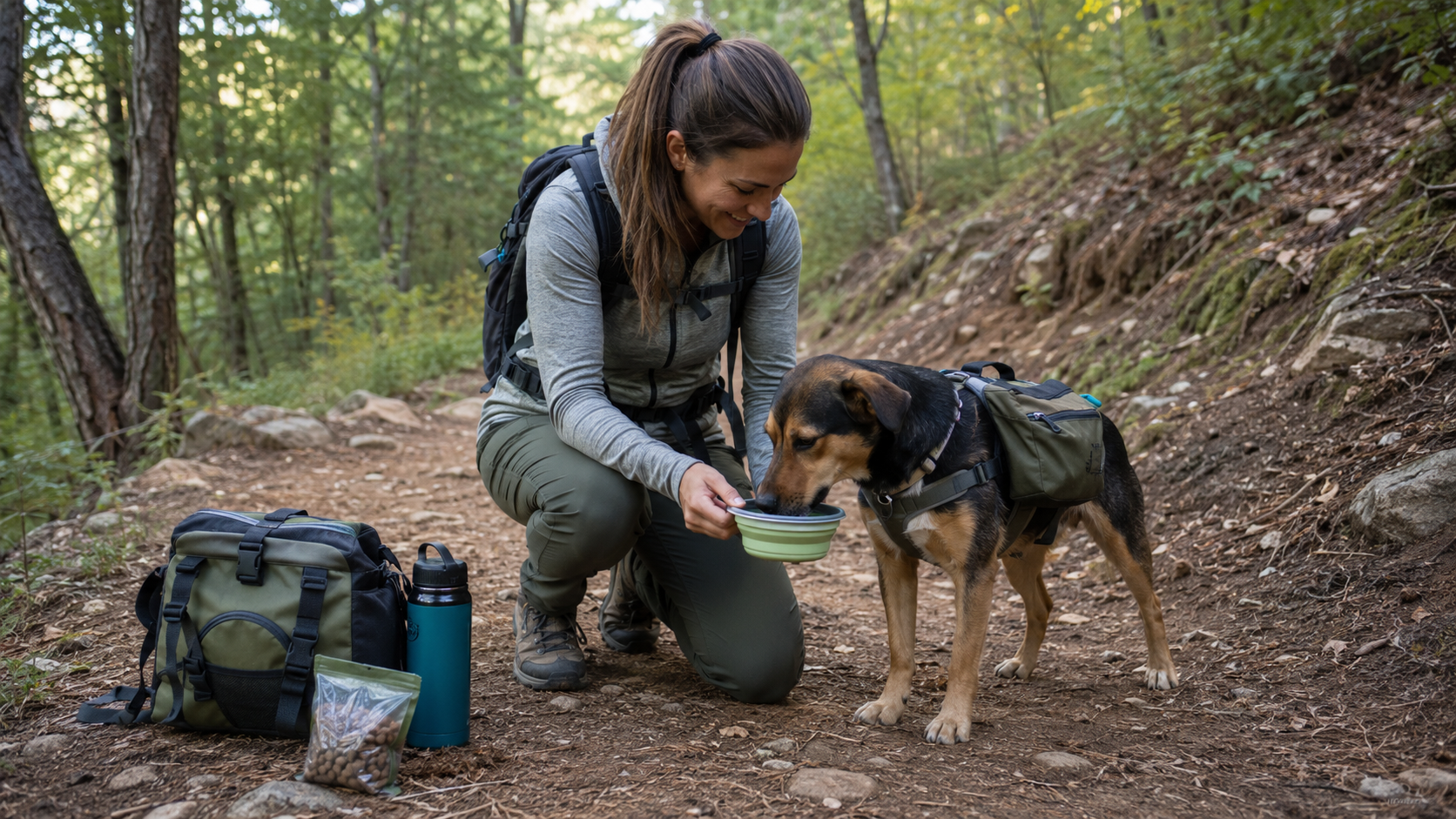
Taking your dog backpacking sounds simple until you start packing. You know how much food and water you need for yourself, but your dog is different. Your dog cannot tell you, “I need more water,” “my pack is too heavy,” or “I am too tired to keep going.”
That means your job is to plan ahead, not just for the hike itself, but for your dog’s full backpacking gear system.
For most beginner hikers, the safest starting point is simple: begin with your dog’s normal daily food and water needs, then add extra for trail effort, heat, terrain, and delays. A backpacking trip is not the time to guess. It is also not the time to suddenly test a new dog food, new treats, or a much longer hike than your dog is used to.
This article will give you a practical way to estimate how much food and water to bring for your dog on a hike or beginner backpacking trip. It is not a replacement for veterinary advice, especially if your dog is young, older, overweight, has health issues, or is not used to long trail days.
The Simple Answer
For water, a common starting estimate is about 1 ounce of water per pound of body weight per day. A 40-pound dog may need about 40 ounces of water in a normal day before you adjust for hiking, heat, dry air, elevation, or pack weight. This is only a planning baseline, not a limit. Active dogs and dogs hiking in warm weather may need more.
For food, start with your dog’s normal measured daily serving. For an overnight backpacking trip, pack the meals your dog would normally eat, then add extra food or trail snacks as a safety buffer. The harder the trail, the hotter the weather, or the longer the trip, the more important that buffer becomes.
A good beginner rule is this: pack from your dog’s normal routine first, then adjust for trail conditions.
Start With Your Dog’s Normal Daily Needs
Before you think about backpacking math, start with what your dog already uses at home.
How much food does your dog normally eat in one day? How much water does your dog normally drink? How does your dog act after a long walk, a hot day, or an active afternoon?
Those normal patterns matter because backpacking does not create a completely new dog. It simply adds movement, heat, excitement, unfamiliar smells, uneven ground, and sometimes pack weight.
If your dog normally eats two measured meals per day, use that as the base. If your dog eats a measured amount by weight or calories, use that instead. Do not guess by handfuls on the trail. Measure the food before the trip and pack it in separate portions so feeding is easy at camp.
For water, use your dog’s weight as a planning tool. The following table gives a simple starting estimate based on the common 1-ounce-per-pound guideline as suggested by PetMD.
Use your dog’s weight as a starting point, then adjust for heat, trail difficulty, and water availability.
| Dog Weight | Baseline Daily Water Estimate | Beginner Trail Planning Note |
|---|---|---|
| 20 lb dog | About 20 oz per day | Carry extra on warm or exposed trails. |
| 40 lb dog | About 40 oz per day | Plan regular water breaks, not just water at camp. |
| 60 lb dog | About 60 oz per day | Water weight becomes a major packing factor. |
| 80 lb dog | About 80 oz per day | Route choice, shade, water access, and heat matter a lot. |
The point of this table is not to give a perfect medical number. It is to keep you from underestimating your dog’s water needs.
How Much Water Should You Bring for Your Dog?
Start with the baseline estimate, then increase your plan based on the trail.
A short, shaded hike on a cool day is very different from a hot, exposed climb. A dog that drinks normally at home may need more water when walking for hours over rough ground. Dogs wearing packs may also work harder, especially if the pack is new or poorly balanced.
The safest beginner approach is to carry enough clean water for both you and your dog unless you have a reliable plan to refill and treat water along the way.
Adjust your dog’s water plan based on weather, terrain, pack weight, and how far you are from safe water sources.
| Trail Condition | Why It Matters | How to Adjust |
|---|---|---|
| Hot weather | Dogs can overheat faster during effort. | Carry more water and choose a cooler time of day. |
| Exposed sun | Less shade means more heat stress. | Plan shorter breaks more often. |
| Steep climbs | Your dog works harder and pants more. | Offer water before your dog acts desperate. |
| Dry trail with no water sources | You cannot depend on refills. | Carry the full amount plus a buffer. |
| Overnight trip | Your dog needs water at camp too. | Do not spend all water during the hike in. |
| New dog backpack | Pack weight increases effort. | Start light and watch for fatigue. |
Offer water before your dog acts desperate. If you are stopping for a drink, your dog should usually get a water break too.
The American Veterinary Medical Association advises avoiding walks, runs, or hikes with a dog during the hottest parts of the day or on particularly warm days. AVMA also recommends frequent breaks and bringing enough water for both you and your dog.
How Much Food Should You Pack for a Dog Backpacking Trip?
For food, start with your dog’s normal daily amount.
If your dog eats 2 cups of food per day at home, that is your base. If your dog’s food is measured by weight or calories, use that measurement instead. Your dog’s regular food label and your veterinarian’s advice are better guides than trail guesswork.
For a beginner overnight trip, do not suddenly switch to a new “trail food” unless your dog has already tested it at home. New food, rich treats, or too many scraps can upset your dog’s stomach at the worst possible time.
Use your dog’s normal food routine as the starting point, then add a small safety buffer for longer or harder trips.
| Trip Type | Food Planning Method |
|---|---|
| Longer day hike | Normal meals at home, plus familiar trail treats or a small snack portion. |
| One-night backpacking trip | Normal dinner, normal breakfast, trail snacks, and an extra serving as a buffer. |
| Two-night beginner trip | Normal food for each day, divided into portions, plus extra food for delays. |
| Harder terrain or colder conditions | Start with normal food, then consider extra familiar food based on your dog’s needs and past experience. |
The goal is not to feed your dog constantly. The goal is to avoid running short if the hike takes longer than expected, your dog burns more energy than usual, or you need to stay out longer than planned.
If your dog has medical needs, weight issues, a sensitive stomach, or a special diet, ask your veterinarian before changing food amounts for a backpacking trip.
Should Your Dog Carry Its Own Food and Water?
Some healthy dogs can carry part of their own food and water in a properly fitted dog backpack. But that does not mean every dog should.
A dog pack adds effort. It can also create rubbing, imbalance, heat buildup, and fatigue if it is too heavy or poorly fitted. For a beginner trip, it is often better to start with the dog carrying only light, soft items, or no pack at all, until you know how your dog handles the trail.
If your dog carries food or water, keep the load balanced on both sides. Water changes weight as it is used, so check the pack during breaks. Food should be packed in a way that does not poke, bounce, or rub under the straps.
Start with light, useful items before asking your dog to carry food, water, or extra gear.
| What the Dog Carries | Good Beginner Approach |
|---|---|
| Food | Light, balanced portions in soft bags. |
| Water | Only if the dog is conditioned and the pack fits well. |
| Bowl | Usually light enough for the dog to carry. |
| First aid or safety items | Better carried by the hiker unless the dog is well trained with a pack. |
| Too much gear | Avoid this. Your dog is not a pack mule. |
A dog’s backpack is not just storage. It is part of the dog’s comfort system. Check the harness and pack during breaks. Look under the straps for rubbing, hot spots, hair loss, or irritation.
Can Dogs Drink From Streams or Lakes?
It may seem natural to let your dog drink from streams, lakes, or puddles, but natural water is not automatically safe.
Outdoor water can contain bacteria, parasites, algae, animal waste, or other contamination. AVMA advises dog owners to avoid letting dogs drink from or swim in rivers, lakes, ponds, marshy areas, or slow-moving or stagnant water because of disease risks such as leptospirosis.
For beginner trips, the safer plan is to bring clean water or treat water before offering it to your dog. A collapsible bowl makes this much easier. Instead of letting your dog drink directly from every puddle or stream crossing, pour carried or treated water into the bowl during breaks.
This also helps you track how much your dog is drinking.
If your route depends on natural water, check the trail conditions ahead of time. A stream shown on a map may be dry in late summer. A pond may be unsafe because of algae. A water source may be hard for your dog to reach safely.
Watch for Signs Your Dog Needs a Break
Food and water planning is not only about numbers. You also need to watch your dog.
A dog may keep walking because it wants to stay with you, even when it is tired. Some dogs hide discomfort until the problem becomes serious.
Watch your dog’s behavior during the hike so you can respond before a small problem becomes serious.
| What You Notice | What It May Mean | What to Do |
|---|---|---|
| Heavy or unusual panting | Heat, stress, or overexertion | Stop, find shade, offer water, and reassess. |
| Slowing down or lying down repeatedly | Fatigue or discomfort | Shorten the hike or turn around. |
| Dry or sticky gums | Possible dehydration warning sign | Stop hiking and monitor closely. |
| Thick saliva | Possible dehydration warning sign | Offer water and reduce effort. |
| Vomiting, diarrhea, confusion, or weakness | Possible serious problem | End the hike and contact a veterinarian. |
AKC lists possible dehydration signs in dogs including loss of skin elasticity, reduced energy, panting, sunken or dry-looking eyes, dry or sticky gums, and thick saliva.
If your dog seems overheated, weak, disoriented, or unable to recover with rest, shade, and water, the hike is over. Get off the trail and contact a veterinarian as soon as possible. Do not try to push through because you are close to camp or close to a viewpoint.
A safe dog hike is one where the dog gets to finish healthy.
Simple Packing Example for a Beginner Overnight Trip
Here is a simple way to think through a beginner overnight trip.
Imagine a healthy 40-pound dog that normally eats two meals per day and drinks around 40 ounces of water on a normal day. For a short overnight backpacking trip, the plan might look like this:
Use this simple overnight example as a planning guide, then adjust for your dog, the weather, and the trail.
| Item | Beginner Packing Plan |
|---|---|
| Dinner | Normal dinner for night one. |
| Breakfast | Normal breakfast for morning two. |
| Trail food | Familiar treats or a small snack portion. |
| Extra food | One extra meal or serving as a safety buffer. |
| Water | Baseline daily amount, increased for heat, distance, and water availability. |
| Bowl | Collapsible bowl for controlled water breaks. |
| Water treatment | Filter or treatment method if using natural water sources. |
| Storage | Waterproof food bags and proper storage based on local rules. |
This example is not a prescription. It is a planning method. Your dog’s real needs may be different.
If the trail is hot, dry, exposed, or has no reliable water, increase the water plan. If your dog is new to backpacking, shorten the route before trying to solve the problem with more food and water.
Do Not Forget Camp Time
A dog still needs food and water after the hiking part of the day is over.
At camp, your dog may still be excited, alert, cold, warm, tired, or distracted by smells and sounds. Offer water again after settling in. Feed your dog in a controlled place, then store leftover food and scented items properly according to the rules for that area.
This is also where the rest of your dog’s sleep system matters. A dog that is cold, restless, or uncomfortable may not recover well overnight.
If your dog does not sleep well, the second day can feel harder for both of you. Food and water matter, but rest matters too.
Check Trail Rules Before You Go
Before you build your food and water plan, make sure your dog is allowed on the trail.
Some parks and protected areas limit where dogs can go. Some require leashes. Some do not allow dogs on certain backcountry routes. The National Park Service advises hikers with pets to follow site rules and keep dogs on a 6-foot leash in many park settings.
This matters because a dog-friendly campground does not always mean every trail nearby is dog-friendly. Always check the specific trail and land manager before the trip.
Final Thoughts
For beginner dog backpacking, the safest food and water plan is simple.
Start with your dog’s normal daily needs. Add extra for hiking effort. Bring a safety buffer. Offer water before your dog acts desperate. Watch your dog more than you watch the mileage.
Your dog does not need an extreme adventure to have a good trail day. A shorter hike with enough water, familiar food, regular breaks, and a comfortable place to rest is better than a big trip where the dog is pushed too hard.
If you are unsure, start smaller. Do a local practice hike. Test the food, bowl, pack, harness, and rest breaks before you commit to an overnight route.
That is how you build a dog backpacking system that works for both of you.
Dog Backpacking Food and Water FAQ
These quick answers help beginner hikers plan food, water, and safety breaks before taking a dog on a backpacking trip.
How much water should I bring for my dog on a backpacking trip?
A common starting estimate is about 1 ounce of water per pound of body weight per day, but hiking can increase that need. Heat, sun, distance, terrain, and your dog’s fitness all matter. Bring extra, especially if the trail has limited water.
How much food should I pack for my dog when backpacking?
Start with your dog’s normal measured daily food amount. For an overnight trip, pack the meals your dog would normally eat, plus extra familiar food or snacks as a safety buffer. Avoid switching to new food on the trail.
Can my dog drink from streams or lakes while hiking?
It is safer not to assume stream, lake, or puddle water is clean. Natural water can contain bacteria, parasites, algae, or animal waste. Bring clean water or treat water before offering it to your dog.
Should my dog carry its own food and water?
Some healthy, conditioned dogs can carry part of their own food or water in a properly fitted backpack. Start light, keep the pack balanced, and check often for rubbing, fatigue, or overheating.
How do I know if my dog is dehydrated on the trail?
Possible warning signs include heavy panting, low energy, dry or sticky gums, thick saliva, sunken-looking eyes, vomiting, diarrhea, or unusual weakness. If your dog seems overheated, confused, or unable to recover, stop hiking and seek veterinary help.
Leave a Reply