
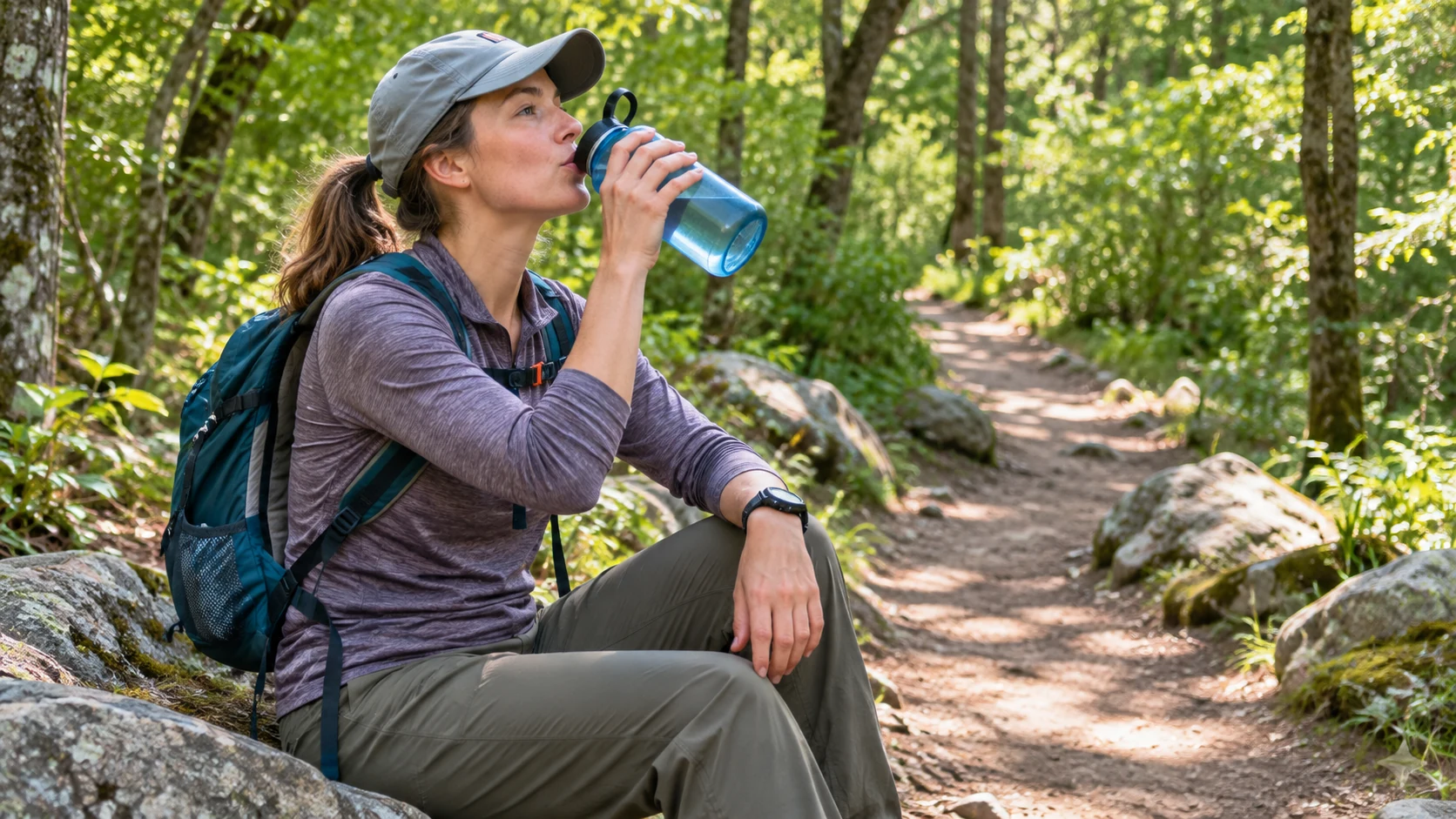
How much water should you bring on a day hike? The answer depends on how long you will be hiking and the conditions you expect.
A practical starting point for many moderate day hikes is about half a litre of water per hour, but that is a planning baseline—not a guarantee. Heat, humidity, altitude, pace, steep terrain, body size, fitness, medical needs, and pack weight can all increase demand. Cool conditions and an easy pace may reduce it.
The safest plan is built around the actual route and the people hiking it. Estimate time, adjust for conditions, carry a reserve, and decide in advance when the remaining supply means it is time to turn around.
Use Time as the Starting Point
Estimate the full time from trailhead departure to return, including breaks and a realistic delay margin. For a two-hour outing in mild conditions, one litre per person is a reasonable beginner baseline. A four-hour outing starts around two litres per person before adjustments.
These amounts are not medical prescriptions. Individual needs vary, and drinking excessive water can also be dangerous. People with health conditions or fluid restrictions should follow advice from a qualified clinician.
Add More for Conditions
Increase the plan when the forecast is hot or humid, the trail is exposed, the route climbs steeply, the altitude is higher than you are used to, or the group will carry heavier packs. Children, older adults, and people who are not acclimatized may need closer monitoring.
Check conditions for the trail and elevation rather than relying on the forecast at home. Our day-hike planning guide explains how weather, time, route difficulty, and turnaround decisions fit together.
Do Not Count an Unverified Source
A stream, lake, spring, or trailhead tap is not a dependable refill unless you have verified that it exists, is accessible, is flowing now, and can be made safe with a method you know how to use. Seasonal water can disappear. A treatment device can clog, freeze, break, or fail to address every contaminant.
Carry the water needed to reach the source safely, plus a reserve for a failed refill or delayed return. Never drink untreated backcountry water simply because it looks clear.
Carry a Reserve
A reserve protects against wrong turns, slower pace, heat, injury, or an unexpectedly dry source. For a short, familiar route in mild weather, an extra half-litre per person may be a reasonable starting reserve. Longer or more difficult hikes may require more.
How Much Water to Bring for Different Hike Lengths
| Planned time | Mild-condition baseline | Beginner planning amount |
|---|---|---|
| Up to 2 hours | About 1 L per person | 1–1.5 L, depending on conditions |
| 2–4 hours | About 1–2 L per person | 2 L plus adjustments and reserve |
| 4–6 hours | About 2–3 L per person | Route-specific plan; consider verified refill |
| Longer or hot/exposed | Baseline alone is insufficient | Conservative plan, reserves, and reliable refill strategy |
The table is a planning aid, not a substitute for judgment. Do not deliberately under-carry because a route is popular or a map shows water.
Drink Regularly and Watch the Group
Take regular small drinks rather than waiting until you feel extremely thirsty. Encourage group members to speak up early about headache, dizziness, nausea, unusual fatigue, confusion, or weakness. These symptoms can have several causes and may require stopping, cooling, eating, drinking appropriately, turning around, or seeking medical help.
Do not force large amounts of plain water. On long, hot, or strenuous outings, food and electrolytes may be relevant, but products and individual needs vary. Follow reputable health guidance and avoid exceeding product directions.
Split the Supply
Use more than one container when practical. If a single bottle leaks, the entire supply is not lost. A clear bottle also makes it easy to check remaining volume, while a hydration reservoir can make frequent drinking convenient. Choose equipment you can monitor and operate reliably.
Keep some water accessible without unpacking the whole bag. Protect containers from freezing conditions and sharp objects. Before leaving, verify that lids, hoses, and valves do not leak.
If you use water bottles rather than a hydration reservoir, make sure your backpack keeps at least one bottle easy to reach. Our guide to hiking backpacks with water bottle holders explains what to look for when choosing a practical carrying system.
Use a Turnaround Decision
At a planned checkpoint, compare remaining water with the distance and effort needed to return. Account for the slowest person, the warmest part of the day, and any delays already used. If the reserve is being consumed on the outward leg, turn around.
Water is one of several margins. Time, weather, energy, trail conditions, and route confidence matter too. Review when to turn around on a hike before committing to a route where retreat decisions may be difficult.
A Simple Pre-Hike Water Check
- Estimate total hours, including breaks and delay margin.
- Start around 0.5 L per hour in mild conditions.
- Add for heat, humidity, altitude, effort, exposure, and individual needs.
- Verify every planned refill and carry a treatment backup where appropriate.
- Carry a reserve that remains untouched for the planned return.
- Split water between containers and check for leaks.
- Set a checkpoint or turnaround trigger based on supply remaining.
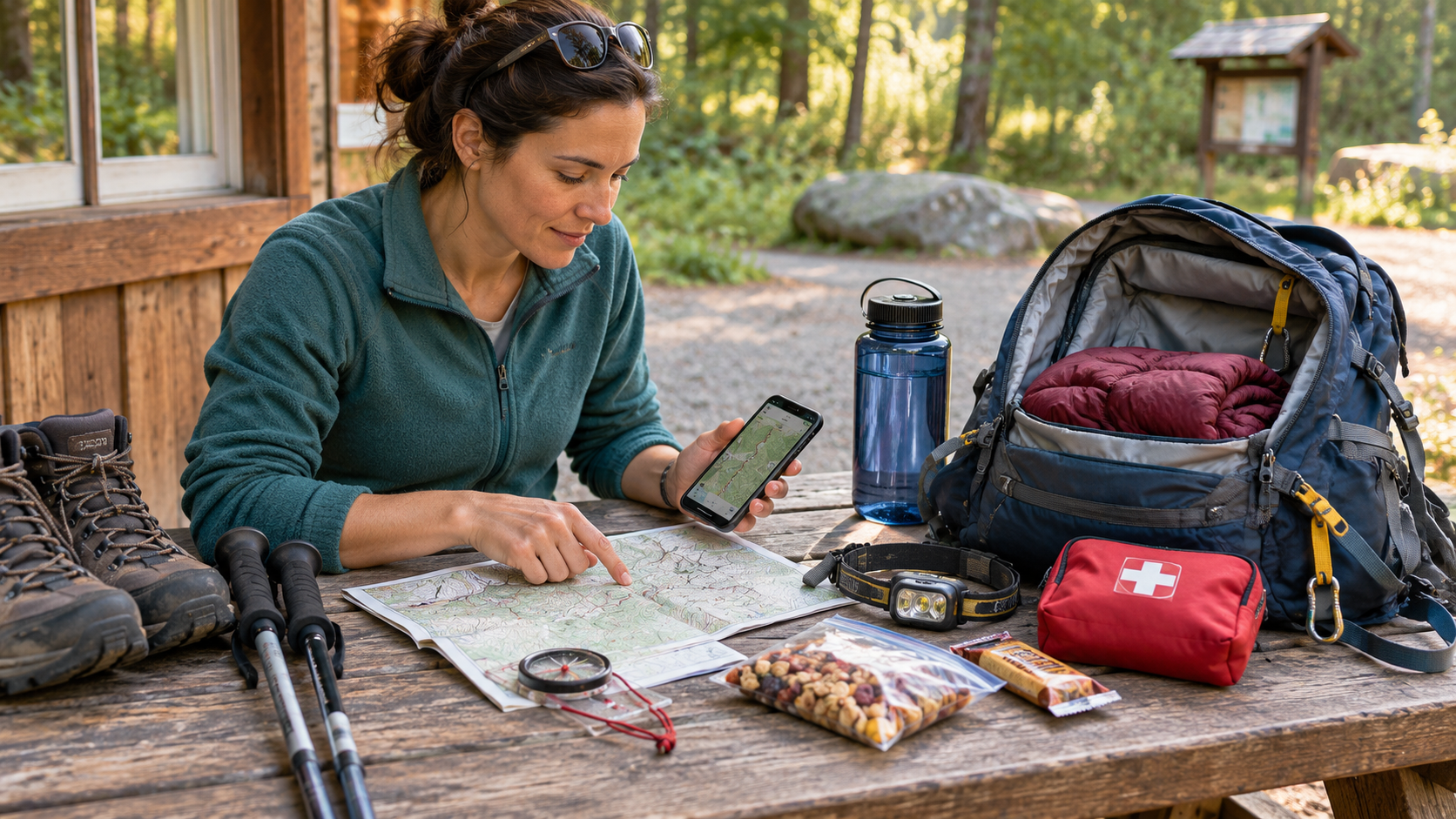
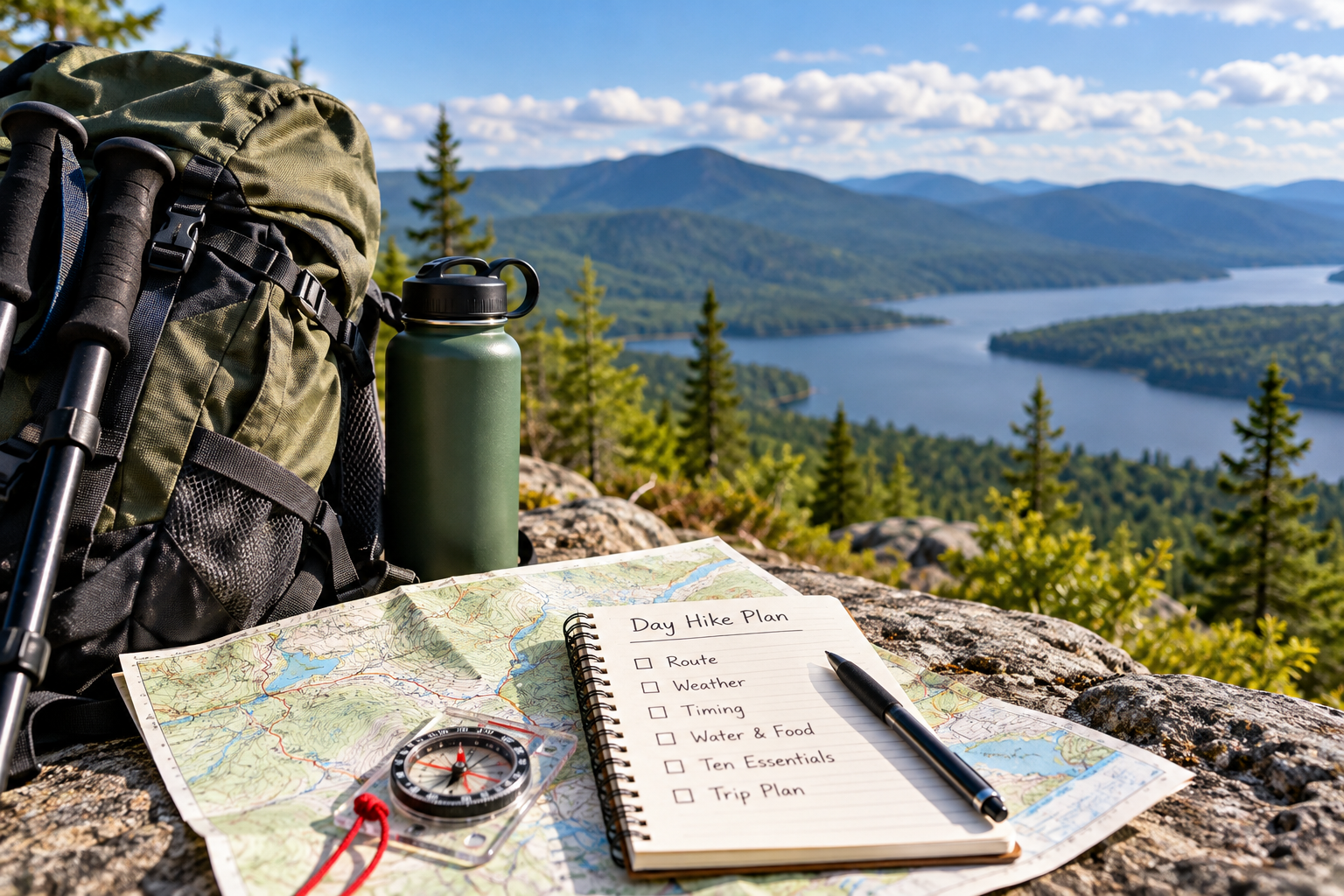
Water belongs with the other essentials, not as an afterthought. A route plan, weather check, food, navigation, insulation, light, first aid, fire, repair items, and emergency shelter all support a safer day.
Frequently Asked Questions
Is one litre enough for a day hike?
It may be enough for a short outing in mild conditions, but not for every day hike. Estimate the full time, then adjust for heat, effort, altitude, group needs, delays, and reserve.
Can I rely on streams for water?
Only if the source is verified, currently available, accessible, and paired with an appropriate treatment plan. Carry enough to handle a dry source or failed treatment method.
Should I drink only when I feel thirsty?
Thirst is useful but not a complete plan. Take regular small drinks, monitor how you feel, and avoid both severe dehydration and excessive water intake.
How much extra water should I carry?
The reserve depends on route remoteness, weather, duration, refill reliability, and the group. A short familiar hike may need at least an extra half-litre per person; harder routes require more conservative margin.
Final Takeaway
Start with time, then add conditions and reserve. Verify refill sources, monitor the group, and turn around before the return supply becomes uncertain. The best water plan is not the lightest one—it is the one that still works when the day takes longer or becomes harder than expected.
Sources: National Park Service: Hiking Safety; CDC: Heat and Health.
Leave a Reply