
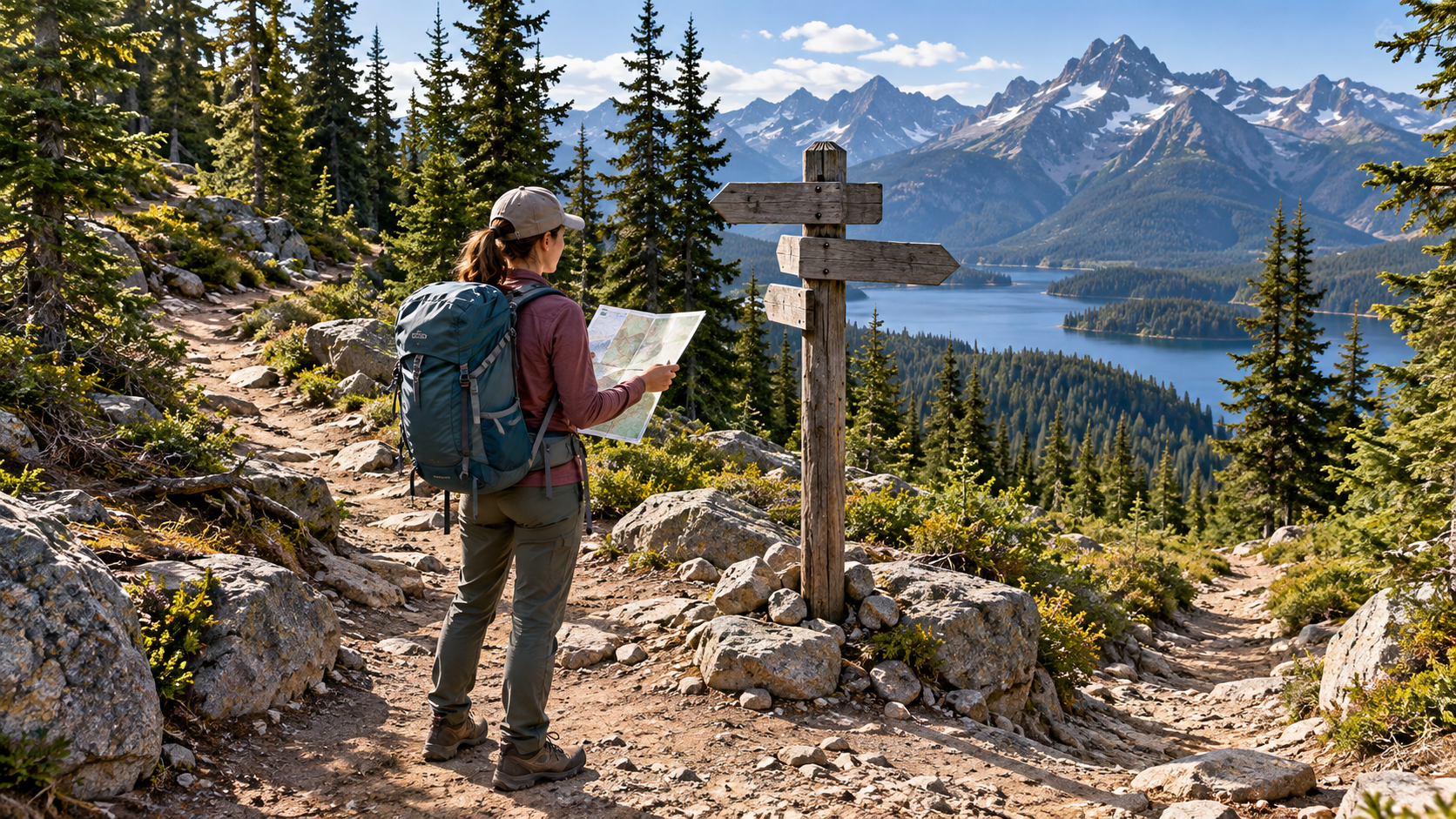
If you get lost while hiking and cannot identify a safe route back, the most important thing is to stop making the situation worse. Find a safe place to pause, check your group’s condition, and determine whether you can return to a location you know for certain. If you cannot, stay put and seek help rather than choosing another direction at random.
Getting lost does not automatically mean you are in immediate danger. But an uncertain route can become a serious emergency when daylight fades, the weather changes, or someone becomes injured or exhausted. Knowing what to do if you get lost while hiking can make the difference between a controlled response and a situation that becomes increasingly difficult for searchers to resolve.
This guide focuses on the emergency response: deciding whether it is safe to retrace your steps, contacting rescuers, making yourself easier to find, and protecting yourself if help takes longer than expected.
First, Establish Whether You Are Safe Where You Are
Imagine reaching a trail junction you do not recognize. Your phone shows a location dot, but you cannot match it confidently to the trail. You remember crossing a stream earlier, although you are no longer sure which direction it lies.
The temptation is to keep walking until something looks familiar. That is precisely when movement can become dangerous.
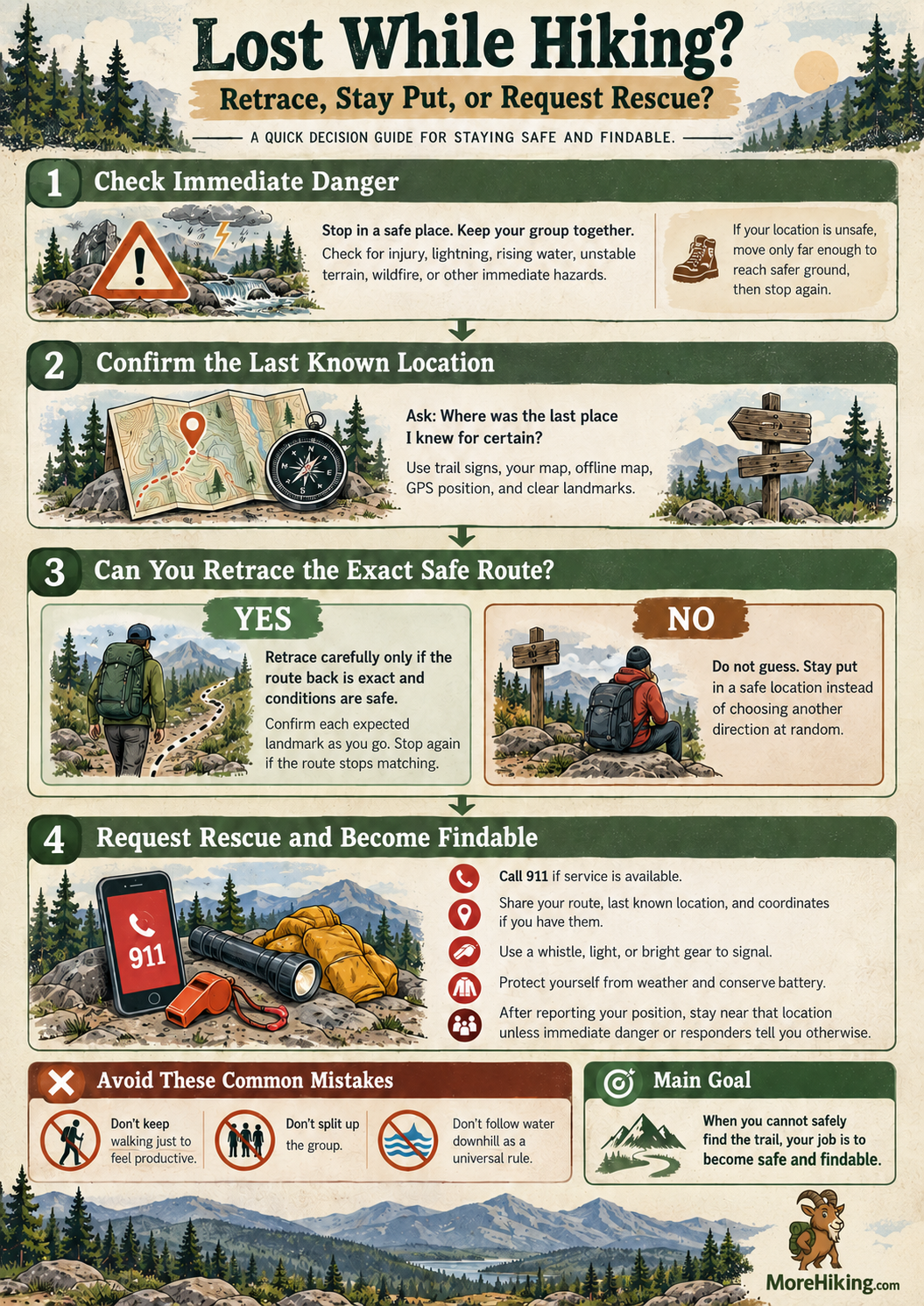
Choose a safe place to stop. Take a few slow breaths and check your surroundings. Before worrying about the route, look for anything that requires immediate action.
Ask whether anyone in your group is injured, becoming unusually cold or hot, confused, or unable to travel safely. Check for hazards such as rising water, lightning exposure, unstable rocks, wildfire, or dangerous terrain.
If your immediate location is unsafe, move only far enough to escape that danger. For example, move away from a flooded streambank or a place exposed to falling rocks. Once you reach safer ground, stop and reassess.
Keep the group together. Someone may remember a trail sign or landmark that another person missed, and separating people can turn one lost-party situation into several emergencies.
At this point, you need one important decision: can you return along a genuinely known route, or would you be guessing?
Should You Retrace Your Steps or Stay Put?
This is the decision that shapes everything that follows.
A hiker who recognizes a recently passed, marked junction may be able to reverse a short section of trail safely. Another hiker who cannot identify the route, or would need to choose among several possible directions, is in a different situation.
Before considering a retrace, answer two questions:
- Where was the last location I confirmed with reliable evidence, such as a marked junction, bridge, map position, or distinctive landmark?
- Can I identify the exact route back to that location without guessing, and is it safe to travel under current conditions?
If either answer is uncertain, remaining in a safe location and seeking help may be safer than continuing.
| Situation | Safer next action |
|---|---|
| You know the last confirmed location and the exact route back, and conditions permit safe travel. | Retrace carefully, checking each expected landmark. Stop if the route stops matching what you know. |
| You cannot identify the route or would have to guess between paths. | Stay put in a safe location and seek assistance. |
| Injury, exhaustion, darkness, weather, or hazardous terrain makes travel unsafe. | Prioritize emergency assistance, shelter, and protection from further harm. |
| You have reported your location or activated an emergency SOS. | Remain near the reported position unless responders instruct otherwise or immediate danger requires movement. |
The National Park Service Outdoor Emergency Plan makes an important distinction between safe self-rescue and the need to stay put. It recommends using navigation tools to locate yourself and retracing when safe, but seeking help and remaining in place when you cannot retrace your route.
Do not treat a GPS dot, distant road noise, or the direction of a stream as proof that a route is safe. A coordinate may help establish where you are, but it does not tell you whether the terrain between you and your destination is passable.
MoreHiking’s Understanding the Wrong Turn Spiral and How to Stop It Early explains how to recognize and correct a navigation mistake before the route becomes uncertain. Once you cannot identify a safe way back, however, your priorities change from correcting the hike to managing an emergency.
How to Contact Rescuers and Explain Your Location
If you cannot safely find your way out and need rescue, request assistance before worsening conditions make communication more difficult.
In the United States, call 911 when emergency assistance is required and service is available. Parks and recreation areas may also publish specific emergency procedures. Follow the instructions given by the dispatcher or park authorities.
Do not wait until you are severely injured or hypothermic before reporting a genuine rescue emergency. Being unable to navigate safely out of remote terrain can itself become serious, particularly when darkness or bad weather is approaching.
Give Rescuers Information They Can Use
A useful emergency report should tell responders where to begin looking and what conditions they may encounter.
Provide the following information as accurately as you can:
- Who you are: Your name, callback number, and number of people in the group.
- Where you started: The park, trailhead, parking area, and trail name.
- Your planned route: Your intended destination and expected return route.
- Your last known location: The most recent place you positively identified, and approximately when you were there.
- Your current position: GPS coordinates if available, along with how you obtained them.
- Visible landmarks: Roads, streams, bridges, signs, ridges, lakes, or other distinctive features.
- Your condition: Injuries, medical concerns, dangerous weather, or other immediate threats.
- What you are wearing and carrying: Clothing colors, shelter, lights, and signaling equipment.
If you are unsure of a detail, say so. An uncertain estimate is still useful when identified as an estimate. Presenting a guess as a confirmed location can misdirect a search.
Once you have contacted emergency services, the dispatcher may ask you to remain in place, keep your phone available, or take a specific action. Their instructions take priority over general advice in this article.
If Your Phone Has No Cellular Service
Do not confuse GPS positioning with the ability to communicate. A smartphone may obtain a position from satellites without cellular coverage, especially when it has a clear enough view of the sky. But displaying a location does not mean it can place an emergency call.
Some compatible phones support emergency satellite messaging in certain locations. Dedicated satellite messengers and personal locator beacons can provide another way to request help. Availability and performance depend on the equipment, service, terrain, and sky visibility.
Use an available emergency satellite function when rescue is genuinely needed, following the device instructions. Do not assume every phone can send an emergency text, and do not rely on text-to-911 unless it is supported where you are.
If you cannot communicate at all and do not have a confirmed safe route out, remain in a safe location, make yourself easier to find, and manage your supplies while waiting for assistance. Your trip plan may help a trusted contact alert authorities when you become overdue.
Preserve Battery Power After Requesting Help
Your phone has a different job once an emergency is underway. It is no longer mainly a navigation or photography device. It may be the connection through which rescuers obtain updated information, return a call, or provide instructions.
Record your coordinates, reduce unnecessary screen use, and keep your phone protected from cold and moisture. Use a power bank if available. Avoid repeated map browsing or unrelated calls that could drain your remaining battery.
If you have contacted rescuers, follow their instructions about maintaining communication. Do not enable settings that would prevent expected calls or messages without considering their impact on emergency contact.
Make Yourself Easier to Find Without Creating Another Danger
Searchers benefit from having a reasonably stable location to investigate. If a hiker keeps moving across unfamiliar terrain, the area that must be searched can grow considerably.
Remaining in place does not mean doing nothing. You can improve your chances of being noticed while still protecting yourself.
Use Clear, Repeated Signals
A whistle is one of the simplest tools for a lost hiker. It usually takes less effort than repeated shouting, which becomes tiring and can strain your voice.
Three whistle blasts in a repeated pattern are commonly recognized as a distress signal. Signal, pause, and listen for a reply. A flashlight or reflective object can also attract attention when used appropriately.
Yosemite National Park’s wilderness safety guidance advises lost hikers who cannot locate the trail to stay put and use reflective objects or repeated distress signals to attract help.
Improve Visibility Carefully
Bright clothing, a colorful pack cover, or a reflective emergency blanket may make your waiting area easier to identify. If it can be done safely, position a visible item nearby without scattering essential equipment across the landscape.
A clearing may offer greater visibility than dense forest, but reaching one should never require crossing hazardous terrain or travelling far from your reported position.
If you hear a helicopter, do not rush toward it or climb onto an exposed ridge. Use visible signals from a safe location and follow any instructions you receive.
A signal fire is not a routine lost-hiker solution. Fire restrictions, dry vegetation, wind, and the possibility of creating a wildfire can make it dangerous. Do not light one unless conditions, local rules, genuine survival needs, and your ability to control it justify doing so.
Protect Yourself While Waiting for Rescue
One of the hardest parts of being lost may be accepting that you need to wait. You may be uncomfortable, worried about the time, or tempted to take another chance at finding the trail.
However, once a safe location has been established and rescuers have your position, the next task is protecting yourself from exposure and keeping your condition from deteriorating.
Cold, Rain, and Wind
Put on extra clothing before you become seriously cold. Wet clothing and wind can increase heat loss even when the air temperature does not seem especially low.
Use rain protection and an emergency blanket, bivy, or tarp if available. Keep appropriate ventilation, and avoid placing shelter in drainage channels, beneath unstable branches, or on exposed terrain.
Insulate yourself from cold ground using a sitting pad, backpack, or spare clothing. Remaining dry and reducing unnecessary movement can help preserve energy.
If someone becomes confused, unusually drowsy, poorly coordinated, or severely affected by cold, treat that as a serious medical concern and communicate it to emergency responders if possible.
Heat, Water, and Fatigue
In hot conditions, seek safe shade, reduce exertion, and use available drinking water appropriately. Do not refuse yourself needed water simply because you are trying to stretch a limited supply.
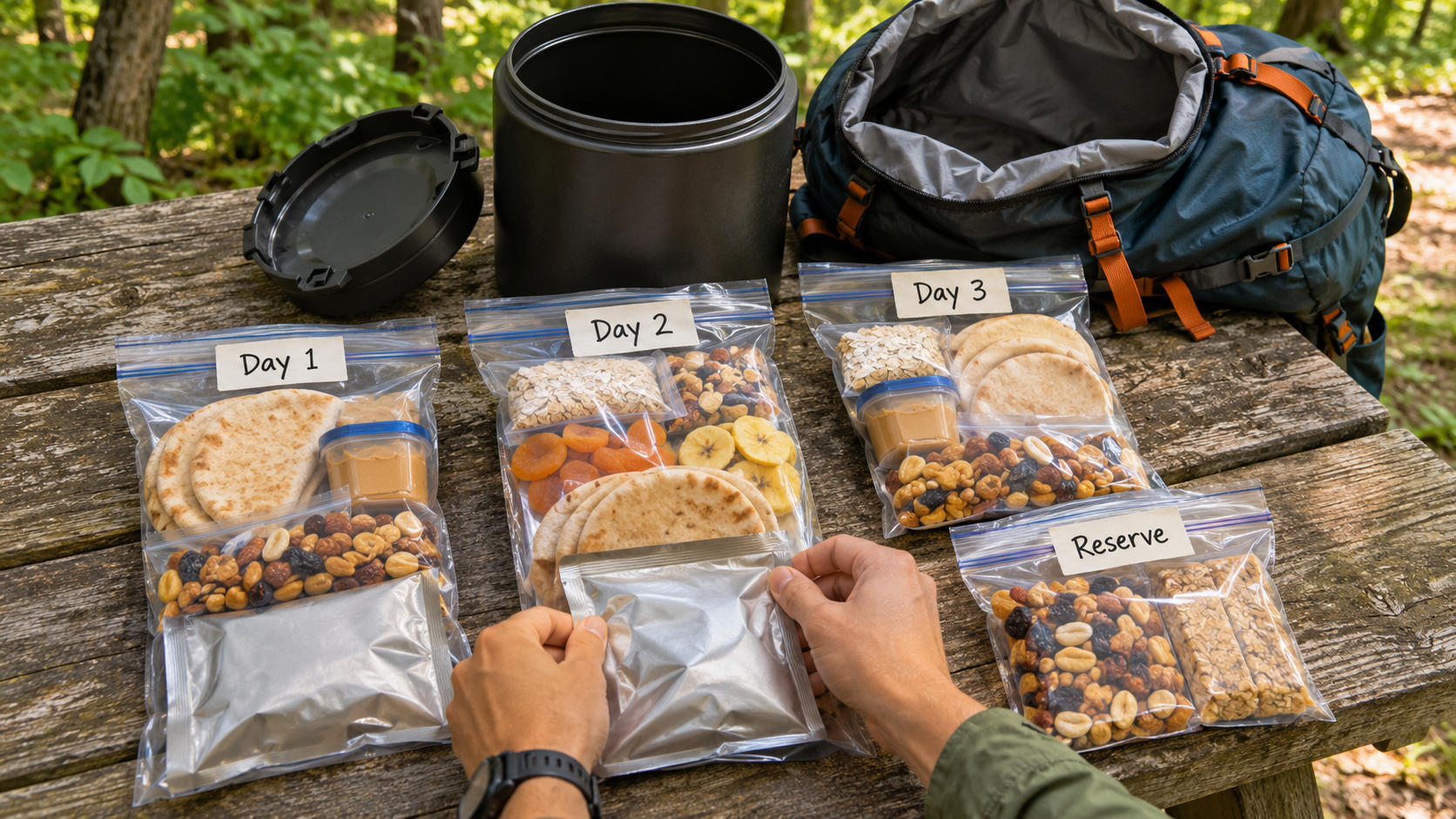
Keep track of what you have: water, food, extra layers, emergency shelter, lights, and medical supplies. The purpose is to understand your options, not to begin constant ration calculations.
Eat available food as needed and rest where it is safe. Avoid unnecessary walking, shelter construction, or attempts to collect resources that expose you to additional hazards.
What If You Must Spend the Night Outdoors?
An unexpected overnight stay can be frightening, particularly when you expected to finish a short day hike before supper. Yet trying to walk through unfamiliar terrain in darkness may create a greater danger than waiting.
Before daylight fades, identify a reasonably sheltered position away from rising water, unstable trees, steep drop-offs, and other local hazards. Arrange your clothing and shelter, insulate yourself from the ground, and keep your light, whistle, and communication equipment accessible.
Stay with your group and check on one another. If you have spoken to rescuers, inform them that you may be waiting overnight and follow their directions.
Search and rescue can take hours or longer depending on terrain, weather, resources, and access. Prepare for a delay rather than assuming someone will arrive immediately.
When Someone Is Injured or Cannot Continue
An injury can make an already difficult situation more urgent. A twisted ankle on a familiar trail is different from a person with severe bleeding, breathing difficulty, or an altered level of awareness in remote terrain.
Provide first aid within your training, call emergency services when available, and follow dispatcher instructions. Avoid moving a seriously injured person unnecessarily unless staying where they are presents an immediate danger.
If communication is unavailable, the group may face a difficult choice about sending someone for help.
When a known, safe route to assistance exists, it may be appropriate for capable group members to travel for help while others stay with the injured person. The National Park Service discusses this option in its emergency guidance. However, sending someone into uncertain terrain can create another lost-person emergency.
Consider the seriousness of the injury, the abilities of the group, the certainty of the route, weather, daylight, and whether the injured person can safely be left with adequate assistance. Whenever possible, obtain instructions from emergency personnel rather than improvising a rescue plan.
Common Mistakes That Can Make Rescue Harder
A few decisions deserve special attention because they can transform a manageable lost-hiker situation into something much more serious.
Following water downhill. Streams may eventually connect with roads or developed areas, but they can also lead to waterfalls, cliffs, deep canyons, slippery banks, and dangerous crossings. Following a stream is not a universal route to safety.
Walking toward a distant sound. A vehicle, train, or barking dog may sound close in quiet terrain. Distance and direction can be deceptive, particularly across valleys and ridges.
Taking shortcuts. A straight line on a map may cross steep slopes, thick vegetation, private property, or impassable terrain. Do not assume a shorter distance means a safer route.
Splitting the group without a sound plan. Sending people in different directions to search for a trail increases uncertainty. Assistance trips should only be considered when there is a clear safety reason and a reliable route.
Leaving a reported rescue location. Once emergency responders have your coordinates, unnecessary movement may send them toward a place you have already left. If immediate danger forces you to relocate, communicate the change whenever possible.
The underlying principle is simple: do not exchange an uncertain situation for a more dangerous one merely because moving feels more productive than waiting.
Prepare Before Your Next Hike
The best time to improve your emergency options is before you need them. A little preparation can reduce the consequences of a wrong turn, an injury, or an unexpected delay.
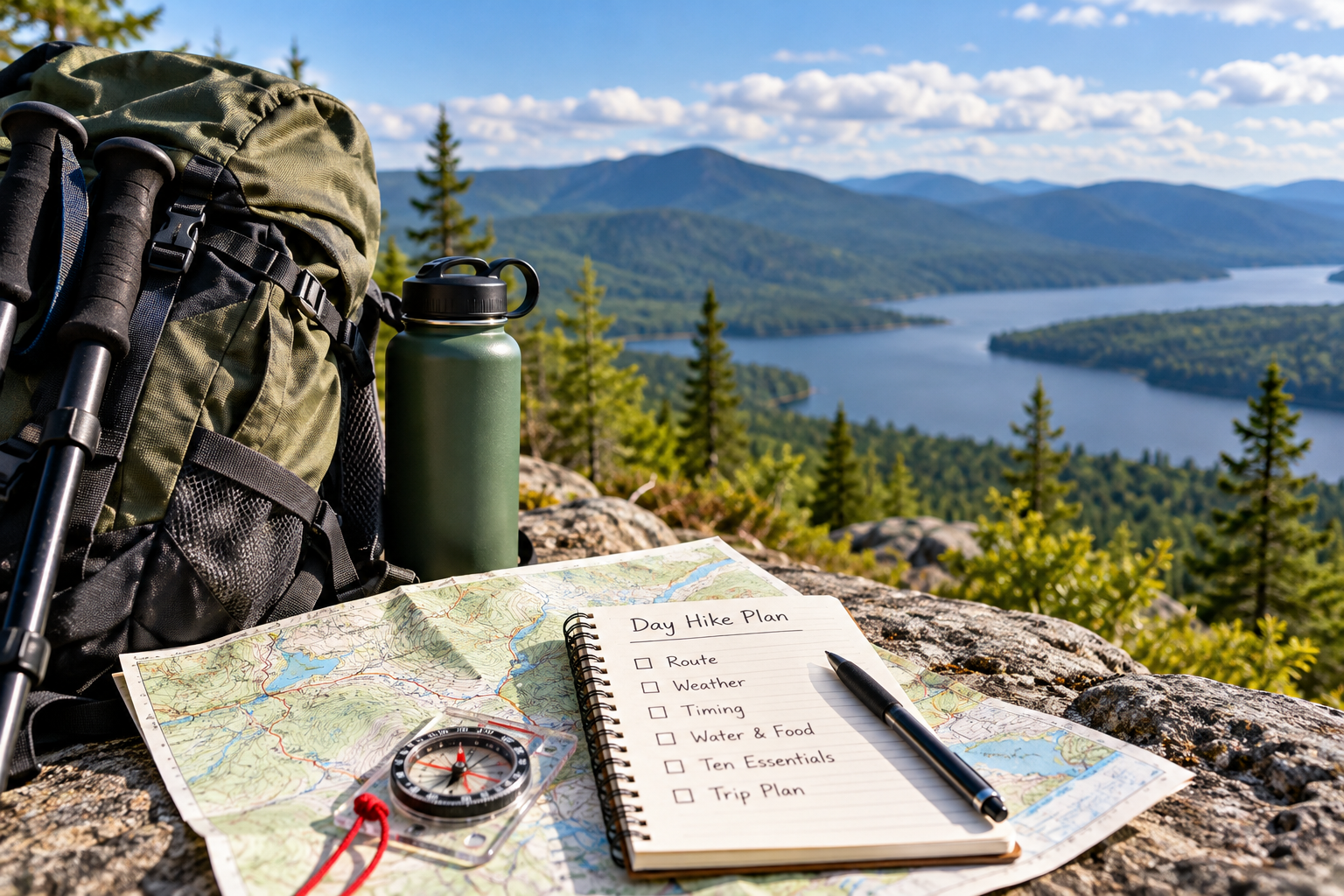
Leave a trip plan with someone you trust. Include the trailhead, intended route, group members, expected return time, and instructions for contacting authorities if you become overdue.
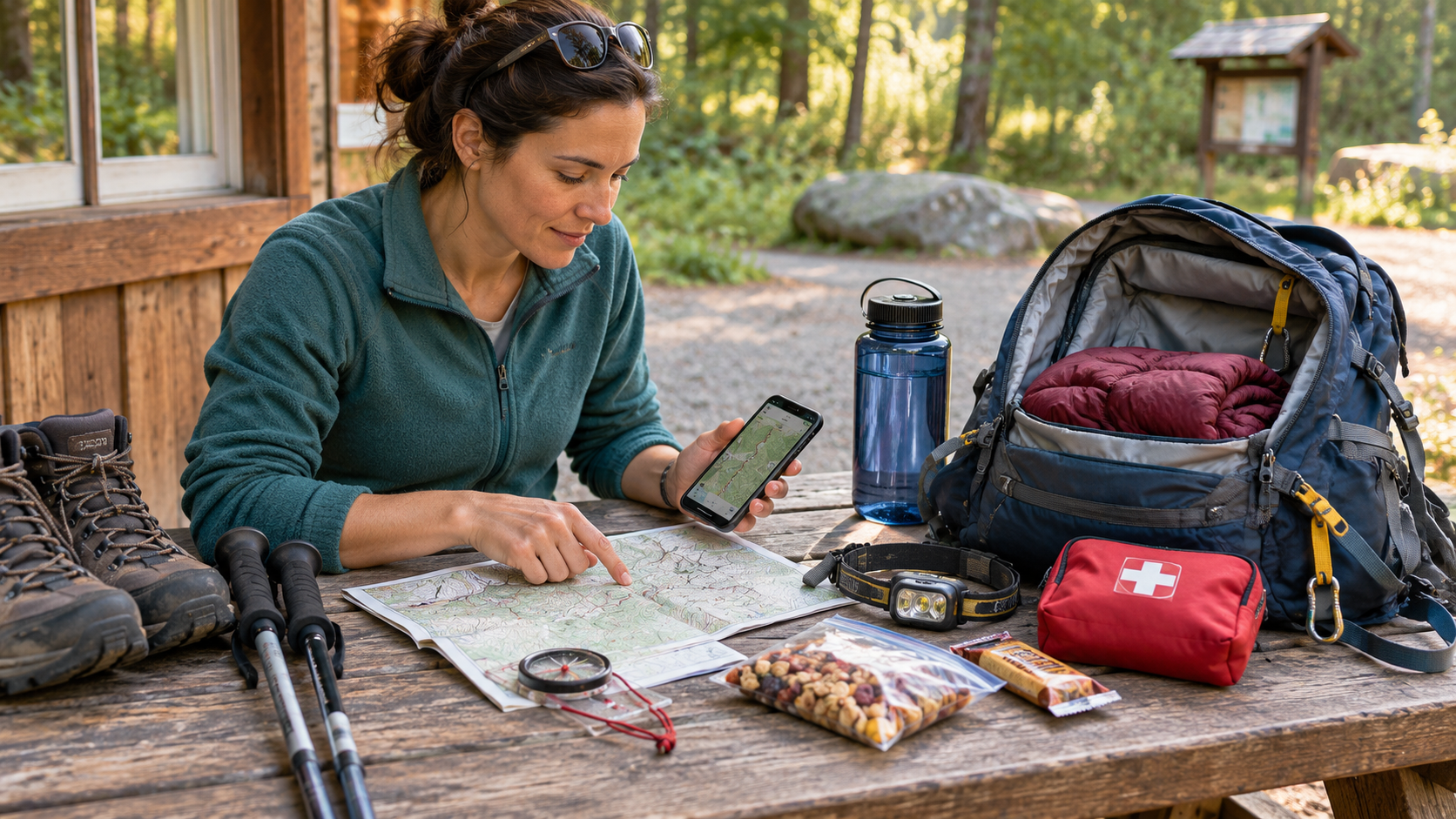
Carry essential supplies suited to the location and conditions. A map, navigation backup, charged communication device, whistle, headlamp, rain protection, warm clothing, extra water, food, first-aid supplies, and an emergency shelter can all become valuable when a hike lasts longer than planned.
The National Park Service emergency plan emphasizes the Ten Essentials, a trusted contact, signaling equipment, and knowing how to use the tools you carry.
Develop your navigation habits as well. MoreHiking’s Beginner Hiking Navigation guide explains how to maintain awareness of your location throughout a hike, while our guide to knowing when to turn around helps you recognize when time, weather, energy, or route uncertainty makes continuing unwise.
These skills cannot eliminate every emergency, but they help you recognize problems earlier and preserve more safe options.
The Goal Is to Become Safe and Findable
When a hike has gone wrong, success no longer means reaching the summit or finishing the planned route. It means making decisions that protect lives and give rescuers a reliable chance to find you.
If you know the exact safe way back, a careful retrace may resolve the problem. If you do not, stop in a safe location, request assistance when needed, and make yourself easier to find. Preserve your supplies, protect yourself from the weather, and follow emergency instructions.
Remaining in place can feel frustrating, especially when you believe safety might be just beyond the next bend. But an uncertain direction is not a rescue plan.
When you cannot safely find the trail, your most important job is to stop becoming harder to find.
Frequently Asked Questions
What is the first thing to do if you get lost while hiking?
Stop moving in an uncertain direction and assess your immediate safety. Keep your group together, check for injuries or environmental hazards, and establish whether you know an exact safe route back. If you cannot identify one, remain in a safe location and seek help.
Should you always stay put when lost hiking?
Not always. A careful retrace may be reasonable when you know your last confirmed location, the exact safe route back, and conditions allow travel. If the route is uncertain or movement is unsafe, staying put is generally the safer response. Follow emergency responder instructions if you have made contact.
When should you call 911 if you are lost on a trail?
Call 911 or the appropriate local emergency service when you need rescue, particularly if you cannot find a safe route out, someone is injured, dangerous weather is developing, or you cannot continue safely. Provide accurate location information and follow instructions from emergency personnel.
What should you do if you are lost without cell service?
Check whether you have a compatible emergency satellite communication device or phone feature. If communication is unavailable and you cannot identify a safe route out, stay in a safe location, use appropriate distress signals, make yourself visible, conserve supplies, and protect yourself from exposure. A trip plan left with a trusted contact may help authorities begin searching if you become overdue.
Should you follow a stream downhill if you get lost?
No. Following water downhill is not a reliable emergency rule. Streams can lead to waterfalls, cliffs, canyons, and dangerous crossings. Do not enter unfamiliar terrain based only on the direction of a stream.
How can you signal rescuers when you are lost?
Use repeated whistle blasts, appropriate flashlight signals, a signaling mirror, or brightly colored equipment. Three repeated signals are commonly recognized as a distress call. Signal from a safe position and pause to listen for a response.
What should you do if you are lost hiking at night?
Avoid attempting an uncertain route in darkness. Find a safe, reasonably sheltered location, put on protective clothing, prepare emergency shelter if needed, and keep communication and signaling tools available. Remain together and follow any instructions from rescuers.
Leave a Reply