
Are You Wondering How to Start Hiking as a Complete Beginner?
If you are wondering how to start hiking as a complete beginner, the best place to begin is not with a mountain, expensive gear, or survival skills.
It is with a safe, simple nature walk close to home.
That may sound almost too simple, but I think that is exactly where many beginners need to start. A lot of people make hiking feel bigger and scarier than it needs to be. They picture long wilderness routes, steep climbs, dangerous animals, confusing maps, and people with years of outdoor experience.
But hiking does not have to begin that way.
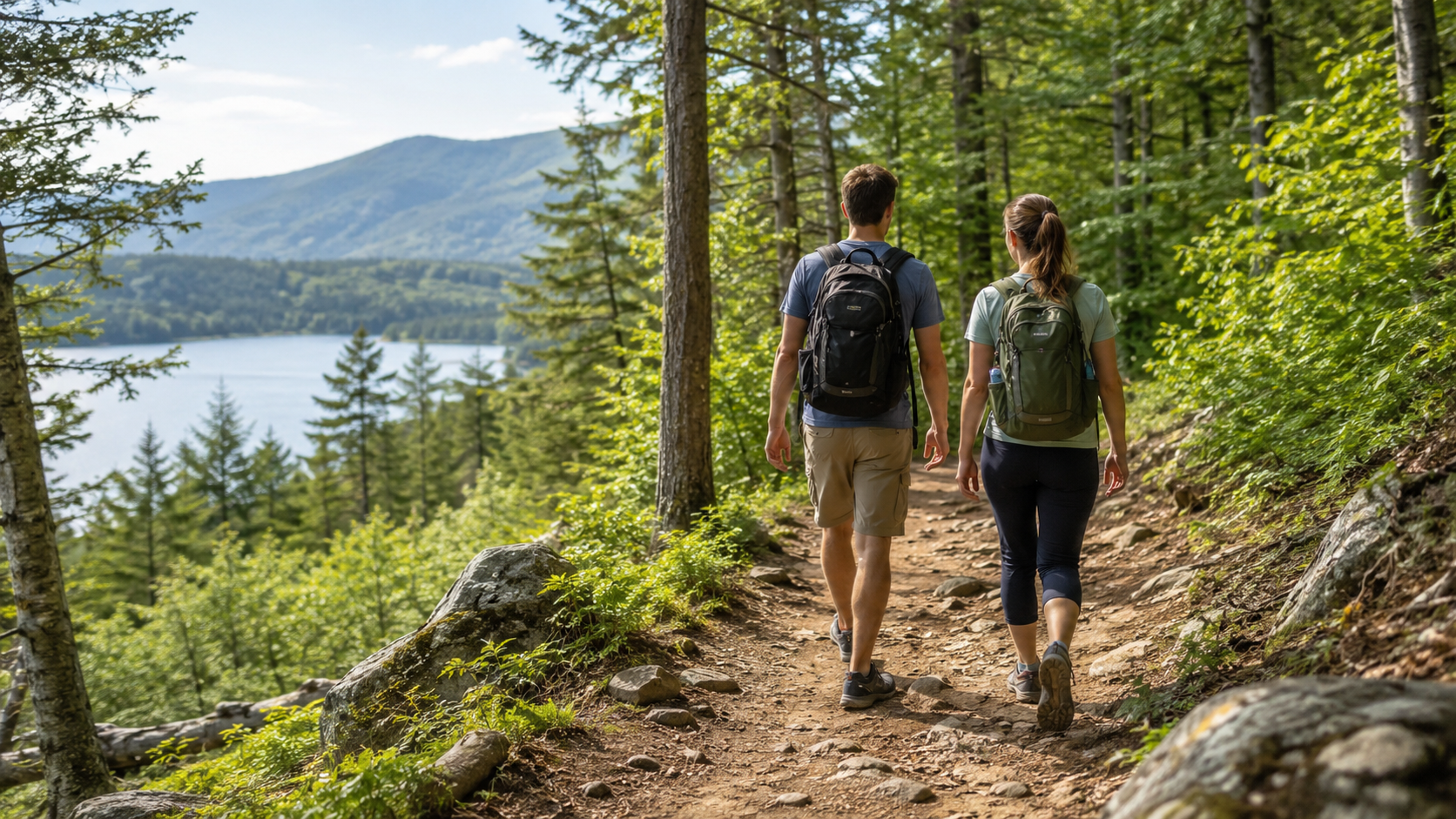
At its core, hiking is walking in nature. You are leaving the finished sidewalk or paved path for a while and stepping onto a real trail. The ground may be uneven. The setting may feel unfamiliar. You may notice bugs, trees, dirt, roots, rocks, and the quietness of being away from regular streets.
That is enough for the beginning.
You do not need to scale a mountain on your first day. You do not need to be a master hiker before you have even started. You need to start safe, stay small, stay close to home, and give yourself a first experience that helps you build confidence.
That is how hiking begins.
How to Start Hiking Without Making It Complicated
One of the biggest mistakes beginners make is thinking their first hike needs to be impressive.
It does not.
Your first hike should not be a test of toughness. It should be a test of comfort. You are learning whether you enjoy being on a trail. You are learning how your body feels on uneven ground. You are learning what pace feels natural. You are learning whether the woods feel peaceful, unfamiliar, exciting, or uncomfortable.
That is all useful information.
Most hiking for beginners advice gets too complicated too quickly. Before you worry about advanced gear, long-distance routes, survival skills, or mountain trails, you need one simple success.
In my opinion, the best beginner hike is a planned walk on a local nature trail. It should be long enough that it feels like a real outing, but short enough that it does not become overwhelming.
A good first hike helps you finish with this thought:
“I can do that again.”
That matters more than distance. It matters more than speed. It matters more than choosing a famous trail.
Your First Hike Should Be a Local Nature Walk
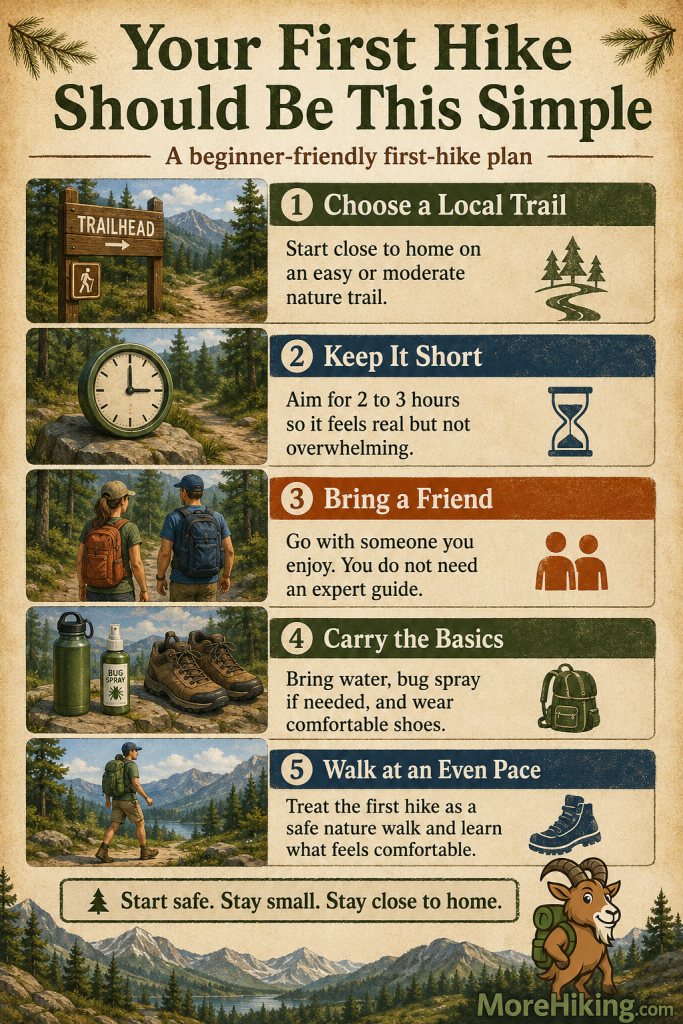
For a complete beginner, I would start with a local nature trail.
You want something close enough to home that the whole day does not feel like a major commitment. You also want a place that feels different from a sidewalk or pavement path. The goal is to experience a real trail without throwing yourself into a difficult outdoor challenge.
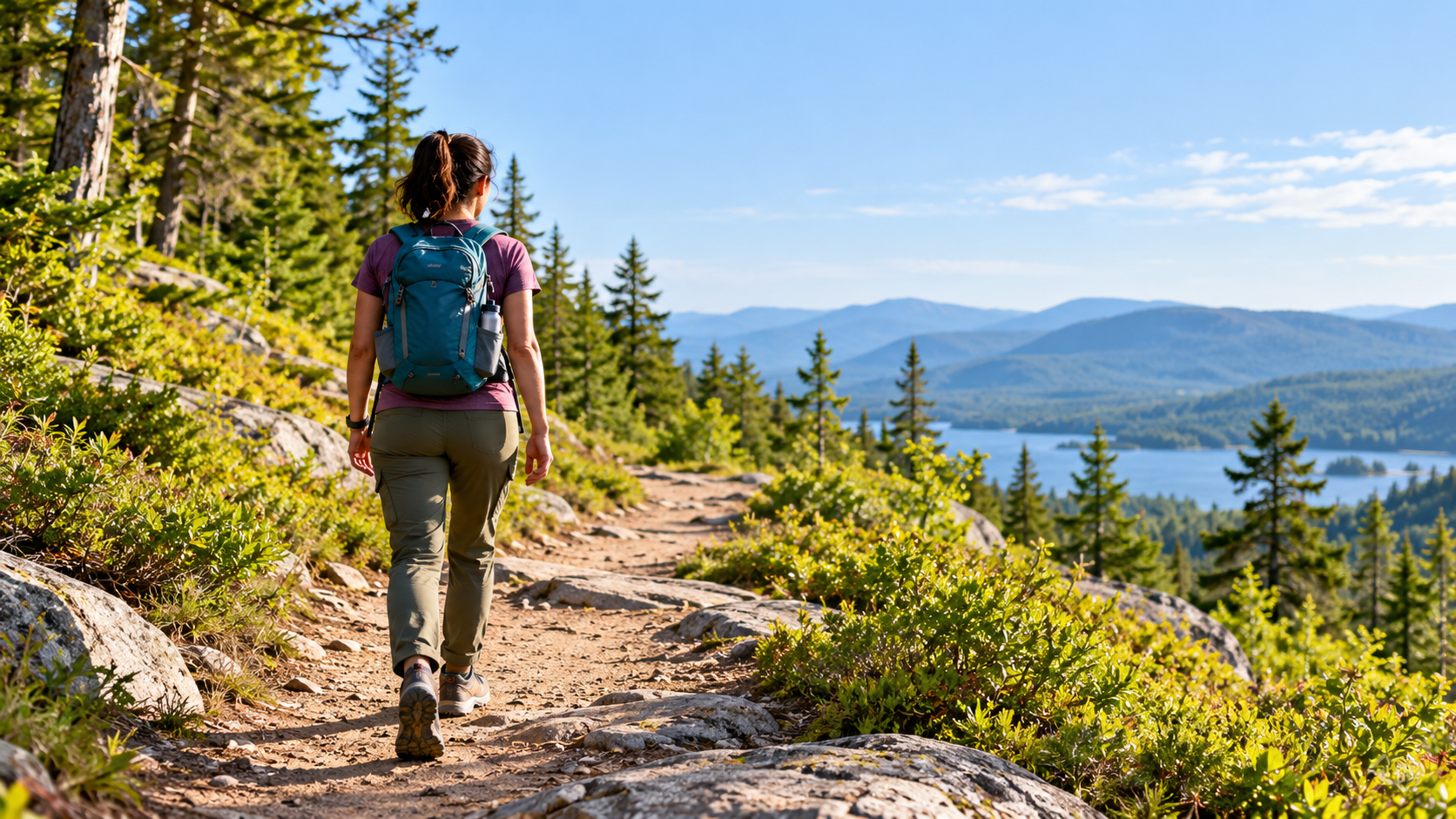
Look for a place where you are actually walking through trees, along a dirt path, beside a creek, through a conservation area, around a lake, or through some kind of natural setting.
The trail can be a little rugged. In fact, that is helpful. A beginner should get used to ground that is not perfectly flat or finished. There may be roots, small rocks, dirt, mud, gentle hills, or narrow sections.
But it should not be unusually difficult.
This is not the time to choose the hardest trail in the area. This is not the time to prove you can handle steep climbs, remote terrain, or long mileage. The first hike should help you understand what hiking feels like, not scare you away from trying again.
A two- to three-hour walk is a good starting point for many beginners. That is long enough to feel like you went somewhere. It gives you time to learn your pace, feel the terrain, and notice how your body responds. But it is not so long that the outing becomes a huge emotional investment.
You are not trying to conquer anything. You are giving yourself a safe introduction.
Go With a Friend on Your First Hike
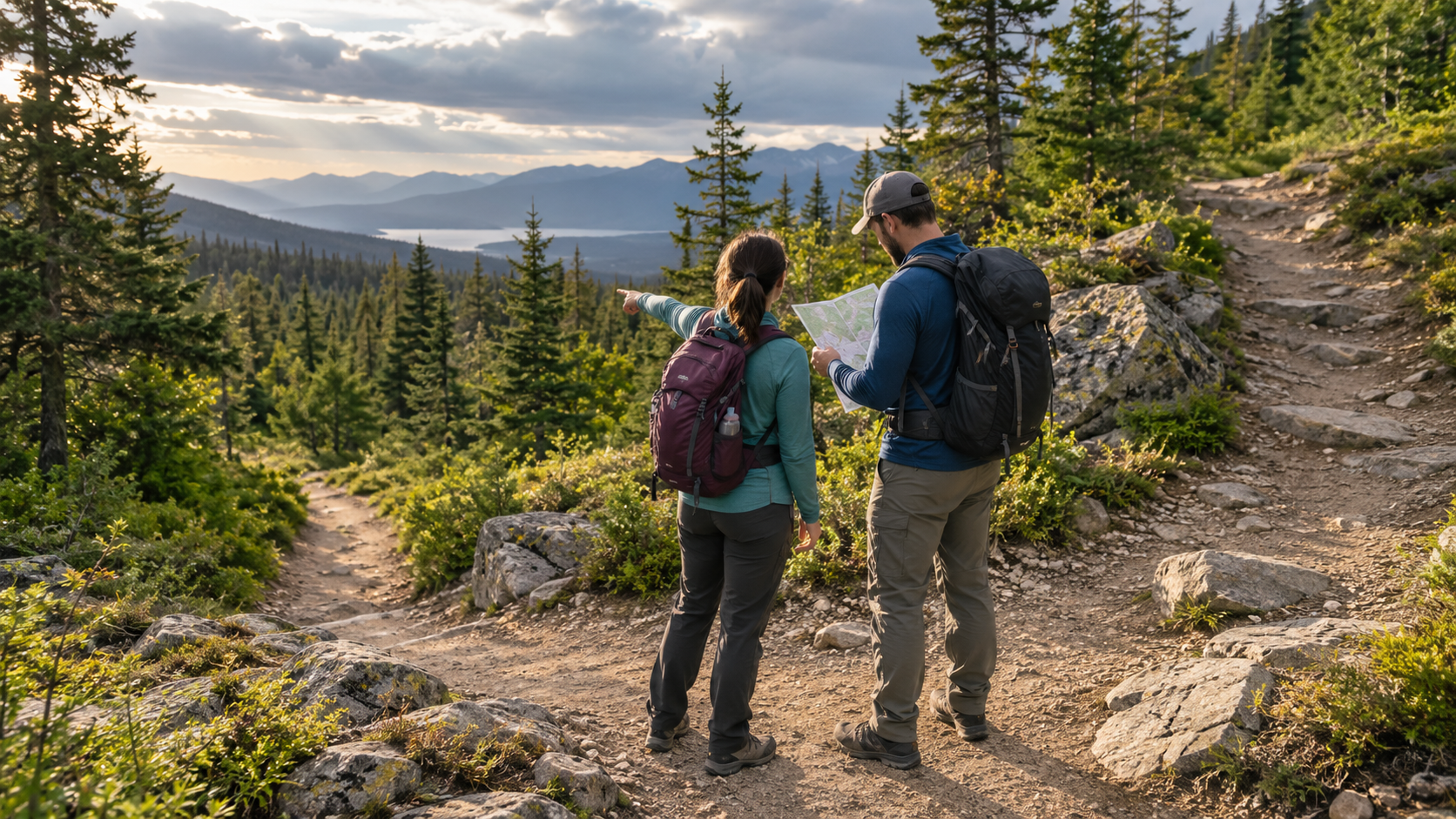
For the first hike, I think it is wise to bring a friend.
That friend does not have to be a highly experienced hiker. This is important. A beginner may think they need an expert guide before they are allowed to start. That is usually not true for a simple local trail.
What you need is someone you are comfortable with.
A friend makes the first hike feel more relaxed. You can talk as you walk. You can slow down together. You can decide together if the pace is too fast or if the trail feels longer than expected.
The right companion also lowers the emotional pressure. If you are nervous about getting lost, wildlife, bugs, or being inexperienced, having someone beside you can make those fears feel smaller.
This first outing should feel like a shared nature walk, not a performance.
You are allowed to be new. You are allowed to take your time. You are allowed to stop, look around, and figure things out.
Choose a Planned Trail With a Clear Route
Many beginners are not really afraid of hiking. They are afraid of the unknown.
That is why the first trail should be planned and easy to understand.
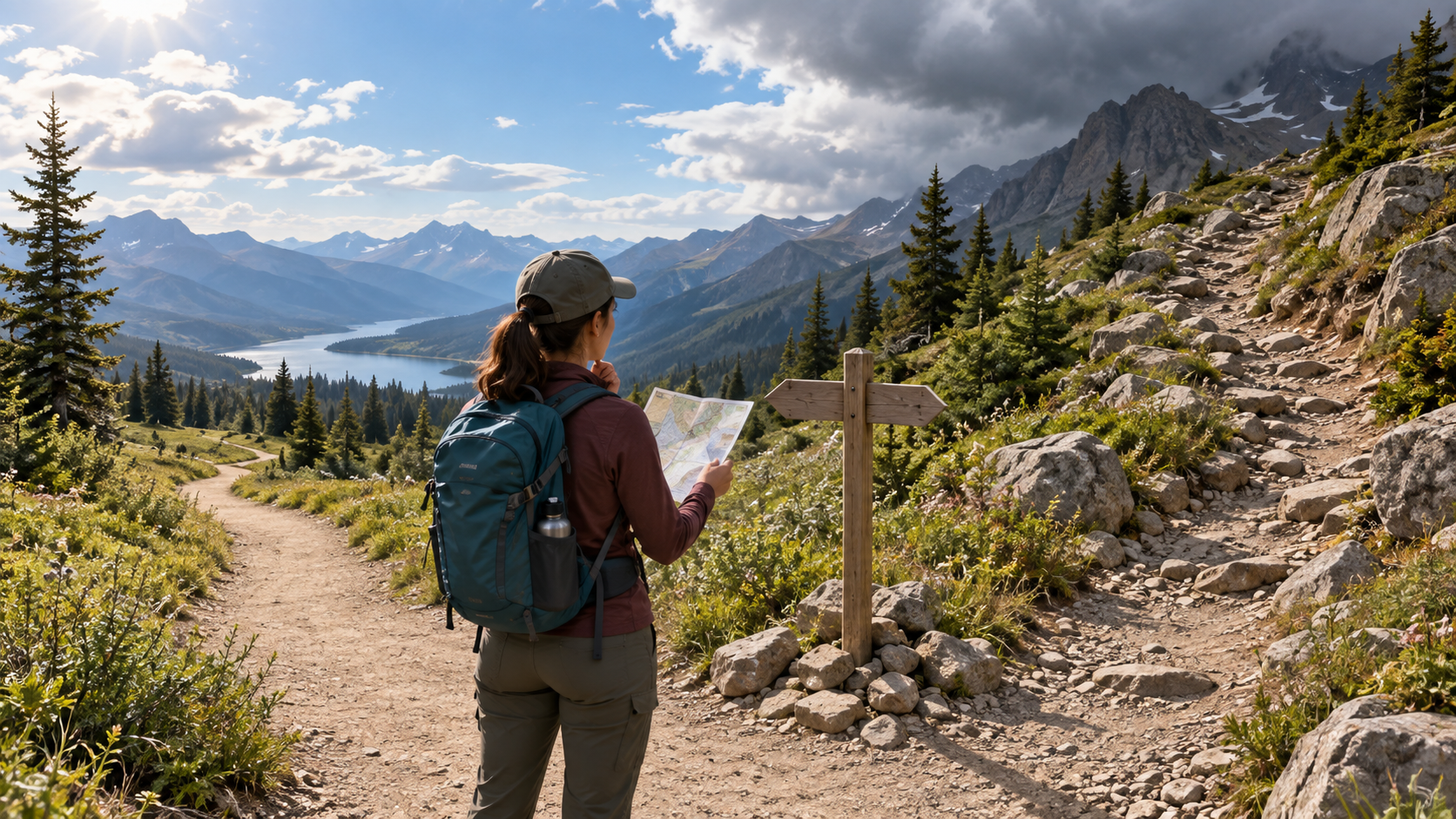
Choose a place where you know where the trail begins. Know whether the route is a loop, an out-and-back trail, or a marked path through a park or conservation area. Look at the basic trail information before you go.
You do not need to become a navigation expert before your first hike. But you should not be guessing either.
A little research can remove a lot of fear. Check the trail length. Read the trail description. Look for recent comments if they are available. Notice whether people mention mud, bugs, confusing signs, closures, steep sections, or rough footing.
Also check the weather before you leave.
A simple trail can feel very different in heavy rain, high heat, cold wind, or muddy conditions. For your first hike, choose a day that gives you the best chance of enjoying the experience.
This is not about becoming fearful. It is about becoming aware.
A planned trail gives you confidence because you have a clear beginning, a clear direction, and a reasonable idea of what to expect.
Do Not Start With a Hard Trail
A beginner does not need a hard trail.
This is where many people get hiking backwards. They think the trail has to be dramatic to count. But if the trail is too hard too soon, the beginner may finish tired, discouraged, sore, or anxious.
That is not a good first lesson.
The first hike should be light or moderate. The terrain can be natural and varied, but it should not be punishing. You want enough trail feel to learn something, not so much difficulty that every step feels stressful.
A good beginner trail gives you room to notice the environment. You can pay attention to the trees, the ground, the sounds, the air, and the feeling of being outside. You are not spending the whole time worried about whether you can finish.
That is the difference between building confidence and creating fear.
If you finish your first hike thinking, “That was manageable,” you have done it right.
Keep Your Pace Even
A hike is not a race.
For beginners, pace matters more than speed. If you start too fast, the first half hour may feel easy, but the next hour may feel much harder than it needs to.
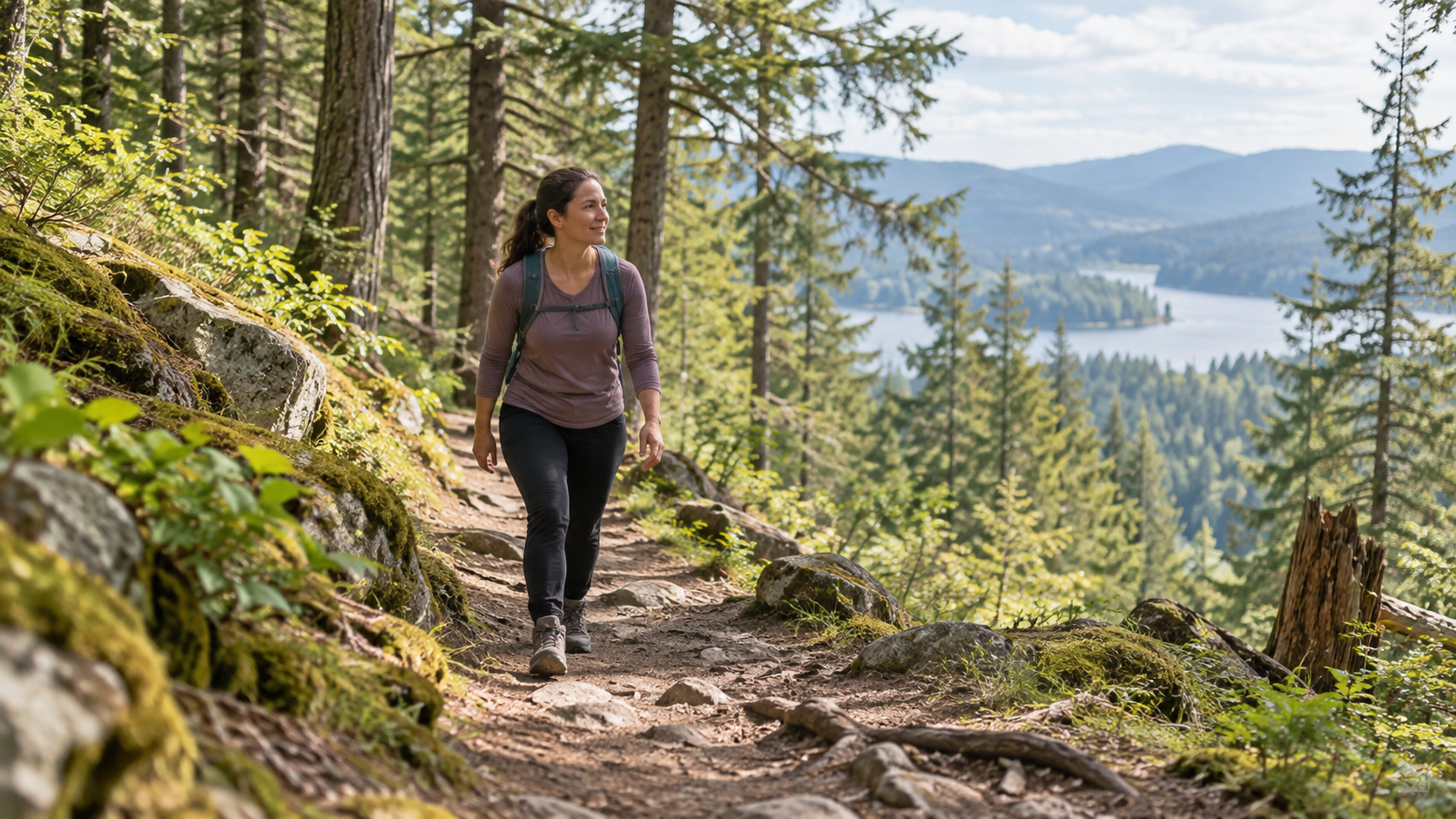
I would rather see a beginner walk evenly from the beginning. Choose a pace that feels comfortable and sustainable. Slow down on uneven ground. Slow down on hills. Stop briefly if you need water or a rest.
There is no prize for rushing.
One of the things you are learning on your first hike is how your body responds over time. A trail is different from a sidewalk. Uneven ground makes you use your legs and balance differently. Small climbs and descents can add up. Even a simple trail teaches you something about time, distance, and effort.
That is why your first hike is not just about finishing. It is about paying attention.
Notice whether your shoes feel right. Notice whether you brought enough water. Notice whether the trail feels easier or harder than expected. Notice whether your pace feels natural.
This is how you start building real hiking experience.
What to Bring on Your First Beginner Hike
For a first beginner hike, keep the gear simple.
You do not need to buy half an outdoor store before walking a local nature trail. That is another place where beginners can get stuck. They start researching boots, backpacks, jackets, survival tools, GPS units, and technical equipment before they have even taken their first walk in the woods.
For a simple first hike, the basics matter most.
Bring water. Wear comfortable shoes. Dress for the weather. If bugs are common where you are walking, bring bug spray. Carry your phone and know the basic trail route before you begin.
That is enough for a short, planned local hike.
Your shoes do not need to be expensive hiking boots for an easy first trail, but they should be comfortable for walking for a couple of hours. Your clothing should match the conditions. If it is warm, avoid clothing that will make you overheat. If it is cool, bring a simple layer so you are not uncomfortable when you slow down or stop.
As you hike more often, you can add gear based on real experience. That is the better order.
First, learn what you actually need.
Then buy gear that solves real problems.
Use the First Hike as a Test of the Environment
Your first hike is partly a walk, but it is also a test of the environment.
You are learning how it feels to be away from pavement. You are learning how comfortable you are in the woods or on a natural trail. You are learning whether bugs bother you. You are learning whether the quiet feels peaceful or strange. You are learning how your body handles uneven ground.
That matters.
A beginner should not judge the first hike only by distance. Distance is only one part of the experience. The better question is, “What did I learn?”
Maybe you learn that you enjoy being outside more than you expected. Maybe you learn that you need better shoes. Maybe you learn that two hours is enough for now. Maybe you learn that you are ready for something a little longer next time.
All of that is useful.
This is why starting small is not a weakness. Starting small gives you feedback without creating a major problem.
A first hike should teach you what your next hike should look like.
How to Handle Common Beginner Hiking Fears
Beginner hiking fears are normal.
Some people worry about getting lost. Some worry about wildlife. Some worry about bugs. Some worry that they are not fit enough. Others feel awkward because they do not know what they are doing yet.
I think most of those fears come from being unfamiliar with the environment.
That is why the first hike should be a short, planned, local trail with a friend. You are not ignoring the fear. You are making the situation manageable.
If getting lost worries you, choose a marked trail with a clear route. If wildlife worries you, start with a popular local trail rather than a remote area. If bugs worry you, bring bug spray and choose a season or time of day that feels more comfortable. If fitness worries you, keep the trail light or moderate and walk at an even pace.
Do not make the first hike bigger than it needs to be.
You are allowed to start with something simple.
In fact, that is the point.
Do a Little Research, But Do Not Overthink It
A small amount of research helps. Too much research can become another way to avoid starting.
Before your first hike, look up the trail. Check the distance. Check the expected difficulty. Look at the route. Check the weather. Make sure you know where to park or where the trail begins, and take a few minutes to understand the basic route before you leave.
Then go.
You do not need to read every possible article before taking a simple nature walk. You do not need to master every outdoor skill before stepping onto a local trail.
Research should support action, not replace it.
The goal is not perfect knowledge. The goal is a safe, reasonable first experience.
For a simple safety check before you go, the National Park Service’s Hike Smart guidance is a useful place to understand the basics of planning, water, weather, and trail awareness.
How to Build Hiking Confidence After Your First Walk
After your first hike, do not jump immediately into something extreme.
Build gradually.
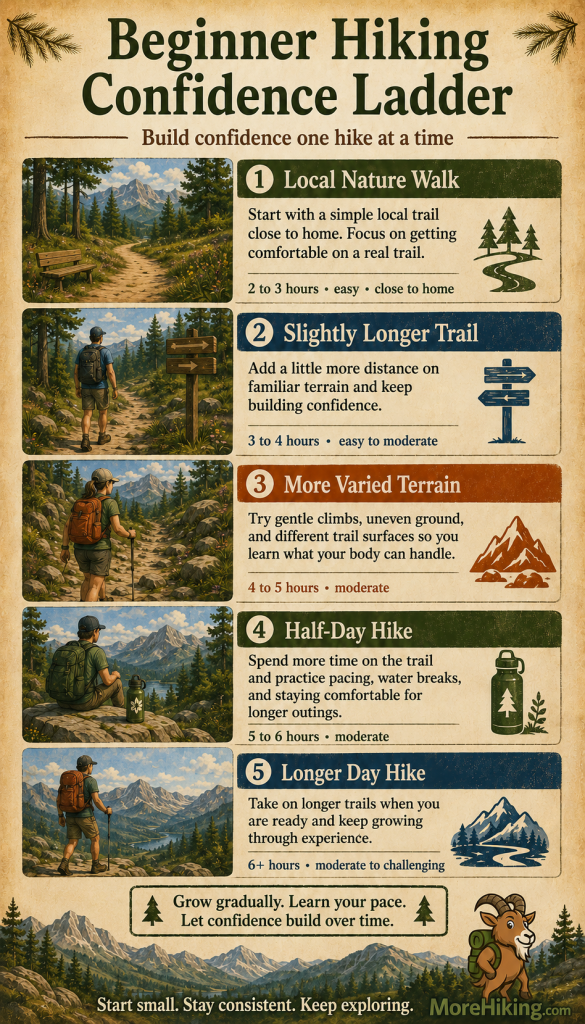
I like the idea of doing three or four more walks with growing distance and time. You might start with a two- to three-hour local trail, then try a slightly longer walk, then a trail with more varied terrain, then a longer half-day outing.
The exact timing will depend on your fitness, comfort level, weather, and trail options. But the principle is simple.
If you are unsure how much distance to add next, use this guide to decide how far a beginner should hike based on time, elevation, trail surface, weather, and current fitness.
Grow slowly.
Each hike teaches you something. You learn how long you can walk comfortably. You learn how your feet feel. You learn how much water you need. You learn what kind of trail you enjoy. You learn how to keep a steady pace. You learn how terrain changes the effort.
Over time, you may work toward longer outings, even full-day hikes. But that should come after you have built confidence through smaller successes.
A beginner does not become capable by pretending to be advanced.
A beginner becomes capable by repeating manageable hikes and learning from them.
Build Time Before You Build Difficulty
If you want to grow as a hiker, build time before you chase difficulty.
A longer easy trail can teach you a lot. You learn how your energy changes after several hours. You learn how your pace changes. You learn whether your shoes still feel good after time on your feet. You learn how small hills, uneven ground, and trail surfaces affect you.
That knowledge is more valuable than choosing a difficult trail too early.
For many beginners, the first goal should not be climbing the steepest route. It should be becoming comfortable walking for longer periods on manageable trails.
There is a big difference between being able to walk for one hour and being comfortable for three. There is another difference between three hours and a longer half-day route.
Let your body and confidence grow together.
That is safer, more enjoyable, and more likely to keep you hiking.
Keep Hiking With a Friend as You Grow
Even after your first hike, it is still helpful to bring a friend.
As you try longer routes or slightly more varied trails, having someone with you can make the experience more relaxed. You can keep each other aware. You can talk through small decisions. You can encourage each other to keep an even pace.
There may come a time when you feel comfortable hiking solo on simple trails. But there is no need to rush that step.
For a beginner, hiking with a friend is not a weakness. It is a good way to build confidence.
You are still learning how you respond to distance, terrain, weather, and time. Having someone with you makes that learning process easier.
Learn Your Natural Hiking Pace
One of the most important beginner lessons is pace.
Your hiking pace is not the same as your sidewalk pace. Trails slow you down. Roots, rocks, mud, hills, narrow paths, and uneven ground all change how you move.
At first, that can feel awkward.
Over time, you begin to understand your own rhythm. You learn when to slow down. You learn when to take a short break. You learn how long a trail really takes you, not just how long a sign or app suggests it might take.
That is real experience.
It does not come from buying gear. It does not come from pretending you already know everything. It comes from walking, paying attention, and doing it again.
Hiking Starts With Confidence, Not Distance
The goal of beginner hiking is not to cover the most miles.
The goal is to build confidence.
Confidence comes from small, successful experiences. You choose a reasonable trail. You prepare a little. You bring water. You walk with a friend. You keep an even pace. You finish safely. Then you use what you learned to choose the next hike.
That is how hiking becomes natural.
The woods feel less unfamiliar. Trails feel less intimidating. Your body gets used to uneven ground. You begin to understand time, distance, weather, and pace.
This is why I believe beginners should start safe and stay small.
Small does not mean meaningless.
Small is how you build.
A Simple First-Hike Plan for Complete Beginners
Start with a local nature trail. Choose something easy or moderate. Go during daylight. Bring a friend. Plan for about two to three hours. Bring water, wear comfortable shoes, dress for the weather, and carry bug spray if bugs are likely.
Before you go, look up the trail and understand the basic route.
While you walk, keep an even pace. Do not rush. Notice how the ground feels. Notice how your body feels. Notice what makes you comfortable or uncomfortable.
After the hike, think about what you learned. If the trail felt good, choose something slightly longer next time. If it felt hard, repeat a similar hike before adding distance.
That is a good beginning.
Not dramatic. Not extreme. Not complicated.
Just a safe, simple start.
Final Thoughts
The best way to start hiking as a complete beginner is to stop making it bigger than it needs to be.
You are not signing up for a survival challenge. You are not trying to prove yourself on a mountain. You are not required to understand every piece of outdoor gear before you begin.
You are taking a nature walk.
Start close to home. Stay on a planned trail. Go with a friend. Bring water. Wear comfortable shoes. Choose an easy or moderate route. Walk at an even pace. Learn from the experience.
Then go again.
That is how hiking begins.
If you have enjoyed this post, perhaps you would like one of our other Posts.
Gear Guide: Best Navigation Tools for Beginner Hikers (Maps, Compass, GPS, Apps)
Leave a Reply